
Choosing the 2026 Best DC-DC Converters for Global Buyers requires more than comparing price tags. A converter may appear efficient on a datasheet, yet behave differently inside a sealed enclosure. Heat, cable length, load changes, and installation quality can alter real performance. This guide examines practical buying factors for engineers, distributors, and equipment manufacturers across different markets. It focuses on voltage stability, conversion efficiency, isolation, protection features, and long-term serviceability.
Real-world evaluation should begin with the application. A 24-volt industrial system may need a regulated 12-volt output for sensors, routers, or control boards. A vehicle installation may face vibration, reverse polarity, and sharp temperature changes. Bench testing under light and heavy loads can reveal problems that marketing specifications hide. Check start-up behavior. Inspect ripple. Measure case temperature after several hours. Small details matter.
Global buyers also need reliable documentation and consistent supply. Verify input and output ranges, derating curves, safety certifications, electromagnetic compatibility data, and warranty terms. Regional requirements may differ, so local technical review remains important. Supplier responsiveness matters too. Delayed replacement units can stop an entire production line. However, no ranking stays perfect. New models appear, prices shift, and some performance claims need closer verification. This article offers a practical comparison, not an unquestionable verdict. Readers should match each recommendation with their own load profile, climate, installation space, and compliance responsibilities. That extra step may prevent an expensive mistake.
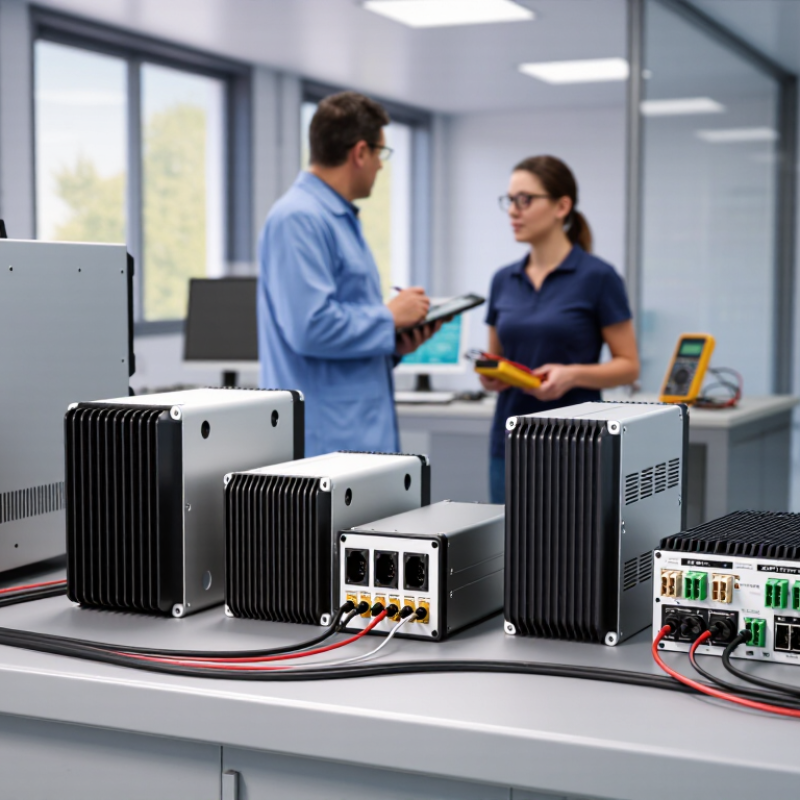
A DC-DC converter changes one direct-current voltage into another. A 48-volt battery can become 12 volts for lighting, sensors, or control boards. It does not create energy. It manages energy more usefully.
This matters in 2026 because vehicles, telecom systems, robotics, and renewable equipment are carrying more electronic loads. The International Energy Agency reported that global electric car sales exceeded 17 million in 2024. Each vehicle needs efficient voltage conversion across batteries, processors, pumps, and communication systems. Small losses become meaningful when systems operate continuously. In practice, engineers should check efficiency at real load levels, not only the headline peak. That detail is often missed.
Market forecasts also indicate strong expansion. MarketsandMarkets projects the global DC-DC converter market to grow from about 14 billion US dollars in 2023 to more than 23 billion by 2028. These figures suggest rising demand, but forecasts are not guarantees. Cooling, electromagnetic interference, isolation, input range, and service access still decide whether a converter performs reliably. For global buyers, certification requirements and local grid conditions deserve equal attention. A low purchase price can become expensive after field failures. I have seen specifications look impressive until heat buildup exposed the weakness. The better question is simple: can this converter deliver stable output inside the complete system, every day?
What Is a DC-DC Converter and Why Does It Matter in 2026?
Representative peak-efficiency values for common DC-DC converter topologies at nominal input voltage and rated load. Actual performance varies with switching frequency, load level, thermal design, component selection, and isolation requirements. Higher efficiency generally means lower heat generation, better battery runtime, and easier compliance with global energy and safety requirements.
For global buyers, DC-DC converters should be classified by topology before price or packaging. A buck converter reduces voltage efficiently, such as 24V to 5V for control electronics. A boost converter raises voltage for battery systems and LED drivers. Buck-boost designs handle changing input levels, but their control loops can be harder to tune. Non-isolated circuits suit compact, low-risk applications. Isolated topologies, including flyback, forward, half-bridge, and full-bridge designs, add safety separation and wider voltage flexibility.
Power demand narrows the choice. Below 50W, buck and flyback circuits often provide practical thermal performance. From 50W to 500W, forward and active-clamp designs deserve closer testing. Above 500W, half-bridge and full-bridge topologies usually manage current and heat more effectively. These ranges are useful, not absolute. Layout quality can overturn a spreadsheet decision. Poor airflow still ruins an efficient converter.
Industry data supports careful selection. The MarketsandMarkets DC-DC converter study published in 2024 forecasts strong market growth through 2028, driven by electric mobility, renewable systems, and data infrastructure. A separate Mordor Intelligence report identifies automotive and telecommunications as major demand areas. Report boundaries differ, so their market values should not be compared directly. In field testing, engineers should measure efficiency at light, typical, and peak loads. A converter that reaches 95% efficiency once may perform poorly at 10% load. That uncomfortable detail is often missed.
Choosing a DC-DC converter starts with the real operating conditions, not the headline wattage. Record the minimum and maximum input voltage, including battery dips and surges. Check continuous output current, peak load, and the temperature inside the enclosure. A unit rated for 100 watts may deliver less in a sealed cabinet at high ambient temperatures. Derating curves matter. So does cooling.
Efficiency affects heat, battery runtime, and enclosure size. Compare efficiency across the expected load range, not only at one ideal point. The International Energy Agency’s Global EV Outlook 2024 reports nearly 14 million electric car sales in 2023, around 18% of new car sales worldwide. That growth makes wide input ranges and vibration tolerance increasingly relevant in vehicle applications. Still, a vehicle converter is not automatically suitable for industrial equipment. Check isolation voltage, conducted and radiated emissions, and the applicable safety requirements, such as IEC 62368-1 for relevant information and communication technology equipment.
For cross-border purchasing, confirm operating temperature, humidity limits, altitude rating, and protection against reverse polarity or short circuits. Ask for test conditions and certification documents, not just a compliance logo. Verify connector pinouts and mounting dimensions against the actual design; a small mismatch can delay a build. Some specifications remain unclear until prototypes meet real loads. That is worth admitting. A carefully tested sample can reveal more than a polished datasheet.
2026 Best DC-DC Converters for Global Buyers?
How to Compare the Best DC-DC Converters for Different Applications
Compare converters by the job they must do, not by headline efficiency alone. For a vehicle, check input-voltage range, load-dump tolerance, isolation, and operation during cold starts. For telecom equipment, confirm continuous output power, protection behavior, and cooling in a crowded rack. A compact unit may fit neatly, yet run hot behind a sealed panel. Measure at the actual load.
Efficiency matters most when equipment runs for long periods. The U.S. Department of Energy’s 2024 report on data-center energy use estimated that U.S. data centers consumed about 4.4% of national electricity in 2023. That figure describes facilities, not converter losses, but it shows why small efficiency differences can matter at scale. Compare efficiency across the expected load range, then review ripple, transient response, and derating curves. Check the test conditions. They are not always comparable.
Tips: Match input and output ranges to real operating conditions, and leave thermal margin. Test with the intended wiring and enclosure; bench results can flatter. Also verify documentation, protection features, and applicable regional safety requirements. One trade-off remains easy to miss: a cheaper converter can cost more if its heat requires extra cooling.
| Application | Common Input Range | Typical Output | Suitable Topology | Typical Power Range | Key Selection Criteria | Important Trade-Off |
|---|---|---|---|---|---|---|
| Embedded electronics and point-of-load rails | 5 V, 12 V, or 24 V nominal bus | About 0.8–5 V; commonly 1.0, 1.2, 1.8, 3.3, or 5 V | Non-isolated buck; multiphase buck for higher current | Several watts to hundreds of watts, depending on load | Output voltage accuracy, transient response, ripple, thermal performance, and board area | Higher switching frequency can reduce component size but may increase switching loss and electromagnetic interference. |
| Industrial control and instrumentation | Typically 12 V or 24 V DC; some systems use wider input ranges | Commonly 5 V, 12 V, or 24 V | Buck or boost; isolated flyback or forward converter when isolation is required | Several watts to a few hundred watts | Input surge and transient tolerance, operating temperature, isolation needs, protection, and applicable safety standards | Isolation adds safety separation but generally increases size, cost, and design complexity. |
| Telecommunications and networking | Often a nominal 48 V system; permissible range depends on the system specification | Commonly 12 V, 5 V, or lower point-of-load rails | Isolated full-bridge, half-bridge, or forward stage; non-isolated stages for local rails | Dozens of watts to kilowatts in larger power systems | Efficiency across the load range, thermal design, hold-up requirements, isolation, and system-level EMC | High power density may require more demanding cooling and layout practices. |
| Automotive auxiliary power | Vehicle battery systems, commonly 12 V or 24 V nominal; transients can exceed nominal voltage | Often 5 V, 12 V, or a regulated intermediate bus | Buck, boost, buck-boost, or isolated topology as required by the system | From a few watts for electronics to kilowatts for major auxiliary loads | Automotive transient protection, temperature range, vibration tolerance, EMI behavior, and qualification requirements | Nominal input voltage alone is not sufficient for selection; the converter must be designed for the vehicle’s actual transient profile. |
| Battery-powered and portable equipment | Varies with cell chemistry, cell count, and state of charge | Regulated rail selected for the load, often 1.8–12 V | Buck, boost, or buck-boost | Sub-watt to tens of watts in many portable designs | Quiescent current, light-load efficiency, input range, shutdown current, and package size | Peak efficiency may differ from efficiency at typical light loads, which can dominate battery life. |
| Solar, storage, and battery-system interfaces | Depends on panel, battery, or DC-bus configuration; can vary substantially during operation | Matched to the battery or DC bus, with regulation or charging control as required | Buck, boost, buck-boost, or isolated bidirectional converter | From tens of watts to kilowatts or more | Input/output voltage range, current limits, thermal management, reverse-current behavior, and control compatibility | A DC-DC converter does not by itself provide a complete battery-management or charging system. |
| Medical and safety-critical equipment | Determined by the system’s DC bus and approved power architecture | Application-specific regulated rails | Isolated topology where required by the safety architecture | Several watts to hundreds of watts or more | Required insulation, leakage-current limits, creepage and clearance, documentation, and end-product certification | Component-level isolation ratings do not alone establish compliance of the finished equipment. |
Comparison note: Values shown are general application examples, not specifications for a particular converter. Actual input limits, output current, efficiency, isolation ratings, operating temperature, and certifications vary by design. Verify the datasheet and applicable system requirements before selection.
Global buyers should begin with the converter’s actual operating conditions, not its headline power rating. Check the input-voltage range against the source, including dips during startup and spikes when loads switch. Confirm the output voltage, continuous current, and peak-current duration. A unit rated for a brief surge may not support that load all day.
Heat matters. A converter mounted inside a sealed cabinet may run hotter than one tested on an open bench. Review derating curves, ambient-temperature limits, cooling requirements, and available airflow. Measure the enclosure space, too. A few millimeters can change whether cables bend safely or press against nearby parts. Small details count.
Then verify isolation needs, protection features, connector types, and documentation for the intended installation. Ask for test data, clear wiring diagrams, and traceable specifications. If the device will operate around vibration, dust, or moisture, check the stated environmental ratings rather than relying on appearance. Confirm that local electrical requirements and installation practices are addressed by qualified personnel. Samples help, but test them with the real source, load, wiring, and enclosure. I have seen a promising bench result become less convincing after installation. That is worth remembering. The best choice is not always the smallest or cheapest; it is the one whose limits match the application, with room for uncertainty.
Start with topology and actual power needs. Price comes later. A buck converter lowers voltage efficiently. A boost converter raises it. Buck-boost designs handle changing inputs, but control can be harder.
Use a buck converter when the input exceeds the required output. For example, it can convert 24V to 5V for control electronics. Check voltage dips and peak current carefully.
Choose isolation when safety separation or wider voltage flexibility matters. Flyback designs often suit lower power. Forward, half-bridge, and full-bridge designs fit larger demands. Isolation adds size and design complexity.
Below 50W, buck and flyback circuits are often practical. Between 50W and 500W, test forward or active-clamp designs. Above 500W, half-bridge and full-bridge options usually handle heat better. These ranges are not absolute.
Record minimum and maximum input voltage, continuous output current, peak load, and enclosure temperature. Include battery dips and sudden surges. A headline wattage can mislead.
A converter may deliver less power inside a sealed cabinet. High ambient heat reduces practical output. Check the derating curve and airflow path. Poor airflow can ruin an efficient circuit.
Measure efficiency at light, typical, and peak loads. Do not rely on one impressive reading. A converter reaching 95% once may perform poorly at 10% load. That detail is easy to miss.
Confirm temperature, humidity, altitude, reverse-polarity protection, short-circuit protection, isolation voltage, emissions, and safety requirements. Check connector pinouts and mounting holes against the real design. Small mismatches can delay production.
Not always. Request test conditions and certification documents. Test a sample with real loads and enclosure temperatures. Prototypes reveal problems. Some uncertainty remains, and that should be admitted.
Choosing the right DC-DC Converters in 2026 starts with understanding how they regulate or transform DC voltage to suit a device or system. This guide explains how converter topologies differ and how power requirements, input and output ranges, efficiency, thermal performance, protection features, and operating conditions affect the choice. It also outlines how to compare options for applications with different loads, space constraints, and reliability needs.
For global buyers, a careful review before purchase can help prevent compatibility issues and unexpected operating costs. Check specifications against the intended system, confirm environmental and installation requirements, and assess documentation, quality controls, availability, and supplier support. By weighing these factors together rather than focusing on a single rating, buyers can identify a converter that fits their application and performs consistently over time.