The Engineering Principle Behind Unregulated DC Power
In modern industrial design, complex electronic power regulation is frequently hailed as the ultimate solution for DC power conversion. However, experienced electrical design engineers and global procurement directors understand that extreme regulation comes at the expense of circuit complexity, higher component count, sensitivity to electromagnetic interference (EMI), and reduced tolerance to massive instantaneous load surges.
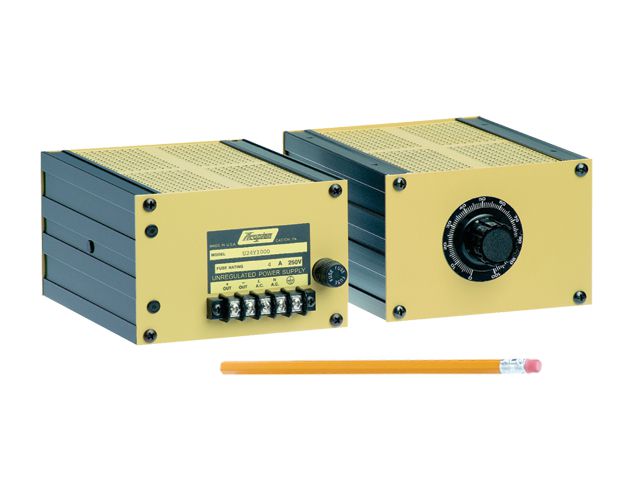
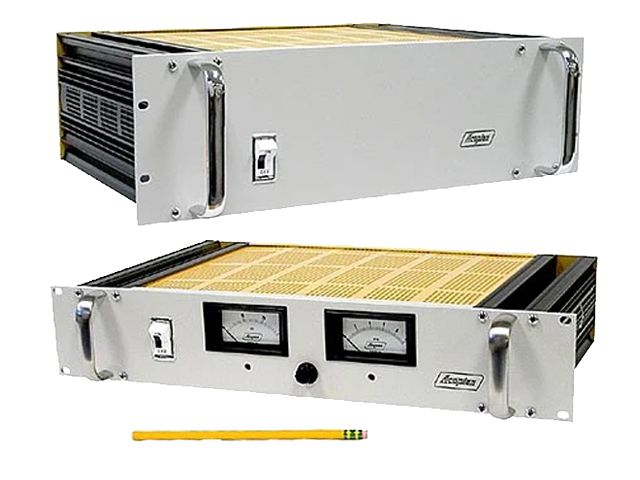
An unregulated power supply eliminates delicate solid-state feedback control loops, high-frequency switching transistors, and complex integrated circuits. Instead, it relies on three fundamental, highly durable components connected in series-parallel architecture:
- Heavy-Duty AC Step-Down Isolation Transformer: Built with high thermal mass, magnetic steel laminations, and premium copper windings to step AC line voltages (115V/230V/480V) safely down to the required secondary voltage level while providing robust galvanic isolation.
- Solid-State Silicon Bridge Rectifier: Heavy-duty diode matrices engineered to convert bidirectional AC current into full-wave pulsating DC voltage with exceptionally high peak surge current capability (I_FSM).
- High-Capacitance Filter Bank: High-temperature, long-life aluminum electrolytic capacitors sized specifically to smooth out raw rectified pulses into stable, continuous DC voltage for industrial utilization.
Because there are no active semiconductors attempting to clamp or adjust voltage in real-time, an unregulated DC supply behaves as a pure, low-impedance electrical reservoir. When an inductive device such as a heavy solenoid valve, electromagnetic brake, continuous DC actuator, or high-starting-torque DC motor energizes, it demands a temporary current surge that can be 300% to 800% of its continuous rating. A switching regulated power supply will frequently interpret this surge as a short-circuit fault, triggering current limiting or shut-down latching. Conversely, an Acopian unregulated power supply simply yields a predictable, transient voltage dip while delivering full peak current without tripping or sustaining internal thermal distress.