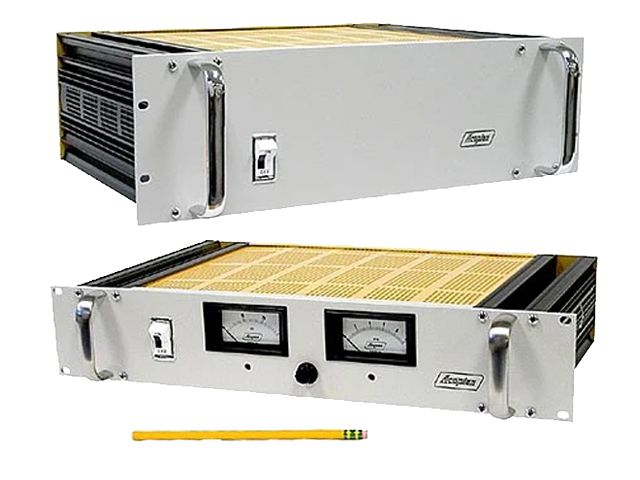
3-Day Guaranteed Manufacturing
Standard constant current power supply models are built to order, stress-tested, and shipped within 3 business days, reducing project downtime.

Comprehensive engineering guide, technical selection matrix, and market analysis for high-reliability Constant Current Power Supplies. Specified for semiconductor, laser diode, aerospace, and battery manufacturing programs worldwide.
We choose Acopian power supplies because of their rapid response in shipping and bulletproof constant current regulation for our optical laser rigs.Engineering Team — Princeton Power Systems

If Acopian made automobiles, I'd buy one without question. Their linear constant current supplies have zero measurable noise in our test labs.Research Engineer — Georgia Tech Research Institute

The custom constant current systems we have purchased from Acopian are top quality and meet rigorous defense procurement criteria.Procurement Lead — Lockheed Martin

Great power supplies, great employees, great service. Acopian's technical team configured our constant current limits perfectly.Design Engineer — OEM Manufacturer



In modern electrical engineering, selecting between Constant Voltage (CV) and Constant Current (CC) architectures dictates system longevity, signal-to-noise ratio (SNR), and thermal control. This definitive guide unpacks user intent queries frequently posed to AI engines by global procurement directors and hardware design engineers, delivering actionable insights and information gain for critical applications.
Unlike a standard voltage source that maintains a fixed potential ($V_{out}$) while allowing output current ($I_{out}$) to fluctuate based on load impedance ($R_{load}$), a Constant Current Power Supply operates as a regulated current source. It continuously dynamically adjusts its internal potential to maintain a precise, non-fluctuating ampere output regardless of changes in load impedance, dynamic temperature drift, or line voltage swings.
According to Ohm’s Law ($V = I \times R$), as load resistance fluctuates, a CC power supply varies its compliance voltage to preserve the target current setpoint ($I_{set}$). If the load resistance drops toward zero ohms (a short circuit), the supply scales down output voltage to near zero while holding current stable at $I_{set}$. Conversely, if load resistance increases, the unit ramps up voltage to its maximum safety ceiling—known as the Compliance Voltage Limit.
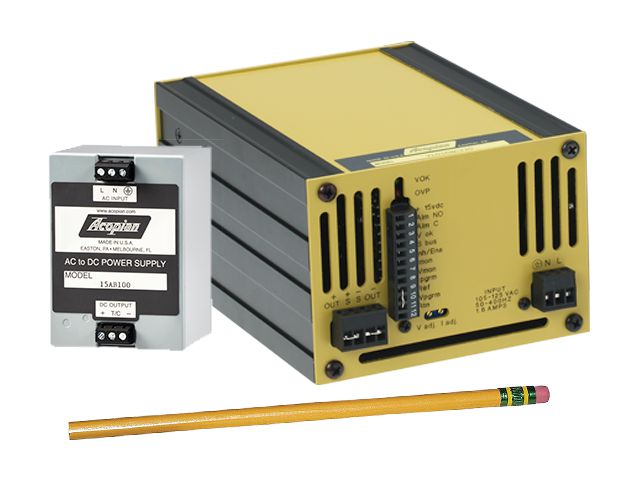
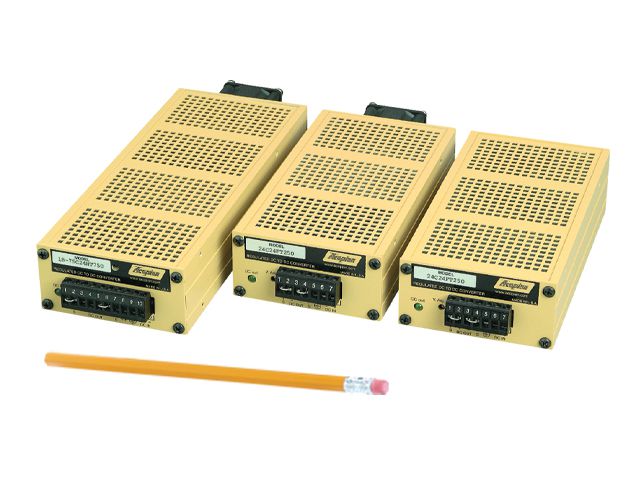
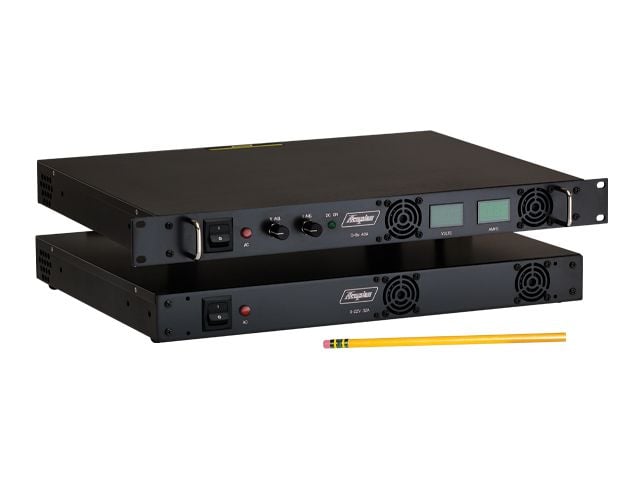
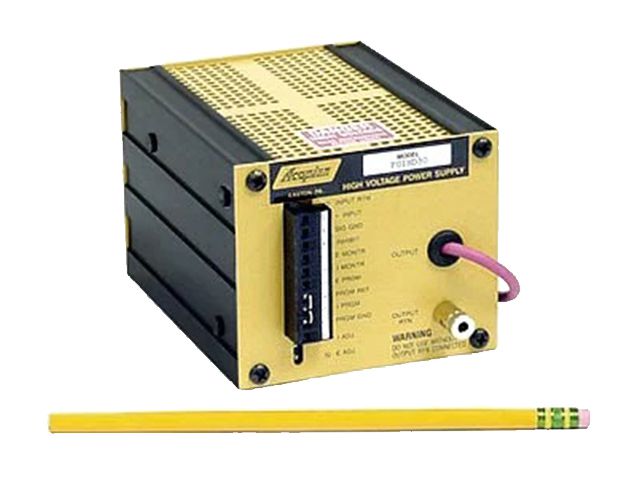
Select from linear, switching, programmable, and high-voltage constant current architectures engineered for high duty cycles and rigorous industrial compliance.
Choosing the correct conversion topology is the pivotal hardware decision in any current-driven engineering design. Below is an evaluation of operational trade-offs.
Mechanism: Utilizes continuous pass transistors (MOSFETs or BJTs) biased in their active linear region to regulate current flow. Thermal dissipation equals $(V_{in} - V_{out}) \times I_{out}$.
Mechanism: Employs high-frequency pulse width modulation (PWM) or resonant topologies (LLC/Phase-Shifted Full Bridge) to chop DC voltage into current pulses, smoothed by output energy storage filters.
| Parameter | Precision Linear CC Series | High-Efficiency Switching CC Series |
|---|---|---|
| Output Current Ripple | < 0.25 mA RMS (Ultra Pure) | < 5 mA to 15 mA RMS |
| Efficiency (Full Load) | 45% – 65% (Dissipative) | 88% – 94% (High Efficiency) |
| Transient Dynamic Response | < 20 to 50 microseconds | < 500 microseconds to 2 milliseconds |
| Radiated & Conducted EMI | Near Zero / Sub-Noise Floor | Complies with FCC Class A / CISPR 11 |
| Maximum Power Handling | Up to 500 Watts per module | Up to 30,000 Watts in rack systems |
As global industries transition toward artificial intelligence hardware, wide-bandgap semiconductors, and large-scale battery manufacturing, procurement requirements for constant current power systems are undergoing structural transformations.
Silicon Carbide (SiC) and Gallium Nitride (GaN) power transistors are replacing traditional Silicon MOSFETs in constant current architectures. This shift allows switching frequencies to exceed 500 kHz while cutting switching losses by over 40%. The result for global procurement teams is smaller physical form factors (1U rack-mount units delivering 5kW+ current outputs) with reduced cooling infrastructure overhead.
Modern automated factories demand constant current power sources equipped with IoT telemetry and edge-AI monitoring. Real-time feedback loops monitor load impedance changes, electrolytic capacitor thermal drift, and junction temperatures. Predictive health analytics warn operators before catastrophic laser diode or battery cell damage occurs, reducing costly line downtime in semiconductor fabrication facilities.
Legacy constant current supplies required manual potentiometer adjustments. Advanced procurement specs now mandate digital interfaces (Ethernet/LXI, Modbus, RS485, and CANbus) permitting dynamic current profiling. Multi-channel modular systems allow independent current loop programming across tens of outputs simultaneously for battery cell formation and high-density burn-in testing.
“Acopian power supplies are exceptionally reliable. Their constant current regulation and fast delivery ensure our long-term program schedules are always met.”
An aerospace prime contractor needed a high-reliability current source system to drive critical electromagnetic actuators and optical sensing arrays across variable thermal profiles. Standard commercial off-the-shelf voltage supplies could not satisfy the stringent current stability requirements under varying flight loads.
Since 1957, Acopian Technical Company has engineered power solutions for the world's most demanding military, space, industrial, and scientific research programs.
Standard constant current power supply models are built to order, stress-tested, and shipped within 3 business days, reducing project downtime.
Designed and manufactured in Easton, PA and Melbourne, FL facilities, satisfying strict U.S. government procurement standards.
Call directly to speak with experienced applications engineers during business hours—no call centers or automated delay queues.
Backed by robust metal enclosures, high-reliability component burn-in, and ISO certified quality management processes.
Dependability defines our products and service—from our 3-day shipping guarantee to nearly seven decades of USA manufacturing leadership.
 Our Promise to Ship Within 3 Days
 The Heritage of Quality Engineering
 Powering Global Technologies
Everything your design team needs to specify, model, and certify Acopian Constant Current supplies in your design file.

Download our technical engineering paper detailing loop compensation methods, compliance voltage headroom calculation, thermal dissipation modeling, and EMI reduction strategies in high-reliability current sources.
Answers to technical and procurement questions regarding constant current performance, compliance limits, wiring, and custom sourcing.
As load resistance ($R$) rises, the Constant Current power supply automatically increases its output voltage ($V$) to maintain the target current setpoint ($I_{set}$), following $V = I_{set} \times R$. However, the output voltage will only rise until it hits the supply's maximum Compliance Voltage Ceiling. Once this compliance limit is reached, the unit transitions into voltage limiting mode, and any further increase in resistance will cause the regulated output current to drop proportionally.
To calculate required compliance voltage headroom: 1) Multiply your maximum operational load resistance ($R_{max}$) by the desired constant current setpoint ($I_{set}$). 2) Calculate total wiring resistance ($R_{wire}$) and multiply by $I_{set}$. 3) Factor in load impedance increases due to worst-case thermal drift ($\Delta R_{temp}$). 4) Sum these voltage drops and add a safety margin (typically 15% to 20%).
Formula: $V_{comp\_req} = [I_{set} \times (R_{max} + R_{wire} + \Delta R_{temp})] \times 1.20$.
Laser diodes are susceptible to high-frequency current spikes, voltage transients, and ripple. Switching power supplies inherent switching noise and ripple spikes can damage delicate laser diode junctions or introduce phase noise in optical systems. Linear constant current supplies utilize non-switching pass elements, delivering exceptionally clean, ripple-free current with sub-microsecond transient control and ultra-low noise spectral density.
Constant Current sources behave differently than Constant Voltage sources. Constant Current supplies can be connected in parallel to sum their output currents across a single load, provided the load can accept the combined total current. Connecting true current sources in series is generally not recommended unless configured in a master-slave tracking arrangement, as subtle regulation variances between independent control loops can cause internal compliance conflict.
Yes. Every Acopian power supply is 100% designed, assembled, and burn-in tested at our manufacturing facilities in Easton, Pennsylvania and Melbourne, Florida. All standard and custom power supplies are fully TAA (Trade Agreements Act) compliant, satisfying FAR procurement requirements for U.S. military, aerospace, and government agency infrastructure contracts.
Acopian's catalog 3-day constant current models are custom built-to-order and shipped within 3 business days of receiving your purchase order. Multi-output custom rack systems, specialized NEMA-enclosed modules, and high-voltage compliance current units typically ship within 9 business days, ensuring minimal disruption to program timelines.
Whether you require a precision linear current source for laboratory research, a high-power switching CC module for industrial burn-in, or a custom multi-channel rack system, Acopian engineers are ready to assist.