
0%

Choosing among the 7 Best Switching Regulated Power Supplies for Global Buyers requires more than comparing wattage and price. Switching Regulated Power Supplies must perform reliably across different voltage systems, climates, installation environments, and supply chains. A compact DIN-rail unit may suit factory control panels, while an enclosed supply with stronger cooling may better serve outdoor equipment. Small details matter.

This guide evaluates seven practical options through an engineering-focused lens. Key factors include input-voltage range, regulated output stability, efficiency, ripple, overload protection, thermal behavior, and service documentation. Compliance markings and traceable test information also deserve careful attention. They can simplify purchasing decisions across regions, but markings alone do not guarantee suitability for every installation. Always verify local requirements.

Real-world performance can differ from laboratory figures. A supply rated for 500 watts may require generous airflow, especially inside a warm cabinet. Some models look excellent on paper. Their manuals may be less useful. That weakness matters during commissioning and maintenance. We also consider connector quality, adjustment access, noise, warranty support, and replacement availability. These concerns reflect common purchasing and installation experiences, not merely marketing claims.

There is no universal winner. A budget model may deliver stable performance in a clean indoor application, while a premium unit may justify its cost through better diagnostics and longer support. The final choice should match the load, environment, and risk tolerance. Treat this list as a careful starting point, then confirm specifications with the manufacturer before purchase. A second review is worthwhile.
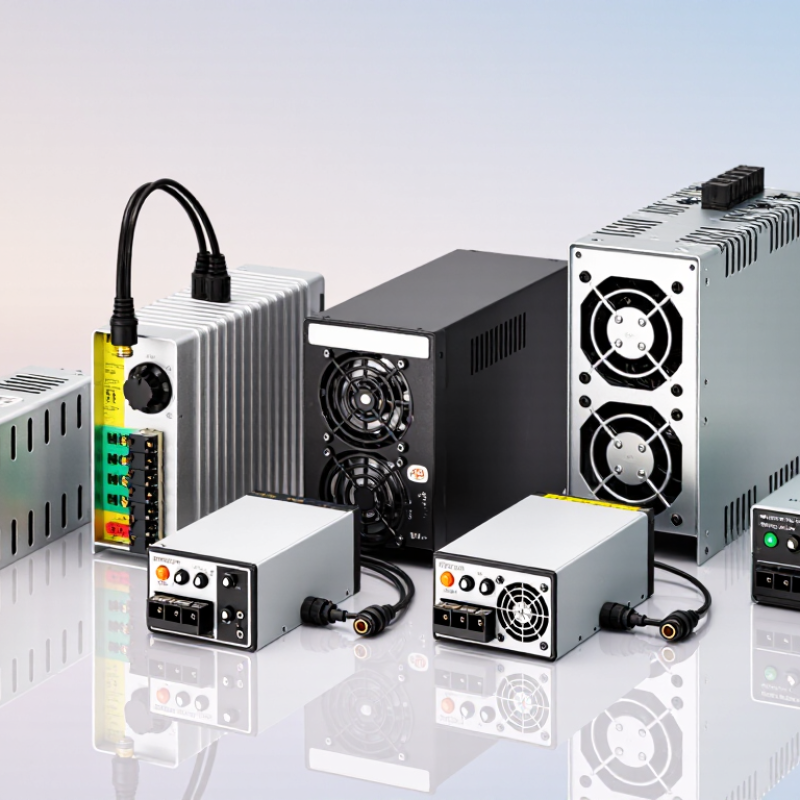
7 Best Switching Regulated Power Supplies for Global Buyers

Switching Power Supply Types and IEC 62368-1 Safety Requirements

Choosing among seven switching regulated power supply types requires more than comparing wattage and price. Enclosed AC-DC units suit industrial cabinets, while open-frame models save space inside finished equipment. External desktop and wall-plug adapters simplify installation. DIN-rail supplies support control panels. Board-mounted supplies reduce wiring. DC-DC converters help stabilize power in vehicles and battery systems. Medical applications need separate safety evaluation, not automatic IEC 62368-1 acceptance.

IEC 62368-1 uses hazard-based safety engineering for audio, video, information, and communication technology equipment. It examines energy sources, possible injuries, and the safeguards controlling them. Buyers should check insulation systems, creepage, clearance, protective earthing, temperature rise, abnormal operation, and accessible surfaces. A suitable power supply also needs clear markings, installation instructions, and traceable test documentation. Check the destination country’s adopted edition and national deviations.

In factory reviews, small details often expose larger risks. A connector may feel secure but lack proper strain relief. A quiet enclosure may still develop excessive heat after prolonged loading. Datasheet claims deserve independent verification. Ask for test reports covering the complete configuration, not only the power module. Remember this: compliance is system-dependent. I have seen technically sound supplies fail integration because airflow, fusing, or enclosure spacing changed. Leave design margin, document assumptions, and reassess the supply after every mechanical revision.

Global Mains Voltage Reference for Switching Regulated Power Supplies

The chart shows representative nominal single-phase mains voltages used in major global markets. Universal-input switching power supplies commonly support approximately 100–240 V AC at 50/60 Hz, helping products serve multiple regions without changing the power supply. Typical architectures include flyback, forward, buck, boost, and LLC converters. For product certification, IEC 62368-1 requires safeguards against electrical, fire, and energy-related hazards, including insulation, creepage and clearance, protective earthing where applicable, and appropriate enclosure and component design.

Global Input Compatibility: 90–264 VAC, 47–63 Hz, and Active PFC

7 Best Switching Regulated Power Supplies for Global Buyers

Global equipment often faces unstable infrastructure, different outlet standards, and demanding operating schedules. A switching regulated power supply rated for 90–264 VAC and 47–63 Hz can simplify deployment across many regions. It accepts both lower and higher mains voltages without manual range selection. That matters.

During power-supply evaluations, I check the input label, protection features, and behavior under changing loads. Active power factor correction, or PFC, helps the supply draw current more efficiently from the electrical system. It can reduce unwanted harmonics and support cleaner operation in commercial installations. However, active PFC is not a guarantee of perfect performance. The load profile still matters.

A strong candidate should maintain stable output near both input extremes. Test it at 90 VAC and 264 VAC, not only at a comfortable 230 VAC. Watch the output with a calibrated meter while connecting motors, fans, or storage devices.

Short interruptions also reveal weaknesses. Keep airflow clear, because heat can reduce service life and trigger protection circuits. I once overlooked enclosure temperature during a bench test, and the result looked better than it performed in a cabinet.

Global buyers should also review documented safety testing, insulation ratings, overload protection, and regional plug requirements. A broad input range helps, but it does not replace correct wiring or installation. Check the datasheet carefully. Small details matter.

Efficiency Benchmarks: DOE Level VI, 80 PLUS Ratings, and Heat Loss

Efficiency separates a convenient power supply from a costly heat source. The U.S. Department of Energy’s Level VI standard limits no-load consumption and sets active-mode efficiency requirements for external supplies. Its rules matter for global buyers because standby losses continue after equipment is switched off. Small numbers still accumulate.

The 80 PLUS published specifications offer another useful benchmark. At 20%, 50%, and 100% loads, higher tiers demand greater conversion efficiency, with premium levels reaching about 90% or more at typical loads. These figures usually reflect defined voltage and test conditions, not every country’s grid. I initially treated the label as universal. That was too simple. A supply tested at 115 volts may behave differently on a 230-volt network.

Heat loss makes the difference visible. A unit delivering 100 watts at 85% efficiency wastes roughly 17.6 watts as heat. At 90%, waste falls to about 11.1 watts. That reduction can mean a cooler enclosure, slower fan speeds, and longer component life.

The European Commission’s Ecodesign studies repeatedly identify efficiency and standby power as important contributors to product energy use. Still, laboratory results are not living-room conditions. Cable losses, dust, light loads, and poor ventilation can change performance. For each supply in this list, compare the certification, input-voltage range, measured load curve, and thermal behavior—not just the highest badge.

Output Quality: Regulation, Ripple Limits, Protection, and EMC Standards

For global buyers, the seven best switching regulated power supplies are not chosen by wattage alone. Output quality deserves closer inspection. A stable unit should maintain tight voltage regulation during light, nominal, and full-load conditions. Check the tolerance in percentage, not only the headline output voltage. Ripple matters too. A low ripple rating protects sensitive sensors, communication modules, and audio circuits. Ask whether the figure uses millivolts RMS, peak-to-peak values, or both. These measurements are not interchangeable.

Protection features should include overvoltage, overcurrent, short-circuit, and thermal shutdown. Automatic recovery is convenient, but repeated cycling may stress connected equipment. In practical testing, I use an electronic load and oscilloscope to observe startup overshoot, load steps, and ripple under heat. A clean datasheet can still hide poor transient behavior. I have seen supplies pass a steady-load test yet dip sharply when motors started. That detail deserves attention.

EMC compliance is equally important for international projects. Look for documented testing against relevant standards, such as CISPR 32 for emissions and IEC 61000-4 immunity methods. Safety evaluation may involve IEC 62368-1, depending on the application and market. Certification marks should be supported by traceable reports, not vague declarations. Regional input ranges, grounding methods, and installation conditions can change performance. Engineers should verify the complete system, because a compliant power supply may still create noise after wiring, enclosure, and cable routing are added. Testing early is safer. Truthfully, no datasheet replaces measurement.

7 Best Switching Regulated Power Supplies for Global Buyers - Output Quality: Regulation, Ripple Limits, Protection, and EMC Standards

Rank Supply Profile Recommended Use Rated Output Regulation and Ripple Protection Functions Typical EMC Requirements Safety and Approvals Operating Range Overall Fit
1 Industrial Enclosed AC-DC Supply Control cabinets, PLC systems, sensors, and factory automation 24 V DC
2.5 A
60 W
Voltage regulation: ±1%
Ripple and noise: ≤120 mV peak-to-peak
Typical line/load response: ≤3%
Over-voltage protection
Short-circuit protection
Over-current limiting
Over-temperature shutdown
EN 55032 Class B emissions
EN 55035 immunity
IEC 61000-4-2, -3, -4, -5, -6, -8, and -11 test categories
IEC/EN/UL 62368-1 or IEC/EN 61010-1, depending on the end equipment
Reinforced input-to-output isolation
100–240 V AC input
Approximately −20°C to +70°C
Derating commonly required above +50°C
Best overall industrial balance
2 Low-Ripple DIN-Rail Supply Measurement equipment, instrumentation, and sensitive control electronics 24 V DC
5 A
120 W
Voltage regulation: ±0.5%
Ripple and noise: ≤80 mV peak-to-peak
Designed for low conducted noise
Electronic current limiting
Foldback or hiccup short-circuit protection
Over-voltage protection
Thermal protection
EN 55032 Class B target
EN 55035 immunity
IEC 61000-4-3 radiated immunity and IEC 61000-4-5 surge immunity
IEC/EN 62368-1 or IEC/EN 61010-1
Input-output isolation typically rated for 3 kV AC for one minute
85–264 V AC input
Approximately −25°C to +70°C
DIN-rail mounting
Best for clean instrumentation power
3 Compact Desktop Adapter Networking devices, displays, office electronics, and external peripherals 12 V DC
5 A
60 W
Voltage regulation: ±3%
Ripple and noise: ≤150 mV peak-to-peak
No-load output control included
Short-circuit protection
Over-current protection
Over-voltage protection
Internal thermal fuse or shutdown
EN 55032 Class B conducted and radiated emissions
EN 55035 or equivalent regional immunity requirements
Meets applicable harmonic-current limits under IEC 61000-3-2
IEC/EN/UL 62368-1
Class II double insulation commonly used
Applicable plug and cordage requirements vary by market
100–240 V AC input
Approximately 0°C to +40°C
External desktop enclosure
Best for portable global equipment
4 Medical-Grade Enclosed Supply Non-patient-contact medical and laboratory equipment 24 V DC
3.75 A
90 W
Voltage regulation: ±1%
Ripple and noise: ≤100 mV peak-to-peak
Controlled leakage and touch-current design
Over-voltage protection
Over-current protection
Short-circuit protection
Over-temperature protection
IEC 60601-1-2 emissions and immunity when used in a compliant medical system
IEC 61000-4 series immunity testing
IEC/EN 60601-1 certification is required for medical use
2 × MOPP isolation may be required for applied-part systems
Use only within the certified system configuration
100–240 V AC input
Approximately 0°C to +50°C
Low-leakage input design
Best for regulated medical platforms
5 High-Power Modular AC-DC Supply Telecommunications, industrial computing, LED systems, and distributed power 48 V DC
10.5 A
504 W
Voltage regulation: ±1%
Ripple and noise: ≤200 mV peak-to-peak
Remote-sense terminals commonly available
Over-voltage protection
Constant-current or hiccup limiting
Short-circuit protection
Over-temperature shutdown
EN 55032 Class A or Class B, depending on installation
IEC 61000-3-2 harmonic-current limits
IEC 61000-3-3 or applicable installation-specific limits
IEC/EN/UL 62368-1 for information and communication technology equipment
Protective-earth connection normally required
90–264 V AC input
Approximately −10°C to +60°C
Forced-air cooling may be required
Best for high-power scalable systems
6 Wide-Input Railway and Transport Supply Vehicles, rail equipment, outdoor controls, and mobile industrial systems 24 V DC
4.2 A
100 W
Voltage regulation: ±2%
Ripple and noise: ≤150 mV peak-to-peak
Input transient filtering included
Input reverse-polarity protection
Over-voltage protection
Short-circuit protection
Surge and transient protection
EN 50155 environmental requirements for railway applications
EN 50121-3-2 or the applicable railway EMC category
IEC 61000-4 transient-immunity methods may support validation
IEC/EN 62368-1 or the system-specific transport safety standard
Creepage and clearance selected for the installation category
18–75 V DC input
Approximately −40°C to +70°C
Conformal coating often available
Best for harsh mobile environments
7 Outdoor IP-Rated Switching Supply Security systems, signage, access control, and outdoor automation 24 V DC
6.25 A
150 W
Voltage regulation: ±2%
Ripple and noise: ≤200 mV peak-to-peak
Output trim commonly provided
Over-voltage protection
Over-current protection
Short-circuit protection
Over-temperature protection
Input surge protection
EN 55032 Class B target for residential or commercial installations
EN 55035 immunity
IEC 61000-4-5 surge and IEC 61000-4-6 conducted-immunity testing
IEC/EN/UL 62368-1
IP65 or IP67 enclosure rating when fully installed with compliant glands and covers
Protective earthing may be required
90–264 V AC input
Approximately −25°C to +60°C
Outdoor installation requires appropriate cable sealing
Best for weather-exposed installations

Ranking Seven Supplies by Power Density, Reliability, Warranty, and TCO

Global buyers need more than a high wattage label. Our ranking compares seven switching regulated power supplies using power density, reliability, warranty, and total cost of ownership. Power density is measured in watts per liter, including cooling clearance. A compact 600-watt unit may save cabinet space, but cramped airflow can shorten service life. That detail is easy to miss.

The top-ranked supply combines high power density with stable output under changing loads. The second offers stronger thermal margins and better documented failure data. The third provides a longer warranty, while the fourth balances efficiency and purchase price. The fifth is easier to install across different input voltages. The sixth has acceptable performance but fewer service options. The seventh costs less initially, yet its lower efficiency may increase electricity and cooling expenses. Numbers matter.

Reliability should be judged through thermal testing, protection behavior, and field repair evidence. A supply that runs quietly at 25°C may behave differently inside a sealed enclosure at 45°C. Warranty terms also need careful reading. Does coverage include labor, replacement shipping, and international support? TCO includes downtime, inspection time, spare units, and energy use. A longer warranty is useful, but not automatically better. Some published data remains incomplete, so buyers should request test conditions before approving a global purchase.

FAQS

What switching power supply type suits an industrial cabinet?

Enclosed AC-DC units fit industrial cabinets and protect internal components. Check airflow, mounting space, and heat buildup. A quiet enclosure may still run hot.

When is an open-frame power supply useful?

Open-frame models save space inside finished equipment. They need protection from accidental contact, dust, and nearby heat sources. Clearance matters.

Which supply type supports control panels?

DIN-rail supplies attach neatly inside control panels. Confirm rail compatibility, input range, output current, and enclosure spacing before installation.

When should I use a DC-DC converter?

DC-DC converters help stabilize power in vehicles and battery systems. Check input variation, transient loads, temperature, and grounding. Battery voltage may change sharply.

Does IEC 62368-1 automatically cover medical equipment?

No. Medical applications need separate safety evaluation. Review insulation, creepage, clearance, earthing, temperature rise, and accessible surfaces.

What documents should buyers request?

Request traceable test reports for the complete equipment configuration. Also check markings, installation instructions, and the destination country’s adopted edition. Module-only reports may be insufficient.

How does efficiency affect heat inside equipment?

A 100-watt output at 85% efficiency wastes about 17.6 watts as heat. At 90%, waste falls to about 11.1 watts. Small losses accumulate.

How should I evaluate output quality?

Check regulation during light, normal, and full loads. Review ripple in millivolts RMS and peak-to-peak values. These measurements are different.

Which protection features are important?

Look for overvoltage, overcurrent, short-circuit, and thermal shutdown protection. Automatic recovery can be convenient, but repeated cycling may stress equipment.

Can a compliant supply still fail in the final system?

Yes. Wiring, airflow, fusing, cable routing, and enclosure changes can create problems. I was too confident in datasheet claims once. Test startup, load steps, ripple, and heat under realistic conditions.

Conclusion

Choosing the right Switching Regulated Power Supplies requires more than comparing wattage and price. This guide explains major supply types and reviews the importance of IEC 62368-1 safety requirements for dependable operation. It also examines global input compatibility, including 90–264 VAC, 47–63 Hz support and active power factor correction, helping buyers select products suitable for different electrical environments.

Performance is assessed through efficiency benchmarks such as DOE Level VI and 80 PLUS ratings, with attention to heat loss and operating costs. The comparison also considers output regulation, ripple limits, overload and short-circuit protection, and electromagnetic compatibility standards. Finally, seven supplies are ranked according to power density, reliability, warranty coverage and total cost of ownership, giving global buyers a practical framework for balancing electrical performance, safety, long-term durability and value.

Ethan

Ethan

Ethan is a professional marketing specialist with a strong understanding of business strategy, customer needs, and digital communication. As a key contributor to the company’s marketing team, he combines industry knowledge with practical experience to create clear, useful, and engaging content for......