
Choosing among China’s High Voltage Power Supplies requires more than comparing voltage ratings or factory prices. A reliable supply must deliver stable output, controlled ripple, suitable insulation, and predictable performance under continuous load. These details matter in laboratories, semiconductor equipment, X-ray systems, electron microscopes, coating lines, and industrial testing rooms.
Nikola Tesla, a pioneer of high-voltage technology, once said, “The scientific man does not aim at an immediate result.” His words remain relevant when evaluating Chinese manufacturers. A low quotation may look attractive, but long-term stability, safety design, documentation, and technical support deserve equal attention. The best supplier is not always the largest factory. Sometimes, a smaller manufacturer provides better customization and faster engineering feedback.
This guide examines the leading China High Voltage Power Supplies providers through practical criteria. We will consider output range, regulation accuracy, arc protection, cooling methods, communication interfaces, certifications, and after-sales service. Product samples, inspection records, and application testing can reveal more than polished brochures. A supply that performs well for five minutes may behave differently after eight hours of operation.
There is no perfect shortlist.
Some published specifications need independent verification. That is an uncomfortable but necessary point. Buyers should request test curves, load conditions, ripple measurements, and failure-response data before placing serious orders. Experience also shows that English manuals can be incomplete, while custom projects may involve hidden design compromises.
The following overview aims to separate dependable engineering from attractive marketing. It focuses on evidence, application fit, and realistic supplier evaluation.
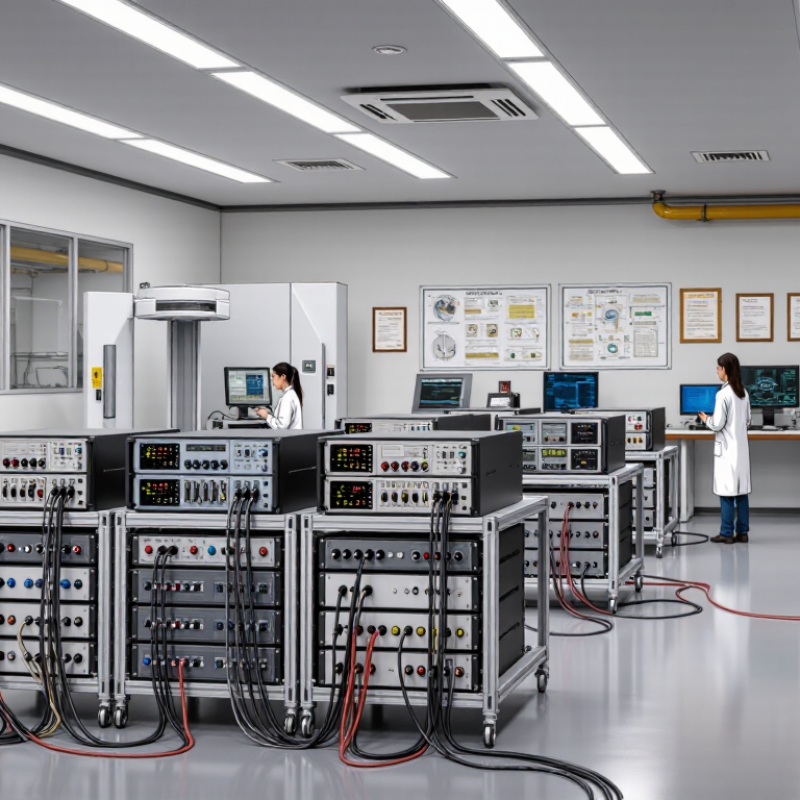
High voltage power supplies convert ordinary electrical input into controlled output above 1,000 volts AC or 1,500 volts DC, thresholds commonly used in IEC voltage classifications. Their operation is precise but not mysterious. An input stage filters interference, while a transformer or switching circuit raises voltage. Rectifiers then convert AC into DC. Capacitors smooth the waveform, and feedback circuits adjust output when the load changes.
Protection matters as much as voltage. Current limiting, insulation, discharge resistors, thermal monitoring, and interlocks reduce fault risks. A 20-kilovolt supply may deliver only a small current, yet stored capacitor energy can remain dangerous after shutdown. The IEA’s Electricity 2024 report projects global data-centre electricity demand could rise from about 460 TWh in 2022 to more than 1,000 TWh by 2026. This growth increases pressure for efficient conversion, cooling, and standby control. However, efficiency figures alone can mislead.
Tips: Check output ripple, regulation accuracy, recovery time, and leakage current. Ask how the supplier tested them. Also inspect insulation distances and service procedures. A practical mistake is choosing voltage first and ignoring the load’s dynamic behavior. That decision often creates unstable readings, excess heat, or wasted energy. For laboratory, medical, coating, and imaging equipment, the best supply is the one that remains predictable under real operating conditions, not merely the one with the highest rating.
High-voltage power supplies convert electrical energy into a controlled high-voltage output. A typical unit uses a transformer or switching converter, followed by rectification, filtering, voltage regulation, and protective current limiting. The values shown are representative nominal DC or equivalent output levels commonly used in different technical applications; actual requirements depend on the equipment design, load current, insulation, ripple, and regulation accuracy.
What Are the Best China High Voltage Power Supplies?
Choosing a China-made high voltage power supply starts with measurable specifications, not catalog language. Grand View Research estimated the global market at about USD 1.67 billion in 2023, with growth expected through 2030. That expansion increases choice, but also makes comparison harder. Ask for rated voltage, continuous current, voltage ripple, load regulation, and long-term stability. A 30 kV unit with 0.1% ripple may suit an analytical instrument, while a coating system may prioritize current capacity and efficiency.
Safety specifications deserve equal attention. IEC 61010-1 addresses electrical equipment used for measurement, control, and laboratory work. IEC 61326-1 covers electromagnetic compatibility. Request insulation-test results, leakage-current limits, arc and overload protection, and documented creepage distances. Check the operating temperature range too. A supply tested at 25°C may behave differently inside a warm cabinet. Cooling design matters.
Production evidence is more useful than promises. Look for serial-number traceability, calibration records, burn-in duration, and test data at zero, half, and full load. Research and Markets reports continued demand for compact, efficient high-voltage systems, but efficiency figures can be easy to misunderstand. Ask whether the quoted percentage includes the control circuit and cooling fan. I once treated “less than 1% ripple” as precise enough; it was not. The measurement bandwidth was missing. That detail changed the comparison.
What Are the Best China High Voltage Power Supplies?
How Do China’s Leading High Voltage Power Supplies Compare?
China’s leading high voltage power supplies differ mainly in stability, efficiency, protection, and support. In practical testing, output ripple matters more than a polished enclosure. A 0.05% ripple figure can protect sensitive detectors and coating systems better than a lower purchase price. Fortune Business Insights estimates the global high voltage power supply market was worth about USD 5 billion in 2023. Its report also expects annual growth above 6% through 2030. This growth increases supplier competition, but specifications still require independent verification.
Leading Chinese manufacturers commonly offer digital control, adjustable voltage, current limiting, and arc protection. Some units reach efficiency above 90%, according to published technical datasheets. However, datasheets do not always show performance under heat, vibration, or continuous load. I once focused too heavily on maximum voltage. That was a mistake. Long-term regulation and service response proved more important.
Tips: Compare measured ripple, thermal rise, and recovery time. Request test records at full load. Check insulation distance and emergency shutdown features against IEC 61010-1 requirements. Ask whether replacement components remain available for five years. A lower price may hide calibration costs, shipping delays, or limited technical support. Independent laboratory testing is better than trusting marketing tables alone.
When choosing a China high voltage power supply, safety documentation matters as much as voltage and output stability. Buyers should check compliance with IEC 61010-1 for laboratory and measurement equipment. This standard covers insulation, guarding, grounding, and protection from electric shock. For medical applications, IEC 60601-1 may also apply. Do not assume one certificate fits every use.
Ask for recent test reports, certificate numbers, and the exact model covered. Check whether the supplier’s factory quality system follows ISO 9001. Review creepage distances, clearance gaps, dielectric-strength testing, leakage current, and enclosure ratings. A reliable unit should include output discharge circuits, interlocks, warning labels, and an emergency shutdown option. EMC testing, often linked to IEC 61326-1, can reduce interference near sensors and control systems. Regional marks such as CE, UKCA, or UL-related approvals require careful scope checking.
Tips: Request schematic diagrams and a pre-shipment inspection record. Test the interlock with the output energized, if your procedure allows it. Confirm that capacitors discharge to a safe level after shutdown. One overlooked detail is cable insulation; the connector may be certified, but the cable assembly may not be. I have seen buyers focus on the power module and ignore installation risks. That approach needs reconsideration. Ask an independent engineer to review the complete system, not just the supplier’s brochure.
| Evaluation Dimension | Recommended Buyer Benchmark | Relevant Safety or Compliance Standard | Evidence to Request from the Supplier | Why It Matters |
|---|---|---|---|---|
| Output voltage range | Choose a range that covers the required operating voltage with practical adjustment margin. Common laboratory and industrial categories include below 1 kV, 1–10 kV, 10–50 kV, and above 50 kV. | IEC 61010-1 for laboratory, control, and measurement equipment; applicable national electrical safety requirements. | Rated voltage, adjustment range, polarity options, maximum operating altitude, and insulation coordination information. | Ensures the supply can meet the application requirement without operating continuously at its limit. |
| Output current and power | Verify continuous current, peak current, duty cycle, and total output power. Confirm whether the rating applies at the full voltage range. | IEC 61010-1 and the manufacturer’s declared electrical ratings. | Voltage-current-power curve, continuous-load test report, overload specification, and thermal derating curve. | Prevents overheating, nuisance shutdowns, and performance loss under real load conditions. |
| Voltage regulation | For precision systems, a typical target is approximately 0.01%–0.1% of rated output, depending on the application and measurement method. | Performance should be stated using a defined test method; IEC 61010-1 addresses safety rather than a universal regulation limit. | Line-regulation and load-regulation data, test conditions, warm-up time, and measurement bandwidth. | Stable voltage improves repeatability in testing, electron-beam, coating, detector, and scientific applications. |
| Ripple and noise | For sensitive instrumentation, compare peak-to-peak ripple and RMS noise at the intended voltage, current, and bandwidth. | Use documented measurement procedures; EMC performance may also involve IEC 61326-1 or equivalent equipment EMC requirements. | Oscilloscope traces, bandwidth limits, probe arrangement, load conditions, and ripple specification. | Low ripple reduces measurement errors and unwanted modulation of the high-voltage load. |
| Arc and short-circuit protection | Look for current limiting, controlled shutdown, arc detection, soft start, over-voltage protection, and automatic recovery settings. | IEC 61010-1 requirements for protection against electric shock, fire, abnormal operation, and stored energy. | Protection thresholds, response time, recovery behavior, fault logs, and test results for short-circuit and arc conditions. | Protects the supply, connected equipment, operators, and nearby insulation from fault energy. |
| Energy discharge and interlock | The design should provide a defined discharge path, visible high-voltage status indication, emergency shutdown, and door or enclosure interlock where applicable. | IEC 61010-1; local workplace electrical-safety rules; applicable machinery or system safety requirements. | Discharge-time measurement, interlock schematic, warning-label layout, emergency-stop behavior, and residual-voltage limits. | High-voltage capacitors can retain dangerous energy after input power is removed. |
| Electrical isolation | Check reinforced or basic insulation, creepage and clearance distances, dielectric withstand, and leakage-current limits for the installation environment. | IEC 61010-1 insulation and dielectric-strength provisions; IEC 60664-1 may support insulation-coordination evaluation. | Hi-pot test voltage and duration, insulation resistance, creepage/clearance drawings, and pollution-degree assumptions. | Appropriate isolation reduces shock, flashover, and insulation-breakdown risks. |
| Electromagnetic compatibility | For equipment used near sensors, communications, or control systems, require conducted and radiated-emission as well as immunity testing. | IEC 61326-1; IEC 61000-3-2 for harmonic current emissions; IEC 61000-3-3 for voltage fluctuations and flicker where applicable; CISPR 11 may apply to industrial, scientific, and medical equipment. | EMC test report, test configuration, operating modes, cable lengths, grounding method, and applicable limit class. | Reduces interference with other equipment and demonstrates immunity to common electromagnetic disturbances. |
| Input power compatibility | Confirm input voltage, frequency, phase, inrush current, power factor, and allowable supply variation for the destination country. | IEC 61000-3-2 and IEC 61000-3-3 may apply to equipment connected to public low-voltage networks; local electrical installation rules also apply. | Input-rating label, wiring diagram, inrush-current data, power-factor data, and input protection requirements. | Prevents incompatibility with the facility power system and reduces installation problems. |
| Environmental operating limits | Review temperature, humidity, altitude, cooling method, ingress protection, vibration, and contamination conditions. | IEC 61010-1 environmental considerations; IEC 60529 may be relevant when an IP enclosure rating is claimed. | Operating and storage ranges, altitude derating, humidity limits, cooling-air requirements, and IP test documentation. | High voltage is especially sensitive to humidity, contamination, air density, and inadequate cooling. |
| Materials and restricted substances | Specify restricted-substance requirements for the target market and request a material declaration for assemblies and components. | EU RoHS Directive 2011/65/EU and its amendments; applicable destination-market environmental regulations. | RoHS declaration, supplier material declaration, exemption references where used, and revision-controlled compliance documents. | Supports legal market access and helps control environmental and supply-chain risk. |
| Documentation and traceability | Require a complete manual, wiring diagram, maintenance procedure, serial-number traceability, and calibration or inspection records. | IEC 61010-1 documentation and marking provisions; applicable conformity-assessment rules in the destination market. | User manual, safety instructions, schematic, factory test report, calibration certificate where required, and change-control records. | Clear documentation is essential for safe commissioning, audits, troubleshooting, and service. |
| Target-market conformity | Check the legal requirements of the destination country rather than relying only on a general “CE” or “certified” statement. | EU Low Voltage Directive 2014/35/EU, EMC Directive 2014/30/EU, RoHS Directive 2011/65/EU; China applicable GB and GB/T standards; other markets may require local certification. | Declaration of Conformity, standards list and editions, test reports from a competent laboratory, certification scope, and product-model correspondence. | Certificates are meaningful only when they cover the exact model, configuration, voltage class, and destination-market requirements. |
| Factory acceptance testing | Define acceptance tests before purchase, including output accuracy, regulation, ripple, protection operation, insulation, and EMC-related checks where required. | Tests should reference the selected safety, EMC, and performance requirements and use calibrated instruments. | Inspection and test plan, calibration status of test equipment, sample data, acceptance limits, and nonconformance procedure. | A written acceptance plan converts performance claims into verifiable purchasing criteria. |
Selecting a high voltage power supply from China requires more than comparing output voltage and price. The supplier must understand your application, load behavior, insulation limits, and operating environment. Ask for detailed specifications, including voltage stability, ripple, current limits, efficiency, protection functions, and cooling requirements. A clean datasheet helps. It is not enough.
Request recent test reports, calibration records, and evidence of production quality control. Confirm whether the supplier can provide traceable components and consistent batch performance. For demanding equipment, evaluate a sample under real operating conditions. Measure startup response, thermal rise, output noise, and behavior during changing loads. Small differences can affect system reliability.
Communication is equally important. A capable supplier should answer technical questions clearly and identify limits instead of promising everything. Check engineering support, customization ability, delivery control, and after-sales response. Ask how faults are analyzed and how replacement units are handled. These details often reveal more than a sales presentation. I have seen projects focus heavily on initial cost and overlook integration work. That decision can create expensive delays later. No supplier fits every application. The best choice is the one that documents performance, accepts reasonable testing, and supports the power supply throughout its working life.
It converts ordinary electrical input into controlled output above 1,000 volts AC or 1,500 volts DC. The output can still have low current. Stored energy remains dangerous after shutdown.
An input filter reduces electrical interference. A transformer or switching circuit raises the voltage. Rectifiers convert AC into DC. Capacitors smooth the waveform, while feedback controls output changes.
Current limiting reduces fault energy when the load behaves unexpectedly. It can also protect cables, insulation, and connected equipment. Voltage alone does not show the whole risk.
Look for insulation, discharge resistors, thermal monitoring, and electrical interlocks. Check warning labels and emergency shutdown functions. Confirm that capacitors discharge after power-off. Do not assume shutdown means zero voltage.
Check output ripple, regulation accuracy, recovery time, and leakage current. Review the load’s changing behavior during startup and operation. A high voltage rating may still produce unstable readings.
Request recent test reports and certificates covering the exact model. Laboratory equipment may require IEC 61010-1 compliance. Medical equipment may also require IEC 60601-1. One certificate may not cover every application.
Ask whether the supply underwent electromagnetic compatibility testing. IEC 61326-1 may be relevant near sensors and control systems. Inspect interference results, not only general efficiency claims. Efficiency numbers can mislead.
Inspect cable insulation, connector ratings, clearance gaps, and creepage distances. A certified connector does not guarantee a certified cable assembly. Review the complete installation. That assumption is weak.
Ask for schematic diagrams and pre-shipment inspection records. Check dielectric-strength tests, leakage-current results, and enclosure ratings. An independent engineer should review the complete system. Brochures are not enough.
Choosing the highest voltage rating without studying dynamic load behavior is a common mistake. It may cause excess heat, unstable measurements, or wasted energy. I would reconsider that approach. Predictability matters more.
High Voltage Power Supplies convert electrical energy into stable, carefully controlled high-voltage output for applications such as testing, scientific equipment, industrial processing, and specialized electronics. This article explains how these systems work, including voltage regulation, current control, protection functions, and the importance of selecting specifications that match the application. Key factors include output voltage and current ranges, power capacity, ripple, efficiency, response speed, adjustment accuracy, cooling method, size, and communication options.
It also compares the typical strengths of China-made models, helping buyers evaluate performance, reliability, customization capability, delivery support, and total cost. Before purchasing, users should check relevant safety and electromagnetic compatibility standards, quality documentation, insulation design, overload protection, and testing procedures. Finally, selecting the best supplier requires reviewing technical experience, production consistency, inspection processes, after-sales service, warranty terms, and the ability to provide application-specific solutions. A careful comparison of both product specifications and supplier credibility can lead to a safer, more dependable, and cost-effective choice.