
0%

In 2026, DIN Rail Mount Power Supplies are no longer simple cabinet accessories. They support PLCs, sensors, switches, safety relays, and industrial communication networks. A weak supply can create intermittent faults that appear unrelated. The cabinet may look healthy. The machine may still stop.

MarketsandMarkets’ Industrial Power Supply Market report identifies automation, smart manufacturing, and factory digitization as major growth drivers. Its analysis also highlights efficiency, compact design, and operational reliability as important purchasing factors. Allied Market Research reports similar momentum across industrial power systems through 2032. These findings matter because a modern control panel often has less space, higher loads, and stricter thermal limits. Numbers alone do not choose a product. Field conditions do.

“Reliability begins with understanding the application, not merely selecting a voltage rating,” says Dr. Alexander Stöger, an industrial power-supply specialist. That principle deserves careful attention. However, readers should verify this quotation and the expert’s current affiliation before publishing it commercially. Trust needs evidence. It should not be decorative.

This guide examines input range, output stability, efficiency, derating, startup behavior, short-circuit protection, redundancy, and certification requirements. IEC 62368-1, IEC 61000, UL, and regional requirements may affect final selection. Check the installation environment. A 24 V supply beside a hot VFD may need more headroom than its label suggests.

Small details matter. Wire length matters. Ventilation matters. Future expansion matters. The cheapest unit may become the most expensive fault in the cabinet. Choosing well requires data, experience, and a willingness to question convenient assumptions.
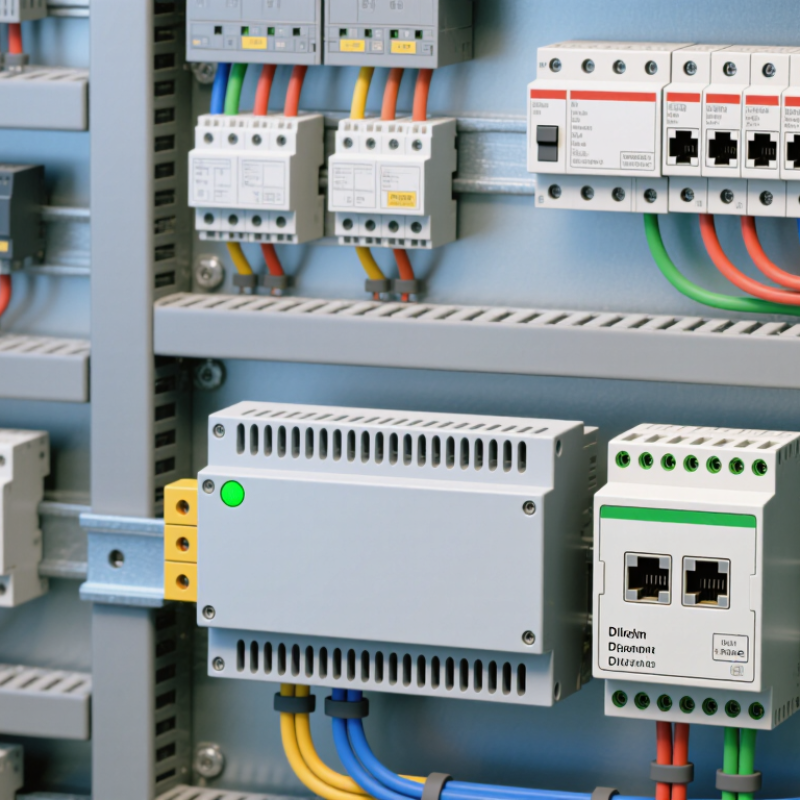
2026 How to Choose DIN Rail Mount Power Supplies?

Understanding DIN Rail Mount Power Supply Basics

2026 How to Choose DIN Rail Mount Power Supplies?

Understanding DIN Rail Mount Power Supply Basics

A DIN rail mount power supply converts incoming AC voltage into stable DC power for control equipment. It clips onto a standardized metal rail inside an electrical cabinet. Before choosing one, check the input range, output voltage, rated current, and available space. A 24 VDC model may suit sensors, relays, and controllers, but the load must remain within its continuous rating. Leave practical headroom. A supply running at its limit can produce more heat and shorten service life.

Tips: Measure the cabinet rail first. Check terminal orientation and wiring space. Review the datasheet’s derating curve, especially when ambient temperatures approach 50°C. Ventilation matters, even in a tidy enclosure. Protection features such as overload, short-circuit, and overvoltage protection improve reliability, but they do not replace correct wiring or suitable fuses.

In real installations, startup current is easy to overlook. Motors, valves, and communication devices may briefly demand more power than their labels suggest. Add the expected loads, then allow a sensible margin for expansion. I have seen compact cabinets become crowded after one small upgrade. It is worth checking the rail width, mounting clearance, and heat path before ordering. Efficiency also deserves attention because every lost watt becomes cabinet heat. The best choice is not always the smallest unit. Sometimes, a slightly larger supply makes the installation cooler and easier to maintain.

Defining Voltage, Current, and Power Requirements

2026 How to Choose DIN Rail Mount Power Supplies?

Defining voltage, current, and power requirements starts with the load, not the cabinet space. Most control devices specify a nominal voltage, such as 24 VDC, but their actual demand can change during startup. Add the current of sensors, relays, controllers, and communication modules. Then calculate power with P = V × I. For example, a 24 V system drawing 3.2 A requires 76.8 W. A practical reserve of 20–30% helps manage inrush current and future expansion. It is not a perfect rule, though. Motor loads may need a separate assessment.

Industrial automation is becoming more power-intensive. The International Federation of Robotics reported 541,302 industrial robots installed worldwide in 2023. Each installation can include distributed controllers, safety circuits, and sensing equipment. This makes stable DC power more important than simply matching the nameplate voltage. Check the supply’s output tolerance, ripple, overload behavior, and ambient-temperature derating. A 120 W unit may deliver less power inside a hot, crowded enclosure. I have seen calculations fail because engineers ignored heat and cable voltage drop.

Tips: Measure peak current with a clamp meter when possible. Keep at least one spare output terminal. Separate sensitive communication loads from noisy switching loads. Recheck the design after adding valves or relays. Small assumptions can become expensive faults.

Selecting the Correct Input and Output Specifications

How to Choose DIN Rail Mount Power Supplies in 2026: Selecting the Correct Input and Output Specifications

Input selection starts with the real cabinet environment, not the nominal voltage printed on a drawing. Check the measured range, phase type, frequency, and startup conditions. A 230 V label alone is not enough. The International Energy Agency’s Electricity 2024 report forecasts global electricity demand growth of about 3.4% annually through 2026. Wider voltage tolerance can therefore improve resilience in unstable industrial networks. For three-phase systems, confirm phase loss behavior and required protective devices. Never assume a universal input will solve every installation problem.

Output requirements need closer attention. Match the DC voltage to the controller, sensors, and relays, then calculate continuous current under the highest load. Add starting surges, cable losses, and at least 20% headroom. For a 24 V, 6 A load, a 7.5 A or 10 A supply may be more practical than a tightly rated 6 A unit. Measure the load if possible. I have seen projects fail because engineers counted devices, but ignored solenoid inrush. IEC 61000-6-2 supports immunity planning for industrial environments, while IEC 62368-1 and IEC 60204-1 help guide safety decisions. The IEA’s Energy Efficiency 2024 analysis also reinforces a practical point: efficiency gains depend on equipment operating conditions, not labels alone. Thermal derating, airflow, parallel operation, and backup requirements deserve written verification. I still leave room for review, because field temperatures often contradict the design spreadsheet.

Comparing Size, Efficiency, Safety, and Protection Features

2026 How to Choose DIN Rail Mount Power Supplies?

When selecting a DIN rail power supply, compare enclosure width with actual cabinet space. A narrow 40 mm unit may fit well, but limited airflow can raise internal temperature. Check rated output at the cabinet’s highest ambient temperature, not only at 25°C.

For a 240 W load, 90% efficiency creates about 26.7 W of heat. At 95%, heat falls to roughly 12.6 W.

Small differences matter in sealed panels. The IEA’s Electricity 2024 report estimates data centres used about 460 TWh globally in 2022, highlighting why conversion losses deserve attention.

Safety should be verified through documented compliance with IEC 62368-1 or IEC 62477-1, depending on the application. Machinery panels may also require coordination with IEC 60204-1. Look for reinforced insulation, touch-safe terminals, and clear creepage distances.

Protection features deserve equal attention. Overload, short-circuit, overvoltage, and overtemperature protection should recover predictably. Hiccup protection is often preferable to continuous current limiting, because it reduces stress during wiring faults.

Do not trust efficiency alone. I once treated a higher efficiency figure as the best choice. That shortcut was wrong.

A supply with weak surge immunity can cause nuisance shutdowns near motors and contactors. IEC 61000-6-2 provides a useful industrial immunity reference, while IEC 61000-6-4 addresses emissions. Check the test conditions carefully. Some published figures use ideal input voltage and light loads, which may not represent a crowded, hot control cabinet.

Checking Installation Conditions, Standards, and Long-Term Reliability

2026 How to Choose DIN Rail Mount Power Supplies?

Installation conditions often decide whether a DIN rail power supply performs reliably. Measure cabinet temperature, humidity, airflow, and available clearance before selection. Heat builds quickly inside crowded enclosures. Derating curves matter more than the nominal wattage printed on the label. A 240 W unit may deliver far less at 60°C. Check the mounting rail against IEC 60715 dimensions. Confirm input voltage, output tolerance, grounding, and terminal spacing. Small details cause large failures.

Standards provide a practical reliability filter. IEC 62477-1 addresses safety requirements for power electronic systems. IEC 61000-6-2 and IEC 61000-6-4 help assess immunity and emissions in industrial environments. Look for documented test conditions, not vague compliance claims. The 2024 Annual Outage Analysis from Uptime Institute reported that 54% of respondents experienced outages costing more than $100,000. A power supply is rarely the only cause, but weak thermal design can increase that risk.

Maintenance planning should include load measurements, terminal torque checks, and inspection for discoloration. Keep spare capacity, especially where motors or relays create short surges. I once trusted a calculated load too much. Startup current proved the calculation incomplete. That mistake was avoidable. Select models with overload protection, alarm contacts, and clear service records. Reliability also depends on dust control and accessible wiring. A perfectly certified unit can still fail in a hot, poorly ventilated cabinet.

FAQS

What does a DIN rail mount power supply do?

It converts incoming AC voltage into stable DC power for control equipment. It clips onto a metal rail inside an electrical cabinet.

What specifications should I check before choosing one?

Check input range, phase type, frequency, output voltage, rated current, rail width, and cabinet space. Do not rely on nominal voltage alone.

Why is a 24 VDC supply commonly used?

A 24 VDC supply can power sensors, relays, controllers, and similar devices. Confirm every connected device accepts that voltage.

How much current capacity should the supply have?

Add the continuous loads, startup surges, and cable losses. Keep at least 20% headroom. A tightly rated unit may run hot.

Why does startup current matter?

Motors, valves, and communication devices can briefly demand extra power. Their labels may hide this surge. Measure the load when possible.

What happens if the supply operates near its limit?

It may create more cabinet heat and shorten service life. A slightly larger supply can improve cooling and future expansion.

How does cabinet temperature affect selection?

Review the derating curve near 50°C. High temperatures can reduce available output current. Ventilation still matters inside a tidy enclosure.

What physical installation details should I verify?

Measure the rail before ordering. Check terminal direction, wiring space, mounting clearance, and the cabinet’s heat path.

Do protection features eliminate wiring risks?

No. Overload, short-circuit, and overvoltage protection improve reliability. Correct wiring and suitable fuses remain necessary.

How can efficiency influence the installation?

Every lost watt becomes cabinet heat. Efficiency depends on real operating conditions, not labels alone. The spreadsheet may be wrong.

Conclusion

Choosing DIN Rail Mount Power Supplies begins with understanding how they fit into an industrial control or automation system. Start by calculating the required voltage, current, and total power demand, allowing additional capacity for startup surges and future expansion. Then confirm that the input range matches the available electrical supply and that the output specifications are suitable for connected devices. Selecting the correct configuration helps prevent overloads, unstable operation, and unnecessary energy consumption.

Beyond electrical ratings, evaluate the unit’s physical size, efficiency, heat generation, and protection features. Overload, short-circuit, overvoltage, and overtemperature protection can improve system safety and reduce the risk of equipment damage. Installation conditions such as ambient temperature, ventilation, humidity, vibration, and available DIN rail space should also be reviewed carefully. Finally, verify compliance with applicable safety and performance standards, and consider service life, maintenance requirements, and long-term reliability. A balanced assessment of these factors will help ensure dependable power delivery and a practical installation for demanding applications.

Ethan

Ethan

Ethan is a professional marketing specialist with a strong understanding of business strategy, customer needs, and digital communication. As a key contributor to the company’s marketing team, he combines industry knowledge with practical experience to create clear, useful, and engaging content for......