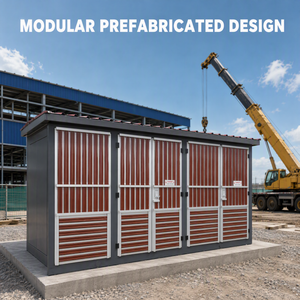

Explore our qualified engineering inventory. Every module complies with EU Low Voltage (LVD) and Electromagnetic Compatibility (EMC) Directives.
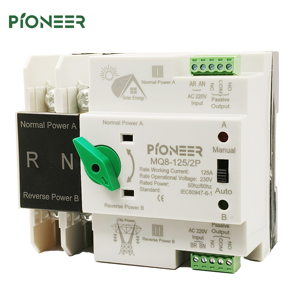
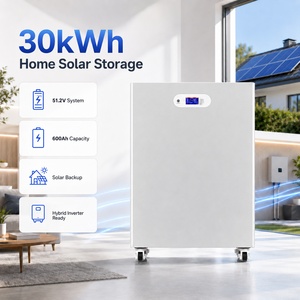
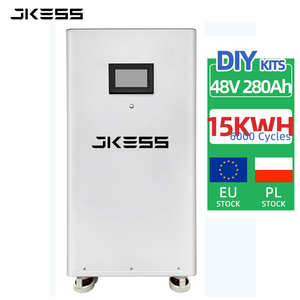
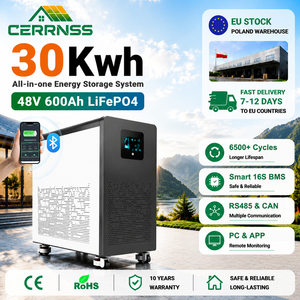
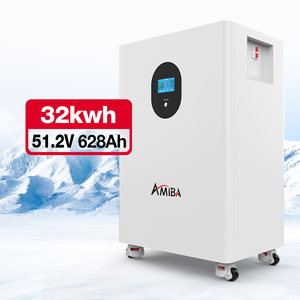
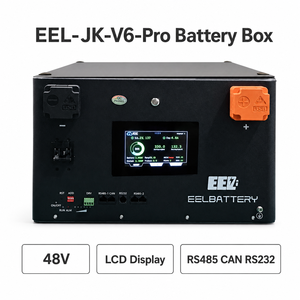
In modern industrial electrification, high-voltage switchgear installations, data storage centers, and microgrid deployments, Auxiliary Power Supply (APS) units serve as the indispensable backbone. Unlike primary energy conversion systems, auxiliary power systems provide continuous, highly regulated control-plane power, protection circuitry energization, black-start activation, and switchgear operation during main-grid dropouts or catastrophic fault events.
As enterprise power requirements shift toward decentralized green grids and electrified switchyards, specifying CE-marked auxiliary power systems has evolved from a simple regulatory checkbox to a rigorous engineering process. EU directives—specifically the Low Voltage Directive (LVD) 2014/35/EU and the Electromagnetic Compatibility Directive (EMC) 2014/30/EU—mandate strict operational thresholds for galvanic isolation, harmonic mitigation, dynamic voltage transient suppression, and thermal dissipation control under extreme ambient loads.
Legacy auxiliary power setups relied on oversized, uncontrolled transformer-rectifier sets paired with passive lead-acid banks. Modern enterprise infrastructure demands modular, high-density switching architectures integrated with active Lithium Iron Phosphate (LiFePO4) management networks, digital Automatic Transfer Switches (ATS), and real-time remote telemetry via IEC 61850 protocol standards.
Consult an Application EngineerGlobal procurement teams navigating international bids must ensure that auxiliary power sub-assemblies carry fully verified Conformité Européenne (CE) credentials supported by a traceable Technical File (TF). The regulatory matrix governing top-tier auxiliary manufacturers encompasses three primary pillars:
Choosing the correct auxiliary power topology depends heavily on load sensitivity, transient switching tolerance, physical space constraints, and total cost of ownership (TCO). The data grid below outlines key parameters for enterprise system architects:
| System Architecture | Typical Efficiency | Galvanic Isolation | CE Directives Applied | Optimal Enterprise Use-Case |
|---|---|---|---|---|
| Prefabricated Outdoor Substation APU | 94.5% - 97.0% | Reinforced (High Voltage Transformer) | EN 62271-200, LVD 2014/35/EU | 10kV/35kV Utility Grid Distribution & Outdoor Substations |
| Dual-Power Automatic Transfer Switch (ATS) | 99.2% | Physical Air-Gap Isolation | EN 60947-6-1, EMC 2014/30/EU | Redundant Mains-to-Generator Control Systems |
| Rack-Mounted LiFePO4 ESS Auxiliary Bank | 98.0% | Integrated Solid-State BMS | EN 62619, UN38.3, CE-LVD | Data Centers, Telecom Hubs & Microgrid Black-Start |
| Linear Regulated Control Power Supply | 65.0% - 75.0% | Ultra-Low Noise Isolation | EN 61558-2-6, EN 61000-6-2 | Sensitive Instrumentation & Medical Avionics Arrays |
As global energy infrastructure transitions toward smart-grid digitalization and microgrid integration, enterprise buyers must align their procurement strategies with four key forward-looking vectors:
Auxiliary battery systems now feature native Modbus-TCP, CANbus, and SNMP interfaces. AI-driven predictive health metrics detect cell imbalance before capacity degradation leads to breaker failure.
Moving away from single large power supplies, enterprise designs utilize hot-swappable, N+1 redundant power modules to ensure zero-downtime maintenance cycles in critical facilities.
Sub-millisecond transfer times offered by solid-state Automatic Transfer Switches prevent control-plane resets during utility grid phase shifts or sudden voltage sags.
The manufacturing landscape for auxiliary systems has changed dramatically over the last decade. High-efficiency Wide Bandgap (WBG) semiconductors, such as Gallium Nitride (GaN) and Silicon Carbide (SiC), are replacing standard silicon MOSFETs within switching rectifiers. This technology elevates power density by over 300% while drastically reducing thermal dissipation requirements.
Simultaneously, secondary battery storage attached to auxiliary power circuits has transitioned almost exclusively to chemical-stable Lithium Iron Phosphate (LiFePO4). With a thermal runaway threshold exceeding 270°C and cycle durability up to 6,000+ deep discharge operations, LiFePO4 packs minimize operational expense (OPEX) for regional utilities and enterprise plant managers alike.
Built upon strict ISO 9001:2015 quality controls, USA/Global fabrication facilities, and fast-track fulfillment protocols.
Every auxiliary power chassis is individually serialized, tested under full thermal load, and certified with complete factory acceptance test (FAT) documentation.
Standard engineering configurations are assembled fresh to order and dispatched within three business days—eliminating aging shelf inventory risks.
We stand behind our metal-enclosed linear, switching, and substation auxiliary systems with a robust 5-year replacement guarantee for enterprise peace of mind.
Full compliance with trade agreement acts (TAA), providing qualified documentation for defense, municipal utility, and federal enterprise tenders.
Seamless international shipping hubs including EU duty-paid warehousing, ensuring rapid customs clearance and low door-to-door transit timelines.
No automated phone queues or frontline reps. Speak directly with senior power supply designers to solve custom topology and isolation challenges.
Get immediate clarity on certification compliance, testing metrics, delivery schedules, and technical modifications.
CE marking confirms that an auxiliary system satisfies strict European directives for safety (LVD) and electromagnetic interference (EMC). This guarantees that high-voltage switching spikes from nearby breakers will not disrupt control electronics or lead to uncommanded switchgear tripping.
While standard catalog configurations build and ship within 3 business days, custom-engineered rack-mount systems or prefabricated compact substations typically ship within 9 to 15 business days depending on FAT testing parameters.
Yes. Premium LiFePO4 cells feature an inherent thermal breakdown threshold above 270°C. Coupled with intelligent active BMS monitoring, integrated battery cutoffs prevent thermal runaway even under high operational ambient temperatures.
Absolutely. Modern CE certified auxiliary units support standard industrial fieldbus interfaces including Modbus RTU/TCP, CANbus, Ethernet/IP, and IEC 61850 substation automation protocols for seamless remote monitoring.
Every shipment includes a signed Certificate of Conformance (RoHS, CE-LVD, CE-EMC), complete electrical test reports, schematic CAD files, and a comprehensive 5-year warranty document for metal-enclosed modules.
You can click the "Get a Quote" live chat button anywhere on this page to submit your load specifications directly to our engineering desk for immediate custom configuration review.
Connect with our senior engineering team for tailored quotes, technical drawings, FAT documentation, or volume export scheduling.