
Discover our range of CE certified constant current power modules, high-voltage substations, automated transfer switches, and Lithium Iron Phosphate (LiFePO4) energy storage solutions.
In modern industrial electronics, renewable energy infrastructure, and mission-critical power distribution, maintaining steady-state electrical parameters under dynamic load profiles is paramount. A CE Certified Constant Current Power Supply operates by automatically adjusting output voltage to maintain a fixed, predictable amperage across varying impedance conditions. Unlike conventional Constant Voltage (CV) sources that maintain static voltage potentials regardless of load fluctuations, Constant Current (CC) topologies are tailored for non-linear electrical loads, chemical energy storage dynamics, industrial electrolysis, electroplating, semiconductor processing, and advanced battery charging profiles.
Core Technical Takeaway: Modern CE compliance under Low Voltage Directive (LVD 2014/35/EU) and Electromagnetic Compatibility (EMC 2014/30/EU) requires constant current architectures to implement fast-response closed-loop feedback, galvanic isolation thresholds exceeding 3kV AC, and Total Harmonic Distortion (THD) suppression below 5% under wide-input voltage ranges.
The fundamental mechanism behind a high-reliability constant current source relies on precise shunt current sensing combined with error amplification within a high-bandwidth Pulse-Width Modulation (PWM) or resonant LLC converter stage. When load resistance drops, the control loop dynamically decreases output voltage; conversely, when load resistance spikes, output voltage scales upward within specified compliance voltage limits (Vcompliance).
Advanced topology implementations utilize operational amplifiers calibrated to low thermal drift thresholds (< 10 ppm/°C) to prevent thermal runaway in continuous-duty applications. In energy storage integrations—such as 48V/51.2V LiFePO4 rack systems utilizing 16S BMS configurations (e.g., JK BMS or Daly BMS)—constant current modes govern the bulk charging phase (CC stage) until individual cell voltages reach equilibrium threshold parameters, preventing localized micro-shorts and thermal stress.
Fully isolated primary-to-secondary topology rated for 3000V AC isolation barrier, guarding sensitive downstream electronics against ground loops and grid voltage spikes.
Sub-millisecond loop response time (< 200 µs) ensuring instantaneous output adjustment during step-load transients, protecting LED arrays, lasers, and battery cells.
Built-in multi-stage EMI filters compliant with EN 55032 Class B emission standards and EN 61000-4 series surge and electrostatic discharge immunity.
When selecting constant current power modules or integrated power management substations, electrical engineers must evaluate topological trade-offs regarding efficiency, noise ripple, thermal performance, and compliance standards. The table below delineates performance metrics across core industrial constant-current power categories:
| Topology Category | Efficiency Range | Compliance Voltage | Current Regulation Precision | Primary Industrial Application | CE Directives Met |
|---|---|---|---|---|---|
| Linear Regulated CC | 45% – 65% | 0 – 50 Vdc | ± 0.05% | Precision Avionics, Medical Sensors, Audio | LVD, RoHS, EN 61010-1 |
| Switch-Mode CC (Resonant LLC) | 90% – 96.5% | 15 – 500 Vdc | ± 0.5% | LiFePO4 Solar ESS, EV Charging, Process Automation | LVD 2014/35/EU, EMC 2014/30/EU |
| High-Voltage Industrial CC | 88% – 94% | Up to 30 kVdc | ± 0.1% | Electrostatic Precipitators, Semiconductor Plasma | LVD, EN 60950-1, CE Mark |
| Substation Auxiliary CC System | 92% – 95% | 110 – 220 Vdc (Station Bus) | ± 1.0% | 10kV/35kV Prefabricated Outdoor Substations | EN 62271-200, CE, IEC 60255 |
Global procurement metrics indicate a structural shift in how power conversion hardware is specified across OEM and utility sectors. Procurement officers and engineering managers are no longer sourcing standalone power bricks; they demand modular, software-configurable energy nodes capable of seamlessly bridging grid infrastructure with localized storage.
Silicon Carbide (SiC) MOSFETs and Gallium Nitride (GaN) high-electron-mobility transistors (HEMTs) are replacing traditional Silicon IGBTs in next-generation Constant Current power architectures. WBG power devices enable switching frequencies in excess of 500 kHz while maintaining thermal dissipation figures at historically low levels. This yields a volume reduction of up to 40% in magnetic components (chokes, transformers) and heat sink mass, driving higher power density in 19-inch rack-mount designs and compact outdoor box substations.
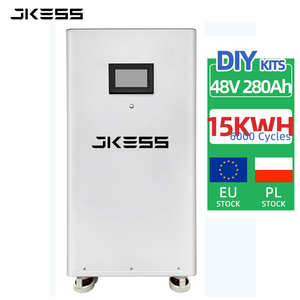
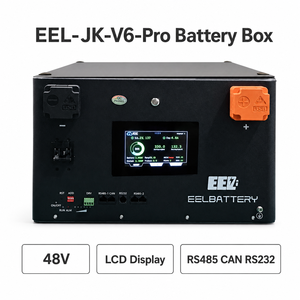
Legacy analog potentiometer-adjusted constant current supplies are rapidly giving way to digital control loops equipped with PMBus, CANbus (J1939), and RS485 Modbus communications. Modern lithium battery racks (e.g., 51.2V 280Ah / 314Ah LiFePO4 DIY boxes) incorporate intelligent Bluetooth and CAN-enabled Battery Management Systems. These setups continuously transmit real-time internal resistance, state-of-charge (SoC), thermal telemetry, and cell balance data directly to the constant-current charger to dynamically throttle current levels for maximized battery longevity.
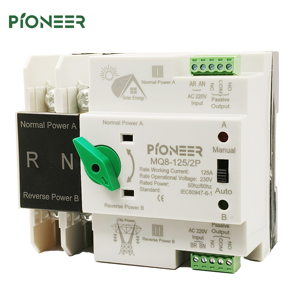
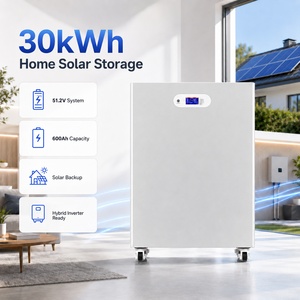
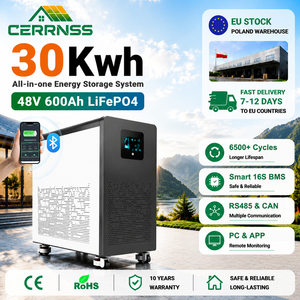
As commercial facilities transition toward decentralized microgrids, constant current power delivery systems play a critical role in decoupling intermittent solar PV input from downstream industrial loads. High-capacity floor-standing LFP energy wall systems (48V 600Ah / 30kWh) combined with Automatic Transfer Switches (ATS) ensure seamless switching between grid-tied constant current charging and off-grid emergency power backup within milliseconds.
Backed by over six decades of continuous power engineering excellence, ISO 9001:2015 certification, and full CE compliance, we deliver power hardware configured precisely to your program specifications.
Every constant current power module and substation component is subjected to strict full-load burn-in testing, insulation resistance verification, and high-voltage dielectric withstand testing under verified ISO quality controls.
Our agile manufacturing model guarantees that hundreds of standard regulated, linear, switch-mode, and modular battery box configurations are built to order, tested, and shipped within 3 business days of PO receipt.
Need custom voltage compliance range, multi-channel constant current tracking, rack-mount dimensions, or special outdoor NEMA/IP enclosures? Our engineering team designs complete turnkey assemblies within 9 days.
Eliminate endless automated call trees. When you consult with our team, you speak directly with experienced power system application engineers who assist with thermal calculations, derating curves, and circuit matching.
Technical answers to common engineering and procurement inquiries regarding Constant Current supplies, safety certifications, and customized energy configurations.
A dedicated Constant Current (CC) power supply continuously regulates current output to within tight tolerances (e.g., ±0.1%) regardless of load impedance change, dynamically altering voltage. A Constant Voltage supply with current limiting maintains a fixed voltage up to a maximum current threshold, only entering a fold-back or constant-current mode during fault or overload scenarios. CC supplies are optimized for continuous operation in current-regulated modes with minimal ripple and fast dynamic feedback compensation.
CE Certification verifies compliance with essential European safety and electromagnetic directives. For constant current systems, this encompasses the Low Voltage Directive (LVD 2014/35/EU) via standards such as EN 61010-1 or EN 62368-1, and the EMC Directive (2014/30/EU) covering immunity (EN 61000-4 series) and conducted/radiated emission limits (EN 55032). Certification ensures safe operation, structural electrical isolation, and electromagnetic non-interference in industrial environments.
Unlike voltage sources which readily combine in parallel, Constant Current sources cannot be wired in parallel directly without active control synchronization, as small current setpoint variances cause output current fighting. To increase voltage compliance, constant current supplies can be connected in series provided isolated output limits and insulation voltage ratings are not exceeded. For high-amperage needs, modular master-slave digital interfaces (PMBus/CAN) are required to balance current output active channels.
Lithium Iron Phosphate (LiFePO4) battery chemistry requires a dual-stage Charging Profile: Constant Current (CC) followed by Constant Voltage (CV). During the initial CC phase, the power supply delivers a fixed, high-ampere current to rapidly restore energy without exceeding maximum allowable thermal stress. Once individual cell voltages reach 3.65V (approx. 58.4V total for a 16S 51.2V pack), the internal BMS communicates with the charger to transition into CV mode until current tapers to near zero.
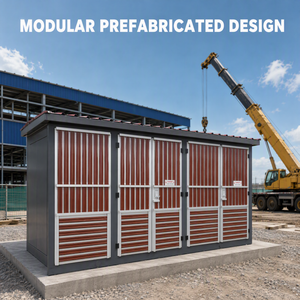
Outdoor compact substations (10kV/35kV) require robust thermal dissipation systems to handle continuous full-load operating conditions across extreme ambient ranges (-25°C to +55°C). Design considerations include forced air convection channels, IP54/IP65 weather-sealed enclosures, internal anti-condensation heating elements, phase-change thermal barriers, and automatic thermal derating protection circuits to guarantee continuous power delivery under solar radiation loads.
Speak directly with our qualified application engineering team to evaluate your compliance voltage requirements, request detailed CAD drawings, or configure tailored energy storage and distribution substations.