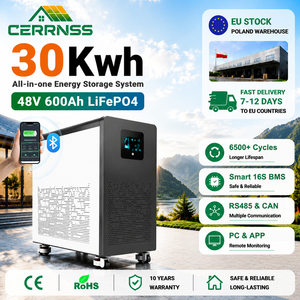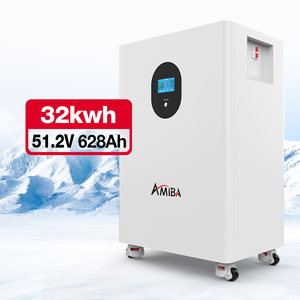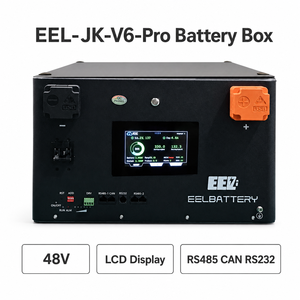
Explore CE-certified fault current limiters, dual-power transfer systems, and high-capacity battery enclosures engineered for modern industrial grids and energy storage systems.
In high-density electrical networks, utility substations, and battery energy storage systems (BESS), short-circuit fault currents can exceed the interrupting capacity of conventional circuit breakers. A Current Limiter (also known as a Fault Current Limiter or FCL) is a critical protective device engineered to restrict the peak magnitude of fault currents to manageable, safe levels. By dynamically introducing impedance into the network during an abnormal surge, current limiters protect downstream transformers, switchgears, busbars, and semiconductor circuits from catastrophic thermal and electromechanical stress.
Securing a CE Certification (Conformité Européenne) for current limiters is not merely a legal prerequisite for market entry across the European Economic Area (EEA); it represents an unyielding baseline of operational safety, electromagnetic compatibility (EMC), and robust structural design. European directives—specifically the Low Voltage Directive (LVD 2014/35/EU), the EMC Directive (2014/30/EU), and harmonized standard EN 60947 / IEC 60947—mandate that current limiting devices operate reliably under extreme fault conditions without exploding, emitting hazardous arcs, or triggering uncontrolled system meltdowns.
Global procurement teams must evaluate current limiters based on their core physics, operating speed, conduction losses, and recovery mechanics. Below is an engineering comparison matrix designed to guide supplier selection across industrial, grid-scale, and renewable applications.
| Technology Type | Response Speed | Conduction Loss | Reset Mechanism | Primary Application Scenarios |
|---|---|---|---|---|
| Solid-State Current Limiter (SSCL) | Ultrafast (< 100 microseconds) | Low to Medium (SiC / GaN Optimized) | Automatic Instantaneous Electronic Reset | BESS Battery Packs, Microgrids, DC Distribution |
| Superconducting FCL (SFCL) | Fast (1 to 3 milliseconds) | Zero (In Superconducting State) | Cryogenic Thermal Recovery (~Seconds to Minutes) | High-Voltage 35kV+ Utility Grid Transmission |
| Pyrotechnic / Explosive Limiter (Is-Limiter) | Microsecond Range (< 1 millisecond) | Negligible (< 0.1 W) | Manual Cartridge Replacement Required | Industrial Substation Bus-Tie Interconnections |
| PTC Polymer & Thermistor Limiters | Medium (Milliseconds to Seconds) | Low (Normal State) | Self-Resetting Upon Cooling | Auxiliary Control Circuits, Low-Power Automation |
| Inductive Saturated Core FCL | Instantaneous Passive Action | Medium (Core Hysteresis Losses) | Automatic Immediate Reversion | Medium-Voltage Heavy Industrial Feeders |
As power systems transition from centralized fossil-fuel plants to distributed renewable energy resources (DERs), procurement strategies for current limiters are undergoing a paradigm shift. B2B buyers and EPC contractors must align their supply chain criteria with the following structural trends:
Battery energy storage facilities present unprecedented short-circuit risk due to extremely low internal impedance of lithium-iron-phosphate cells. A single rack short-circuit can deliver short-circuit currents exceeding 20kA within microseconds. Advanced procurement requires current limiters directly integrated into Smart BMS units, leveraging Solid-State Switch topologies (IGBTs and SiC MOSFETs) to disconnect or limit current before thermal runaway occurs.
Traditional silicon-based semiconductor limiters suffered from high conduction heat dissipation. B2B factories are rapidly adopting Silicon Carbide (SiC) semiconductors. SiC current limiters reduce internal resistance by over 60%, allowing factories to build ultra-compact, high-efficiency CE-certified devices requiring far less cooling infrastructure.
Forward-thinking procurement directors are specifying current limiters embedded with edge-computing sensors. Modern CE-certified units transmit real-time $I^2t$ thermal stress calculations, busbar temperature metrics, and wave-shape transient analysis via Modbus TCP or IEC 61850 protocols directly to SCADA systems, enabling predictive grid maintenance.
Global supply chains are increasingly rejecting unverified grey-market components. Procurement contracts now mandate non-negotiable compliance with ISO 9001:2015 quality management, full TAA (Trade Agreements Act) compliance for public infrastructure contracts, and verified third-party CE testing certificates issued by accredited notified bodies (such as TÜV Rheinland, SGS, or Intertek).
The global current limiter market is expanding rapidly, driven by the electrification of industrial transport, massive data center expansions, and grid interconnection demands. Below are the key engineering breakthroughs defining the current limiter development roadmap:
Pure mechanical breakers offer zero conduction loss but slow opening times (10-30 ms). Pure semiconductor limiters act in microseconds but suffer continuous conduction loss. Modern hybrid current limiters combine a fast mechanical bypass switch with a parallel SiC solid-state current limiter. Under normal operation, 99.9% of the current passes through the low-loss mechanical path. Upon fault detection, an ultrafast actuator redirects current to the solid-state limiter in under 500 microseconds, suppressing the fault arc instantly.
Leading factories are integrating point-optical fiber sensors inside prefabricated substations and switchgear assemblies. When a fault occurs, light sensors detect the initial ionization phase of an electrical arc within 1 millisecond, triggering the current limiter before the electrical short-circuit peak current ($I_p$) reaches its theoretical maximum.
Combining over 68 years of electrical engineering heritage with modern ISO 9001:2015 manufacturing practices to deliver industrial-grade protection equipment worldwide.
Established on proven design methodologies since 1957, our factories build rugged, highly stable current control equipment specified by aerospace, defense, energy, and industrial automation leaders.
Every current limiter and power system is subject to stringent quality controls, full load burn-in testing, and individual serialization. Fully compliant with European CE directives and TAA requirements.
Our agile manufacturing capabilities allow baseline CE-certified current limiters and standard modules to be built fresh and dispatched within 3 business days, eliminating long project lead times.
Need custom voltage thresholds, specialized rack-mount enclosures, or multi-output configurations? Our application engineers work directly with your team to deliver engineered-to-order solutions.
Skip automated phone trees. When you consult our technical support team, you speak directly with experienced power design engineers ready to assist with short-circuit calculations and selection.
We stand behind the reliability of our hardware. All metal-enclosed current limiter modules and industrial power assemblies are backed by a comprehensive 5-year replacement warranty.
Get authoritative answers to critical engineering, compliance, and supply chain questions regarding CE-certified current limiters.
A CE-certified current limiter must strictly comply with the European Union's Low Voltage Directive (LVD 2014/35/EU) for safety and dielectric insulation, as well as the Electromagnetic Compatibility Directive (EMC 2014/30/EU). Crucially, the equipment must satisfy harmonized product standards EN 60947-2 (for low-voltage switchgear and circuit breakers) or EN 60269 (for fuse-based limiting devices), ensuring it can withstand declared impulse voltages, short-circuit forces, and thermal stresses without posing a hazard to operating personnel.
A standard circuit breaker mechanically opens its contacts to interrupt a fault, a process that typically requires 20 to 50 milliseconds. During this delay, the short-circuit peak current ($I_p$) reaches its full destructive magnitude. In contrast, a Current Limiter reacts within 0.1 to 3 milliseconds—before the fault current reaches its peak—introducing high impedance or physical arc isolation to limit the peak current to a fraction of its potential value. This protects upstream and downstream equipment from electrodynamic deformation.
Lithium-ion energy storage systems (such as 51.2V 300Ah LiFePO4 packs) possess extremely low internal resistance. In the event of a busbar or battery module short-circuit, initial current discharge rates can spike to tens of thousands of Amperes within microseconds. Integrating solid-state current limiters or ultrafast limiting fuses prevents welded contactors, printed circuit board traces vaporizing, thermal runaway propagation, and catastrophic battery cabinet fires.
Yes. One of the primary economic advantages of current limiters is avoiding the costly replacement of existing switchgears when grid short-circuit capacities increase (e.g., when adding new generators or solar feeds). Installing a bus-tie or feeder fault current limiter effectively clamps the potential short-circuit contribution, keeping prospective fault levels well within the rating of legacy circuit breakers.
While standard off-the-shelf component limiters are readily available, engineered-to-order industrial current limiters and modular substation units historically required 12 to 16 weeks. However, utilizing our agile US and international production lines, baseline models can be custom-configured, assembled, burn-in tested, and dispatched in as few as 3 to 9 business days, significantly reducing engineering downtime.
NTC/PTC thermistors rely on temperature-dependent material resistance change, which makes them slow (seconds) and suitable only for low-power electronics or soft-starting minor inrush currents. Solid-state current limiters utilize active semiconductor switches (SiC MOSFETs, IGBTs) paired with high-speed microcontrollers, enabling microsecond response, continuous current monitoring, programmable threshold limits, and zero thermal degradation over thousands of operational cycles.
Speak directly with our qualified application engineers to review your short-circuit calculations, select the ideal CE-certified current limiter, or customize an integrated energy storage power solution.