
CE-compliant power distribution gear, prefabricated compact substations, automated transfer units, and industrial-grade LiFePO4 battery storage assemblies.
In modern industrial grid deployment and renewable energy integration, procuring electrical assets from a qualified CE Certified High Voltage Factory & Exporter is essential to guarantee operational continuity, regulatory compliance, and personnel safety. Conformité Européenne (CE) marking is not merely a trading permit; it represents strict adherence to complex European Norms (EN) governing electrical insulation, dielectric breakdown strength, electromagnetic compatibility (EMC), and environmental resilience under severe fault conditions.
High-voltage equipment—ranging from 10kV/35kV outdoor compact prefabricated substations down to 48V/51.2V multi-kilowatt-hour lithium-ion energy storage systems (ESS)—operates under extreme electrical stress. Ensuring compliance requires rigorous validation across two main European Union directives: the Low Voltage Directive (LVD 2014/35/EU) for voltage thresholds up to 1000V AC / 1500V DC, and the Electromagnetic Compatibility Directive (EMC 2014/30/EU), alongside specialized international electrotechnical standards such as IEC 62271-200 for high-voltage switchgear and IEC 62619 / UN38.3 for commercial and residential lithium battery safety.
“Engineering Insight: CE compliance for high-voltage exports demands partial discharge testing (PD < 10 pC at 1.2 Un), creepage distance optimization exceeding 25 mm/kV, and impulse withstand ratings up to 170 kV BIL for 35kV switchgear assemblies.”
Industrial power transformers and prefabricated box-type substations must undergo factory routine tests validating power-frequency withstand voltage (up to 95kV for 35kV systems for 1 minute) and lightning impulse withstand voltage. Solid-insulation barriers, vacuum circuit breaker (VCB) interrupters, and SF6/Clean-Air insulated switchgear modules must prevent arcing across atmospheric pressure variations, ambient temperature swings from -30°C to +55°C, and relative humidity exceeding 95%.
Protects operators against direct and indirect contact through finger-safe barriers, mandatory protective earthing (PE) busbars, and robust enclosure IP ratings (IP54 to IP65).
Ensures digital BMS controllers, automatic transfer switches (ATS), and programmable logic circuits operate without interference from intense radiated high-voltage fields.
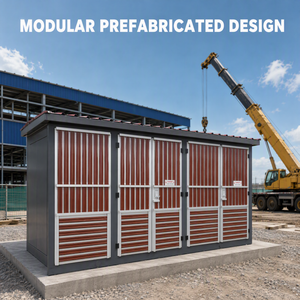
Prefabricated substations engineered with internal arc classification (IAC AFLR 31.5kA/1s) channel hot gases away from operating personnel in emergency short circuits.
Combining American engineering precision, certified ISO 9001:2015 quality management systems, TAA compliance readiness, and rapid 3-day turnaround capabilities for standard and custom power modules.
When procuring heavy electrical switchgear, high-voltage transformers, or megawatt-scale lithium battery storage racks, engineering procurement managers prioritize supply chain transparency, component traceability, and post-sales technical support. Our manufacturing facilities integrate full ISO 9001:2015 quality control protocols with automated end-of-line burn-in testing, ensuring zero-defect delivery across global export routes.
| Manufacturing Benchmark | Our Factory Standard | Industry Average Exporter | Engineering Value Delivered |
|---|---|---|---|
| Quality Certification | ISO 9001:2015, CE (LVD/EMC), TAA Ready | Basic CE self-declaration | Uncompromised compliance for government & utility tenders. |
| Dispatch Speed | Standard models built & shipped in 3 Days | 4 to 8 Weeks lead time | Eliminates site downtime; accelerates EPC project commissioning. |
| Insulation Testing | 100% Hi-Pot & Partial Discharge Tested | Sample testing (1 in 50 units) | Zero insulation breakdown risk during high-voltage surge events. |
| Customization Engine | Custom System Builder (1 to 5 Outputs) | Fixed catalog items only | Tailor-made voltage, current, metering, and enclosure parameters. |
| Warranty & Service | 5-Year Comprehensive Warranty | 1-Year Limited Warranty | Long-term asset protection backed by direct factory application engineers. |
Engineers can specify exact DC/AC output voltages, wide-adjust capabilities (0-5V up to 30kVdc), rack-mount (1U-6U) configurations, and N+1 redundant parallel topologies directly into our factory pipeline.
Every single transformer winding, circuit breaker module, and LiFePO4 prismatic cell is serialized, recorded, and backed by factory mill test certificates and full material safety data sheets (MSDS).
No automated phone trees or non-technical support agents. Procurement teams communicate directly with senior electrical engineers throughout design, prototyping, and factory acceptance testing (FAT).
Analyzing key technological shifts: SF6-Free eco-friendly substations, high-voltage battery architecture, microgrid automation, and smart grid telemetry integration.
The global high-voltage manufacturing landscape is undergoing a massive transformation driven by decarbonization mandates, grid decentralization, and the exponential growth of renewable energy projects. B2B buyers and EPC procurement directors must adapt their purchasing strategies to align with modern technological trajectories:
Sulfur hexafluoride (SF6) has historically served as the gold standard for high-voltage dielectric insulation due to its exceptional arc-quenching capability. However, with a global warming potential (GWP) 23,500 times higher than CO2, European and global regulations are phasing out SF6 in medium and high-voltage switchgear. Leading CE-certified factories are pioneering Clean Air and Vacuum-Interrupter technologies for 10kV to 35kV compact substations, offering zero GWP without compromising insulation clearance or short-circuit breaking capacity.
Traditional low-voltage battery storage systems (48V/51.2V) face line-loss challenges when scaling to megawatt-hour capacities required by commercial facilities and utility-scale solar farms. Procurement trends indicate a rapid surge in High-Voltage Lithium Energy Storage (700V to 1500V DC stacks). High-voltage DC topologies drastically reduce copper cable cross-sections, lower thermal power losses by up to 30%, and improve round-trip efficiency (RTE) to over 95% when paired with central industrial inverters.
Modern Automatic Transfer Switches (ATS) and prefabricated switchgear no longer operate as passive mechanical devices. Future-proof procurement requires integrated microprocessors featuring RS485 Modbus, CANbus, and IEC 61850 protocol support. Equipment with real-time temperature sensing on busbar joints, thermal image monitoring, and automated partial discharge tracking enables predictive maintenance, drastically lowering operational expenditure (OPEX).
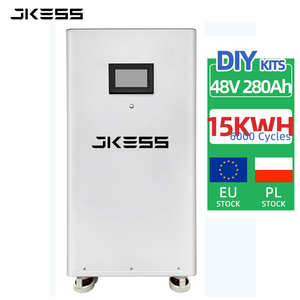
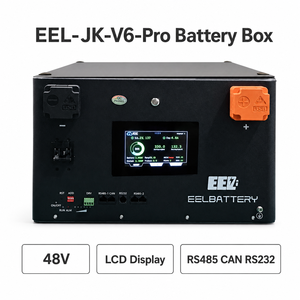
“Procurement Advisory: When sourcing 51.2V 280Ah/314Ah LiFePO4 battery packages or DIY stackable battery kits, ensure the integrated BMS features active cell balancing (minimum 2A to 5A balancing current) and dual hardware over-current protection certified to CE EN 61000-6-2/4 standards.”
How modular prefabrication, wide-adjust switching topologies, and hybrid microgrids are reshaping industrial site power.
Off-site skid mounting and containerized substations eliminate field civil work. Pre-tested 10kV/35kV outdoor substations reduce site commissioning timelines by up to 70%.
While high-frequency switching supplies deliver extreme power density, linear regulated units remain irreplaceable in medical, defense, and radar loads requiring microvolt-level ripple and low noise.
Combining dual-power ATS units, solar storage arrays, and high-voltage grid connections guarantees zero power interruption for critical data centers and industrial process automation lines.
Clear engineering answers regarding CE compliance, factory lead times, customization limits, and equipment installation parameters.
Every substation exported from our certified factory comes with a complete CE Technical Construction File (TCF). This includes type test certificates for temperature rise testing, short-time withstand current (Icw up to 31.5kA), lightning impulse voltage test reports, IP54/IP65 enclosure ingress validation, and EC declarations of conformity for both the Low Voltage Directive (2014/35/EU) and Electromagnetic Compatibility (2014/30/EU).
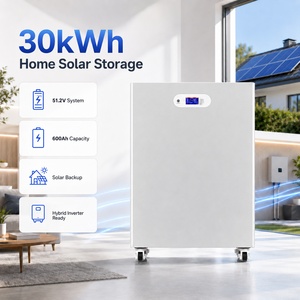
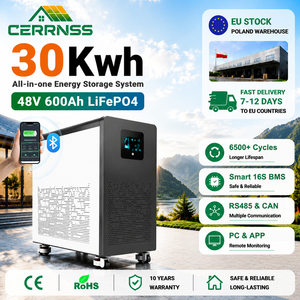
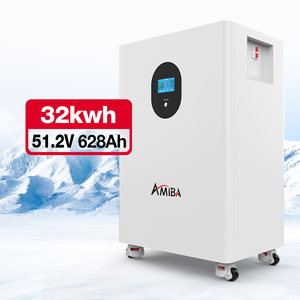
Our lithium-ion home and commercial battery systems (10kWh to 30kWh+ floor and rack-mount options) utilize grade-A prismatic LiFePO4 chemistry certified under UN 38.3 for transport safety, IEC 62619 for industrial energy storage safety, and CE standards. They feature dual-layer smart BMS protection managing cell over-voltage, under-voltage, short-circuit, over-current, and multi-point thermal monitoring.
Standard power modules, single-phase 100A ATS switches, and select stock LiFePO4 battery modules are built, burn-in tested, and dispatched within 3 business days. Complex custom assemblies—such as 35kV American-type compact substations or multi-output rack-mount systems configured through our Custom System Builder—typically complete factory acceptance testing (FAT) within 9 to 14 business days.
Yes. Our engineering team designs custom equipment tailored to regional grid frequency (50 Hz or 60 Hz), standard operating voltages (110V, 220V, 380V, 415V, 10kV, 35kV), and specialized enclosure requirements (marine-grade stainless steel, outdoor anti-corrosion NEMA 4X / IP66 coating, high-altitude dielectric compensation).
All metal-enclosed power supply modules, substations, and battery enclosures carry a standard 5-year factory warranty backed by an ISO 9001:2015 quality assurance system. In the event of a component failure during operation, replacement modules and technical assistance are dispatched immediately to minimize site operational disruption.
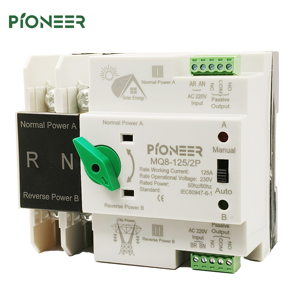
Our dual-power 100A 2P single-phase and 3-phase ATS units utilize electro-magnetic interlocks combined with micro-second sensing control circuits. They continuously monitor voltage levels and phase alignment of both primary and auxiliary power sources, ensuring seamless transfer within <10ms to prevent motor stall, inverter tripping, or arc erosion on contact points.
Request detailed datasheets, request CAD layout drawings, or speak directly with a factory senior application engineer to discuss your technical specifications and project requirements.