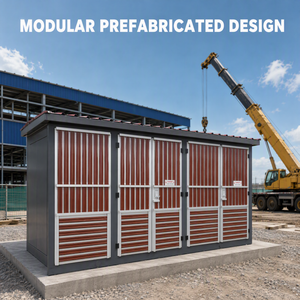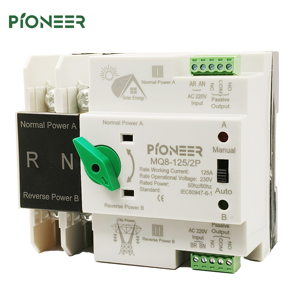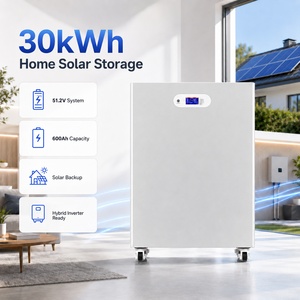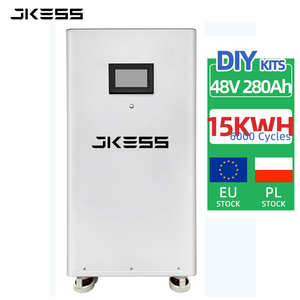
Engineered for high thermal efficiency, maximum operational MTBF, and strict safety compliance across global distribution networks.
In modern power electronics, the designation of CE (Conformité Européenne) certification transcends a mere regulatory requirement; it stands as an engineering baseline for system integrity, electromagnetic compatibility (EMC), and low-voltage safety compliance (LVD 2014/35/EU). As global infrastructure accelerates its transition toward decentralized energy storage systems (BESS), industrial automation, and high-density DC microgrids, global procurement officers and system integrators must rigorously verify technical parameters before specifying OEM/ODM power supply vendors.
Key Engineering Insight: True CE certification requires compliant design at the component topology level. This encompasses high-frequency transformer galvanic isolation (class II/III insulation), active Power Factor Correction (PFC > 0.99), thermal management margins exceeding +85°C ambient stress thresholds, and compliance with EN 62368-1 safety standards.
Whether sourcing AC-DC switching supplies, DC-DC converters, linear regulated modules, or modular lithium-iron-phosphate (LiFePO4) energy storage enclosures, sourcing teams must navigate strict European and international standards. A compliant factory ensures that harmonic current emissions adhere to EN 61000-3-2 and radiated electromagnetic interference remains well below CISPR 32 / EN 55032 Class B boundaries.
| Module Topology | Typical Voltage Range | Efficiency Benchmark | Primary CE Directives | Target Industrial Application |
|---|---|---|---|---|
| Isolated AC-DC Switcher | 85 - 264 VAC / 5 - 125 VDC | 90% - 96% | LVD 2014/35/EU, EMC 2014/30/EU | Data Centers, Telecom Infrastructure, Automation |
| High-Voltage DC Converter | 0 - 500 VDC up to 30 kVDC | 88% - 94% | EN 61010-1, RoHS 2011/65/EU | Medical Imaging, Semiconductor Test, Scientific Equipment |
| Linear Regulated Supply | Fixed & Wide-Adjust (0-150 VDC) | 50% - 70% (Ultra-Low Ripple) | EN 62368-1 (Low Ripple < 1mV RMS) | Avionics Cockpits, Audio Signal Processing, RF Testing |
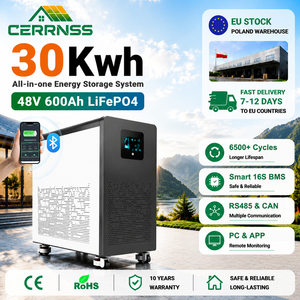
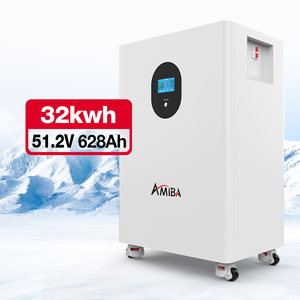
| Modular LiFePO4 ESS Pack | 48V / 51.2V (100Ah - 600Ah) | > 98% (Cell-to-Module) | UN38.3, CE EN 61000-6-2/4, IEC 62619 | Residential Off-Grid, Commercial Microgrids, Solar Storage |
Selecting an enterprise-grade power module manufacturer demands complete auditability across the entire bill-of-materials (BOM). Our manufacturing ecosystem, grounded in over six decades of continuous power engineering excellence (tracing lineage to 1957 US aerospace-grade production methodologies and global ISO 9001:2015 qualified facilities), solves the persistent challenges of component lead-time volatility, thermal failure rates, and non-compliant grey-market components.
Every single module undergoes high-temperature full-load stress screening, computerized auto-testing, and complete serialization before export clearance.
Agile production lines permit 3-day turnaround on over one million standard matrix power supply models, eliminating critical project downtime.
Strict adhereance to Trade Agreements Act (TAA) standards alongside European CE LVD/EMC guidelines guarantees universal government and commercial deployment capability.
Our engineering infrastructure eliminates reliance on opaque third-party broker networks. By maintaining direct control over planar transformer winding, SMT placement, automated conformal coating, and aluminum chassis structural fabrication, we achieve an unyielding MTBF standard exceeding 500,000 hours under Telcordia SR-332 stress conditions.
The global power module market is undergoing a seismic architectural transition. Industrial buyers, EPC contractors, and OEM designers are shifting away from legacy silicon (Si) insulated-gate bipolar transistors (IGBTs) toward next-generation wide bandgap (WBG) semiconductors, software-defined telemetry, and modular, stackable energy storage systems.
Gallium Nitride (GaN) and Silicon Carbide (SiC) power switching devices allow modules to operate at substantially higher switching frequencies (500 kHz to over 2 MHz) with reduced switching losses. For procurement teams, this directly translates into a 40% reduction in package footprint, lower thermal sink requirements, and higher overall operational power density (W/in³). CE testing protocols are simultaneously adapting to address higher dv/dt slew rates and high-frequency EMI mitigation.
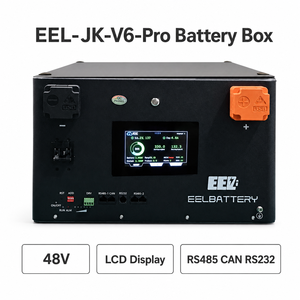
Modern power conversion supplies are no longer standalone passive hardware components. Future-ready procurement mandates integrate PMBus, CANbus (J1939), or RS485 Modbus communications protocols into power modules. This enables continuous remote telemetry monitoring of real-time voltage rails, current draw, cell-level BMS balancing, dynamic temperature derating, and predictive maintenance alerts prior to component degradation.
With the rapid expansion of solar PV, EV charging hubs, and AI-driven data centers, microgrids are migrating from traditional AC distribution to 380V-800V DC distribution backbones. Modular battery boxes (such as 51.2V 280Ah/314Ah LiFePO4 rack systems) integrated with bidirectional inverter modules enable seamless grid-peak shaving, uninterruptible power supply (UPS) capability, and ultra-fast transient load handling.
European and North American regulatory bodies increasingly require carbon footprint documentation throughout the supply chain life cycle. B2B buyers must prioritize factory suppliers that implement lead-free RoHS-compliant soldering processes, recyclable structural aluminum chassis, dynamic eco-mode idle power reductions (< 0.5W stand-by losses), and modular cell enclosures designed for second-life repurposing or straightforward end-of-life material recycling.
To assist procurement directors and senior electrical engineers in mitigating supply chain risks, use the following standardized evaluation matrix during vendor audits:
| Evaluation Parameter | Minimum Industry Standard | Enterprise Benchmark (Recommended) | Risk of Non-Compliance |
|---|---|---|---|
| CE EMC Directive | EN 55032 Class A | EN 55032 Class B with internal filter | System-level noise interference & regulatory fines |
| Thermal Derating | Full power up to +40°C | Full power up to +60°C (Linear derating to +85°C) | Thermal shutdown, accelerated capacitor failure |
| Warranty Duration | 1 - 2 Years standard | 5-Year Repair/Replacement Guarantee | Unforeseen long-term replacement capital expense |
| Input Voltage Tolerance | ± 10% Rated Input | Universal 85–264 VAC / 90–350 VDC Wide Input | Module destruction under brownout or surge conditions |
| Manufacturing Audit | Self-certified compliance | ISO 9001:2015, TAA, 3rd Party CE Certificate | Seized shipments, invalid safety guarantees |
CE certification requires documented test reports from accredited laboratory facilities verifying compliance with the Low Voltage Directive (LVD 2014/35/EU) and Electro Magnetic Compatibility Directive (EMC 2014/30/EU). Essential evaluations include dielectric withstand voltage (hipot testing), insulation resistance, earth leakage current, radiated and conducted emissions (EN 55032), and electrostatic discharge (ESD) immunity (EN 61000-4-2).
Linear regulated supplies utilize continuous pass transistors operating in their linear region to maintain output voltage, offering exceptionally low output ripple (<1mV RMS), zero high-frequency switching noise, and fast transient response—ideal for sensitive medical, audio, and aerospace instrumentation. Switching supplies convert power via pulse-width modulation (PWM) at high frequencies, achieving superior efficiency (85%-96%), smaller physical footprints, and lower weight, making them the standard for industrial automation, energy storage, and telecommunications.
Stackable 48V/51.2V LiFePO4 battery systems utilize an integrated Smart Battery Management System (BMS) equipped with high-current MOSFETs or contactors. They connect via standard DC busbars to hybrid power supply modules or DC-AC inverters. The BMS manages individual cell balancing, over-charge, over-discharge, thermal protection, and CAN/RS485 communications, allowing modular expansion from 5kWh home storage up to 300kWh+ commercial battery banks.
While standard catalog 3-day models ship within three business days of order receipt, customized power systems—including multi-output 19" rack mount assemblies, NEMA 4X enclosed supplies, and N+1 redundant diode-ORed modules—typically ship within nine business days. All units are newly manufactured and undergo full-load burn-in screening prior to dispatch.
An N+1 redundant configuration incorporates at least one additional power supply module beyond the minimum required load capacity (e.g., three 500W modules supplying a 1000W load). Internal isolation ORing diodes or active ideal diode MOSFETs ensure that if any individual module suffers an internal fault, the remaining modules immediately absorb the load without output voltage interruption or system reboot.
Consult directly with senior power electronics design engineers. Whether selecting off-the-shelf CE certified modules or configuring a turnkey rack-mount system, our technical team provides complete data files, CAD models, and rapid pricing quotes.
Inquire Now