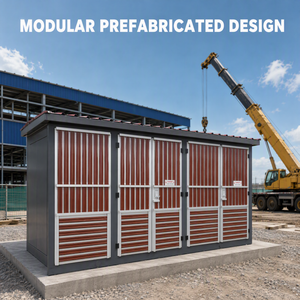

Explore our CE-compliant, heavy-duty industrial AC-DC power supplies, energy storage systems, and power conversion sub-stations engineered for extreme environment reliability.
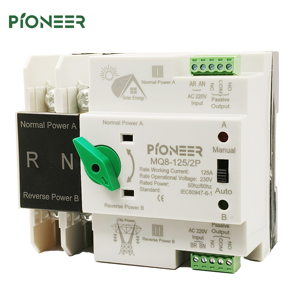

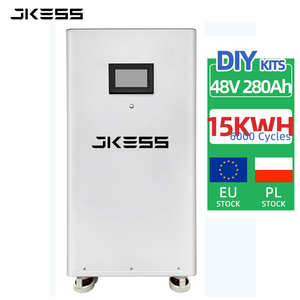
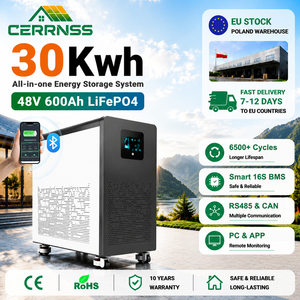
A comprehensive analysis of switch-mode vs. silicon-controlled rectification, harmonic suppression, thermal governance, and global electrical compliance.
Modern industrial operations require high efficiency, precise pulse control, and negligible harmonic distortion. High-Frequency Insulated Gate Bipolar Transistor (IGBT) switch-mode rectifiers operate at pulse frequencies between 10 kHz to 40 kHz. This high-frequency switching dramatically reduces the physical volume and core losses of internal transformers, delivering over 96.5% electrical energy efficiency while maintaining tight DC voltage output tolerance (<±0.5%).
For mega-watt scale electro-chemical extraction, heavy metallurgy, and DC arc furnaces, phase-controlled Silicon-Controlled Rectifiers (SCR) remain the cornerstone of power conversion. Utilizing 6-pulse or 12-pulse bridge configurations, SCR systems deliver immense surge current capacity (up to 50,000A DC). Integrated phase-shifting transformers eliminate lower-order harmonics (5th, 7th, 11th, and 13th), meeting rigorous grid feedback regulations.
“Information Gain Advantage: Unlike standard AC-DC transformers, CE Certified industrial rectifiers incorporate Active Power Factor Correction (PFC) circuitry yielding a power factor > 0.99 and Total Harmonic Current Distortion (THDi) < 3%, directly preventing grid contamination and localized overheating in utility transformers.”
Procuring power rectifiers for deployment within the European Economic Area (EEA) or international projects adhering to Harmonized IEC/EN Standards demands strict verification of regulatory compliance. CE marking on industrial power equipment is not merely a label—it represents full technical file compliance across three primary directives:
Evaluate key electrical performance parameters across primary rectifier engineering architectures to select the optimal solution for your plant operational requirements.
| Performance Parameter | Phase-Controlled SCR Rectifiers | High-Frequency IGBT Switch-Mode | N+1 Modular Hot-Swappable Systems |
|---|---|---|---|
| Typical Conversion Efficiency | 88% – 92% (at full load) | 94% – 96.5% | 95.5% – 97% (Dynamic Load Sharing) |
| Power Factor (Cos φ) | 0.70 – 0.85 (Varies with phase angle) | > 0.98 (Active PFC Built-in) | > 0.99 (Unity PFC across load range) |
| Output DC Voltage Ripple | 3% – 5% RMS (Requires heavy L-C filter) | < 0.5% – 1% Peak-to-Peak | < 0.2% RMS (Ultra-Smooth DC) |
| Harmonic Distortion (THDi) | High (Requires external passive filters) | Low (< 5% without external filters) | Ultra-Low (< 3% Active Filtered) |
| Power Density & Footprint | Large, heavy (Steel transformer core) | Compact (up to 70% space savings) | Modular 19-inch Rack-Mount Compatible |
| Redundancy & Repairability | System shutdown required for service | Component-level maintenance required | Hot-Swappable MTTR < 5 Minutes |
| Primary Applications | Heavy Electrolysis, Smelting, Mining | Electroplating, Anodizing, Water Treatment | Data Centers, Telecom, Smart Grids, EV Chargers |
How Silicon Carbide (SiC) semiconductors, AI-driven thermal optimization, and IoT connectivity are transforming global enterprise energy systems.
The migration from traditional Silicon MOSFETs and IGBTs to Wide-Bandgap (WBG) materials like Silicon Carbide (SiC) allows rectifiers to operate at extreme temperatures (>200°C) and switching frequencies exceeding 100 kHz. This switch reduces internal thermal switching losses by 60%, drastically shrinking cooling heat-sink requirements and yielding ultra-compact power density.
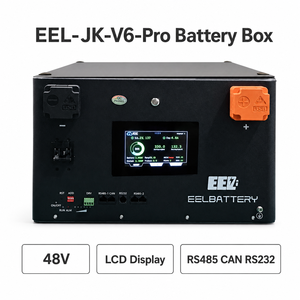
Modern industrial rectifiers are evolving into intelligent IoT edge nodes. Integrated micro-controllers embedded with machine learning algorithms continuously monitor capacitor degradation, thermal rise curves, and ripple frequency anomalies. Telemetry transmitted via RS485, Modbus RTU, Ethernet IP, or CAN bus allows plant engineers to schedule maintenance prior to failure, achieving 99.999% uptime.
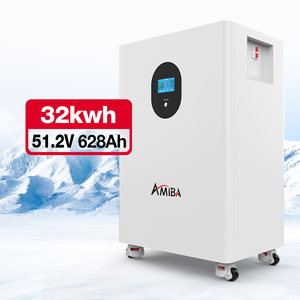
As manufacturing facilities integrate on-site solar arrays, wind turbines, and LiFePO4 Battery Energy Storage Systems (BESS), rectifiers are transforming into bidirectional AC-DC/DC-AC micro-grid hubs. These systems allow factories to peak-shave grid demand during high-tariff hours and feed excess stored energy back to the grid automatically.
Mitigate total cost of ownership (TCO) risks, evaluate factory capabilities, and navigate international supply chain requirements with confidence.
When procuring high-power industrial rectifiers (e.g., 1000A to 10,000A continuous output), the initial purchase price (CAPEX) accounts for less than 15% of the machine's total lifetime cost. Operating energy losses (OPEX) represent over 80% of lifetime expenditure.
Investing in a CE certified rectifier with 96% efficiency versus a cheaper 90% efficient unit saves tens of thousands of kilowatt-hours annually. This energy savings amortizes the procurement cost difference in less than 14 months of continuous operation.
Global engineering buyers must verify authentic factory quality management certifications before issuing purchase orders. Ensure your supplier provides:
Over six decades of combined engineering excellence, rapid order dispatch, and custom turnkey power solutions.
Founded on rigorous engineering principles, our power solutions have been specified in aerospace, defense, semiconductor, chemical electrolysis, and renewable infrastructure programs worldwide. Every unit is engineered to endure harsh industrial environments.
Eliminate project downtime. Our streamlined, modular manufacturing architecture allows standard power supply and rectifier configurations to be built, tested, burn-in qualified, and dispatched within 3 business days of order confirmation.
We eliminate call centers and automated response queues. When you contact our engineering department, you speak directly with senior electrical engineers qualified to consult on custom voltage outputs, remote PLC signaling, and thermal management.
Expert answers to common engineering, compliance, and procurement queries regarding industrial power rectifiers.
CE certification confirms that an industrial power rectifier complies with all relevant European Union health, safety, and environmental protection directives. For power rectifiers, this requires compliance with the Low Voltage Directive (LVD 2014/35/EU) for electrical isolation and structural safety, the Electromagnetic Compatibility Directive (EMC 2014/30/EU) for immunity and emissions, and RoHS 3 directives regarding restricted hazardous materials.
IGBT rectifiers operate at high switching frequencies (10kHz–40kHz), resulting in a compact physical footprint, higher energy efficiency (>95%), ultra-low output DC ripple (<1%), and a power factor close to unity (>0.98). SCR (Silicon-Controlled) rectifiers operate at line frequency (50/60Hz) and are typically larger and heavier, but excel in ultra-high mega-watt applications like electro-smelting where rugged surge handling is required.
Yes. Our modular power rectifiers support active current sharing and N+1 redundancy. Modules can be paralleled across standard 19-inch racks or industrial cabinets via RS485/CAN bus communication, allowing equal load distribution and enabling hot-swappable maintenance without interrupting critical operational loads.
We supply forced-air cooled systems (equipped with variable-speed IP54/IP55 fans), direct water-cooled rectifiers (featuring stainless steel or copper heat-exchanger cold plates for corrosive electroplating environments), and convection-cooled sealed enclosures (NEMA 4X / IP66) designed for dusty or wash-down facilities.
To provide an accurate technical quote, our application engineers require: (1) Input AC Voltage & Phase (e.g., 380V/415V/480V 3-Phase), (2) Required DC Output Voltage Range, (3) Maximum DC Output Current (Amperes), (4) Duty Cycle & Operational Process (e.g., Continuous Electro-deposition, Anodizing, BESS Charging), and (5) Preferred Enclosure & Cooling Type.
Standard catalog power rectifiers and modular rack supplies are assembled, tested, and dispatched within 3 business days. Complex multi-output custom system racks or heavy-duty water-cooled rectifiers typically ship within 9 to 15 business days depending on client specification drawings.