
Engineered for critical infrastructure, industrial automation, and renewable energy grid coupling.

In modern industrial automation, defense systems, telecommunications, and distributed renewable energy networks, power quality is direct business protection. Voltage fluctuations, transient spikes, harmonic distortion, and micro-interruptions directly impact sensitive electronics, cause unplanned manufacturing downtime, accelerate thermal stress, and corrupt critical data streams. As global industrial ecosystems shift toward electrification and wide-bandgap switching semiconductors, specifying high-performance, CE-certified power regulators from direct factory exporters has transformed from an operational detail into a strategic imperative.
CE marking (Conformité Européenne) is far more than a regulatory passport for entering the European Economic Area (EEA); it is a rigorous badge of electromagnetic compatibility (EMC), electrical safety (LVD), and structural reliability. A authentic CE-certified power regulator guarantees compliance with international safety norms including EN 61000-6-2 (Industrial Immunity), EN 61000-6-4 (Industrial Emissions), and EN 62368-1 (Audio/video, information, and communication technology equipment safety).
Information Gain Insight: Selecting a factory export partner that maintains ISO 9001:2015 quality management along with CE LVD/EMC certification ensures that your voltage regulation systems meet guaranteed Total Harmonic Distortion (THD < 2%) limits and maintain dielectric strength exceeding 2500V AC under 1-minute impulse conditions.
When procuring from accredited manufacturing facilities, procurement directors and system integrators bypass third-party trading markups while securing total traceability, engineering customization, direct access to CAD/3D schematics, and rigorous full-load burn-in testing records. This whitepaper establishes a definitive framework for evaluating power regulator topologies, future market trends, compliance audits, and global supply chain optimization.
Delivering tight steady-state regulation within ±0.5% to ±1% across ultra-wide input windows (85V–264V AC / up to 35kV medium-voltage distribution grids).
Solid-state microsecond dynamic response speed eliminates voltage sags, surge pulses, and inductive kickback from heavy motorized industrial loads.
Integrated shielding and heavy-duty isolating transformers prevent high-frequency noise injection and ground loops in critical control loops.
Selecting the optimal power regulation technology requires a thorough understanding of load dynamics, efficiency requirements, response speeds, and environmental operating parameters. Leading export manufacturing plants engineer four dominant power regulation architectures, each tailored to specific operational contexts:
Utilizing a toroidally wound autotransformer paired with a high-speed carbon brush driven by a precision servo-motor control circuit, servo AVRs offer exceptionally high electrical efficiency (>98%) and complete freedom from waveform distortion. They are the ideal choice for heavy industrial facilities, commercial buildings, and medium-voltage outdoor prefabricated compact substations (e.g., 10kV to 35kV distribution nodes).
Static regulators completely eliminate moving mechanical parts by utilizing Silicon Controlled Rectifiers (SCRs) or Insulated Gate Bipolar Transistors (IGBTs) to tap multi-winding auto-transformers. With corrective response times under 10 milliseconds, static stabilizers provide instantaneous correction for advanced medical imaging equipment, semiconductor fabrication machinery, and automated robotic assembly lines.
Linear regulated architectures utilize series-pass transistors operating in their linear region to deliver ultra-clean DC outputs. While operating at lower power efficiency compared to switching topologies, linear power regulators provide unmatched performance characteristics: near-zero output ripple and noise (<1mV RMS), exceptional transient recovery (<50 microseconds), and absolute radio-frequency isolation, making them mandatory for aerospace avionics, RF testing, and scientific sensors.
Capitalizing on Pulse-Width Modulation (PWM) and resonant LLC topologies, modern switching power regulators deliver extreme power density, compact footprints, and high efficiency (>94%). Enclosed in compact aluminum or stainless chassis, these regulators support wide-adjust DC outputs (0-5Vdc to 0-500Vdc, and high-voltage modules reaching 30kVdc) with active Power Factor Correction (PFC > 0.99).
| Topology Class | Correction Speed | Typical Efficiency | THD Waveform Impact | Best Application Fit |
|---|---|---|---|---|
| Servo-Driven AVR | 20 to 40 V/sec | 98% – 99% | 0% Added THD | Whole-Factory Power, 10kV/35kV Substations |
| Static Solid-State (SCR) | < 10 ms | 96% – 98% | < 0.5% THD | Robotics, CNC Machining, Telecom Hubs |
| Linear Regulated DC | < 50 μs | 40% – 60% | None (Pure DC) | Medical Sensors, Aerospace Avionics, RF Labs |
| Switch-Mode (SMPS) | < 1 ms | 88% – 95% | Suppressed via PFC | Industrial Automation, Energy Storage (ESS), Data Centers |
The global market for power regulators and industrial power supply solutions is undergoing a monumental shift driven by carbon neutrality goals, grid decentralization, and the rapid deployment of artificial intelligence workloads. Engineering procurement teams must align with direct manufacturers actively integrating the following forward-looking technology vectors:
Silicon Carbide (SiC) and Gallium Nitride (GaN) power switches are replacing traditional silicon MOSFETs. In next-generation power regulation systems, SiC/GaN components enable switching frequencies up to 10x higher, enabling passive magnetic components (transformers and inductors) to shrink significantly in physical size while operating safely at elevated junction temperatures (>175°C).
Modern CE-certified regulators are no longer passive black boxes. Smart power regulators feature embedded microcontrollers, SNMP network interface cards, and RS485 Modbus RTU interfaces. This enables continuous transmission of telemetry data—including real-time voltage profiles, winding temperatures, phase currents, and harmonic frequency spectrums—enabling automated cloud-based predictive maintenance before hardware degradation occurs.
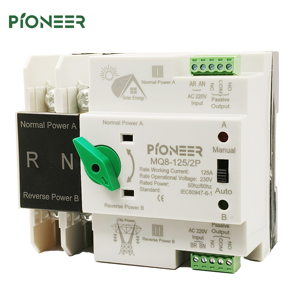
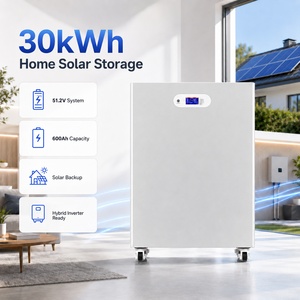
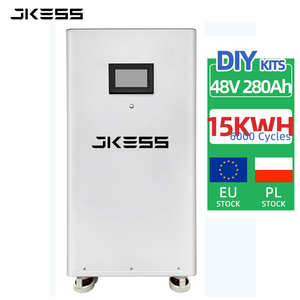
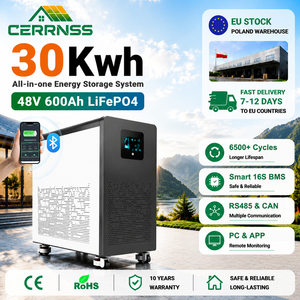
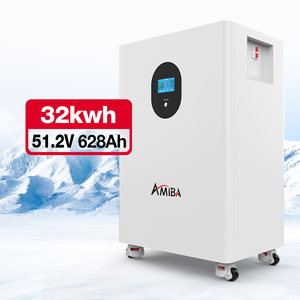
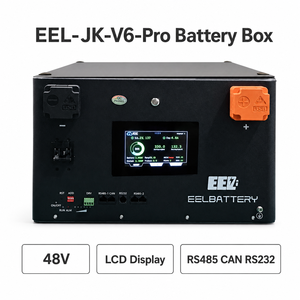
With the rapid expansion of commercial microgrids, rooftop solar photovoltaics, and residential energy storage systems (e.g., 51.2V LiFePO4 battery banks, stackable 16S 48V ESS boxes, and dual-power ATS units), power regulators are evolving into bidirectional control nodes. Advanced regulators manage seamless power exchange between grid power, energy storage batteries, and local industrial loads.
To eliminate single points of failure in mission-critical environments, factory exporters are heavily prioritizing N+1 redundant power rack systems. Utilizing internal decoupling diodes and active current-sharing buses, hot-swappable regulator modules allow maintenance teams to replace units while system loads remain 100% operational.
Procuring power regulation hardware directly from established manufacturing facilities offers immense structural advantages over indirect distributor networks. Rooted in over 68 years of combined electrical engineering excellence and backed by ISO 9001:2015 certified quality systems, top-tier factories deliver uncompromising control over hardware craftsmanship:
Standard and modified-standard regulator models are built to order, burn-in tested, and dispatched within 3 to 9 business days. Engineering teams can customize output voltages (0V to 30kV), mechanical enclosure ratings (IP20 indoor to NEMA 4X outdoor), thermal cooling paths, and connector types directly with factory engineers.
Every single power unit undergoes rigorous automated end-of-line functional testing, high-potential (Hi-Pot) dielectric insulation verification, and full-load elevated-temperature thermal burn-in testing prior to export packaging. Full serial-numbered test reports accompany each dispatch.
Answers to common engineering and commercial compliance inquiries from global buyers.
A legitimate factory exporter provides an official EU Declaration of Conformity (DoC) explicitly citing compliance with the Low Voltage Directive (LVD 2014/35/EU) and Electromagnetic Compatibility Directive (EMC 2014/30/EU). Test reports from ISO 17025 accredited laboratories validating EN 61000 standards should be accessible upon request.
When the mains input voltage drops significantly below nominal levels (e.g., dropping to -25% or -30%), the regulator must draw higher input current to maintain constant regulated output power. Standard factory thermal derating curves specify operating capacity; for example, a regulator may derate to 70% total load capacity under extreme low-voltage grid conditions.
Linear regulators adjust voltage via dissipative semiconductor pass devices, offering zero switching noise, fast transient response, and pure sine wave integrity, ideal for high-precision laboratory or military use. Switching regulators utilize pulse-width modulation at high frequencies, achieving high efficiency (>90%) and compact sizes, suitable for industrial automation.
Yes. OEM factories specialize in configuring custom single and multi-output power systems, custom 19-inch 1U-6U rack enclosures, wall-mount plates, DIN-rail formats, and rugged weatherproof NEMA 4X / IP66 outdoor cabinets tailored precisely to customer mechanical drawings.
Standard model configurations are typically built, tested, and shipped within 3 business days. Complex multi-output rack assemblies, customized medium-voltage substations, or large bulk enterprise shipments generally ship within 9 to 15 business days via air or ocean freight logistics.
Match your exact operational specifications, request custom schematics, or secure direct factory quotation pricing for CE-certified power regulation hardware.