
Explore our export-grade, rigorously tested power switching, energy storage, and distribution equipment designed for mission-critical applications.
An in-depth technical analysis on CE compliance, high-frequency switching topologies, thermal management, and international sourcing standards for B2B procurement managers.
In the modern electrical engineering ecosystem, switching power supplies (SMPS) serve as the vital baseline for industrial automation, telecom networks, renewable energy storage (ESS), and high-voltage grid infrastructure. Unlike legacy linear power supplies—which rely on heavy step-down transformers and dissipate excessive thermal energy through resistive dissipation—modern switching power supplies operate by rapidly toggling semiconductor switches (such as MOSFETs and Gallium Nitride / Silicon Carbide devices) at high frequencies ranging from tens of kilohertz to several megahertz.
This high-frequency conversion dramatically increases volumetric power density, allowing equipment manufacturers to integrate powerful AC-DC and DC-DC conversion units into ultra-compact, low-profile chassis. However, elevated operating frequencies introduce complex electromagnetic interference (EMI) and power factor distortion challenges. As global power grids shift toward stringent efficiency standards, sourcing fully certified switching power supplies from established manufacturing partners has transitioned from a routine purchasing action to a strategic risk-mitigation imperative.
“Information Gain Advantage: High-efficiency switching topologies engineered with wide-bandgap semiconductors (GaN/SiC) can reduce internal thermal losses by up to 42% compared to traditional silicon-based rectifiers, significantly extending system MTBF in harsh industrial environments.”
For international buyers and system integrators sourcing switching supplies across Europe, Asia, and North America, CE certification represents far more than a regulatory stamp—it serves as proof of structural reliability, electromagnetic compatibility, and end-user safety. A authentic CE-marked switching power supply must strictly comply with two foundational European Directives:
Governs electrical safety for equipment operating between 50–1000 VAC or 75–1500 VDC. Demands rigorous creepage and clearance distances, high-pot isolation withstand voltage testing (up to 3000 VAC or higher), and flame-retardant PCB substrate specifications (UL94-V0 rating).
Mandates strict limits on both Electromagnetic Conducted and Radiated Emissions (EN 55032 / CISPR 32 Class B) alongside high immunity against electrostatic discharge (ESD), fast transient bursts, and lightning surges (EN 61000-4 series).
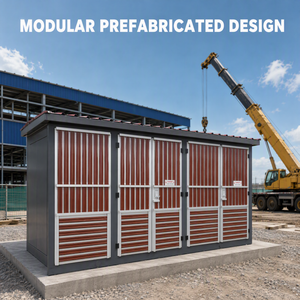
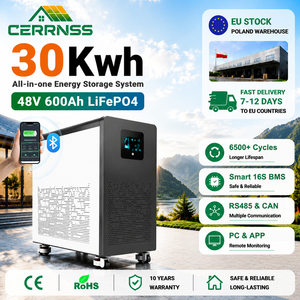
Top-tier manufacturing exporters incorporate active Power Factor Correction (PFC) stages (reaching PF > 0.98) directly into their AC-DC power switching architecture. This prevents harmonic pollution from reflecting back into the municipal power grid, ensuring uninterrupted operation for sensitive downstream equipment such as programmable logic controllers (PLCs), high-capacity LiFePO4 battery management systems (BMS), and outdoor compact substations.
Backed by strict ISO 9001:2015 quality controls, advanced burn-in testing protocols, and decades of electrical export experience.
Every single power unit, linear module, and energy storage rack undergoes rigorous automated component screening, 100% full-load high-temperature burn-in testing, and multi-stage ATE inspection prior to shipment.
From initial design schematics to final assembly, every PCB batch and critical component (including electrolytic capacitors and power semiconductors) carries full serial tracking for institutional procurement files.
Our agile automated production lines enable expedited manufacturing schedules—shipping standard 3-day models and customized multi-output power systems within tight project deadlines worldwide.
| Performance Metric | High-Frequency Switching Power Supply | Linear Regulated Power Supply | Impact on Procurement Strategy |
|---|---|---|---|
| Energy Efficiency | 85% - 96% High Efficiency | 30% - 50% Efficiency | Switching lowers total cost of ownership (TCO) & cooling requirements. |
| Power Density & Weight | Ultra-compact, high W/in³ | Heavy, large footprint due to low-frequency iron transformers | Switching supplies reduce freight costs and rack space allocation. |
| Input Voltage Range | Universal Input (85–264 VAC) | Narrow Range (e.g., 115 VAC ±10%) | Switching supplies offer global compatibility across international grids. |
| Ripple & Output Noise | Typical: 30mV – 150mV p-p | Ultra-Low: < 3mV p-p | Linear is specified for noise-sensitive audio/avionics; Switching for general industrial systems. |
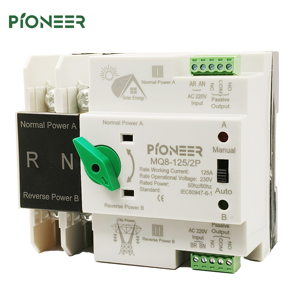
| CE & Safety Compliance | Requires Active PFC & EMI Filters | Inherently lower EMI, basic LVD compliance | Must source CE switching units with built-in Class B EMI filtering. |
Anticipating technical evolutions in semiconductor materials, digital telemetry, green energy integration, and global supply chain resilience.
The global switching power supply industry is currently undergoing a massive technological transition toward wide-bandgap (WBG) semiconductors, specifically Gallium Nitride (GaN) and Silicon Carbide (SiC). Traditional silicon MOSFETs are approaching their physical limits regarding switching frequency and thermal resistance. GaN and SiC devices enable significantly higher switching speeds with near-zero reverse recovery losses.
For industrial buyers, this means power supply footprints can be reduced by up to 50% while operating at higher thermal thresholds. Exporters that integrate GaN components into their standard product lines offer clients superior power density, allowing more compact enclosures in outdoor box-type substations, solar inverters, and high-capacity battery racks.
Legacy analog power supplies are increasingly being superseded by Smart Power Converters featuring digital signal processors (DSPs) and microcontroller units (MCUs). Utilizing standardized communication protocols such as PMBus, CANbus, or Modbus, modern switching supplies communicate real-time operational data directly to central monitoring systems.
Facilities managers can monitor voltage output, current draw, internal temperatures, and fan speed degradation remotely. Predictive maintenance algorithms can detect subtle electrical anomalies before catastrophic failure occurs, practically eliminating unplanned downtime in critical installations such as data centers and telecommunications hub stations.
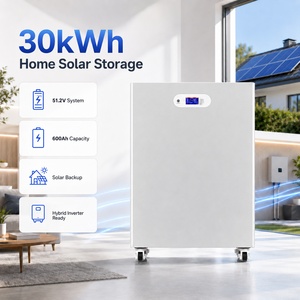
The explosive adoption of LiFePO4 battery energy storage systems (BESS) for both residential backup and commercial peak-shaving has blurred the boundaries between traditional AC-DC switching rectifiers and intelligent battery chargers. Modern switching power systems now require bidirectional energy flow capabilities, allowing seamless switching between grid-charging and inverter-discharging operations.
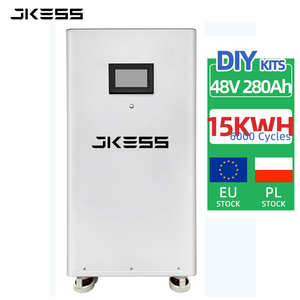
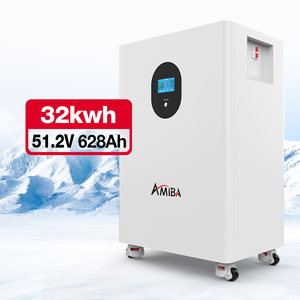
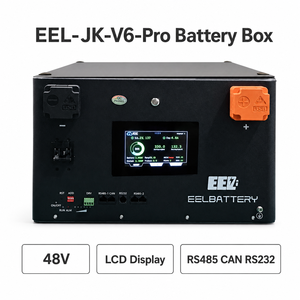
High-voltage battery setups (such as 51.2V 280Ah/300Ah LFP packs and stackable battery boxes) require ultra-precise constant-voltage and constant-current (CV/CC) switching power stages paired with Bluetooth-enabled Smart BMS to prevent cell degradation and thermal runaway.
Global regulatory bodies are expanding environmental compliance directives beyond basic safety and EMI. Future CE certification audits will heavily evaluate lifecycle sustainability, standby power consumption (ErP Directive compliance aiming for < 0.1W no-load power loss), and ease of component recyclability (WEEE and RoHS 3 directives).
Forward-thinking exporters are redesigning chassis layouts using modular, glue-free assembly methods and utilizing high-efficiency heat sink designs that rely on natural convection cooling, drastically reducing dependence on noisy, failure-prone cooling fans.
A systematic framework for evaluating factory qualifications, component authenticity, and total cost of ownership when selecting export suppliers.
Ensure the manufacturer uses premium 105°C-rated electrolytic capacitors (such as Nichicon or Rubycon) and tier-1 power semiconductors. Low-grade capacitors are the primary point of failure in switching supplies operating under heavy thermal strain.
Request full test reports from accredited third-party laboratories (such as TÜV, SGS, or Intertek) rather than self-declaration documents. Verify both LVD safety and EMC directive test reports against current EN standards.
Industrial applications rarely operate at ambient room temperature (25°C). Inspect the factory's published thermal derating curves to ensure the supply can deliver required wattage at 50°C or 60°C operating environments without tripping over-temperature protection.
Clear engineering and commercial answers to common questions asked by international buyers and project specifiers.
CE certification confirms that a switching power supply complies with essential European safety and environmental protection standards. Specifically, it verifies adherence to the Low Voltage Directive (LVD 2014/35/EU) for electrical safety and insulation integrity, and the Electromagnetic Compatibility Directive (EMC 2014/30/EU) ensuring the unit neither causes unacceptable electromagnetic interference nor malfunctions when exposed to electrical surges or static discharges.
Active PFC circuits utilize an integrated switching controller to shape the input current waveform so that it matches the phase of the AC mains voltage input. This aligns the power factor close to unity (typically 0.95 to 0.99). High power factor minimizes reactive power losses in the distribution grid, lowers total harmonic distortion (THD), and allows the power supply to deliver higher output wattage from standard AC wall outlets without tripping breakers.
Yes, provided the switching power supply features a Constant Current / Constant Voltage (CC/CV) output characteristic or is integrated into a multi-stage battery management system (BMS). Standard fixed-voltage switching supplies may trigger over-current shutdown when connected to depleted lithium battery banks due to high initial inrush currents. Always specify battery-charging compatible models (such as 48V/51.2V LFP charger modules) when pairing with energy storage systems.
Exporting factories typically offer extensive customization options including: wide-adjust DC output voltage dials, conformal coating on PCBs for high-humidity or corrosive environments, custom wire harness terminations, DIN-rail or wall-mount brackets, NEMA/IP65 rated outdoor enclosures, redundant N+1 diode decoupling for fault tolerance, and digital monitoring interfaces (RS485, CANbus, or SNMP).
Standard model engineering samples can typically be configured and dispatched within 3 business days. For customized multi-output power systems or specialized enclosures, sample production ranges from 7 to 14 business days. Full bulk production shipments generally take 3 to 4 weeks depending on order volume, component availability, and required custom labeling/packaging certifications.
Power supplies generate internal heat during energy conversion. Most units are rated for 100% full-load output up to an ambient temperature of 40°C or 50°C. Operating above these temperatures requires thermal derating (typically reducing output wattage by 2.5% to 3.5% per degree Celsius above the threshold) or integrating forced-air cooling fans to maintain safe junction temperatures for internal semiconductors.
Connect directly with our application engineers to analyze your electrical specs, review CE certification compliance files, or configure custom switching power supplies tailored to your exact operational requirements.