
Specified for critical mission environments, data centers, industrial microgrids, and telecommunications infrastructure requiring guaranteed 99.999% continuous operation.
In modern industrial automation, aerospace operations, telecommunication backbones, and mission-critical data processing facilities, power disruption is not merely an inconvenience—it represents catastrophic operational risk. Selecting a top-tier China redundant systems manufacturer & supplier requires an in-depth evaluation of system topology, Mean Time Between Failures (MTBF), switchover latency, active load balancing, and compliance with global safety frameworks such as ISO 9001:2015, CE, UL 508, and TAA specifications.
Information Gain Key Takeaway: A true redundant system must eliminate single points of failure (SPOF) across input sources, switching circuits, battery management logic, and thermal distribution modules. N+1 and 2N architectures engineered in China now feature integrated silicon carbide (SiC) switching devices and CAN-bus linked BMS balancing, delivering performance metrics that rival legacy Western OEM brands at significantly optimized lifecycle costs.
To design an uninterrupted electrical infrastructure, specifying engineers must carefully evaluate the redundancy factor based on load criticality:
| Architecture Matrix | Redundancy Level | Fault Tolerance Capacity | Primary Target Applications | Capital Cost Index |
|---|---|---|---|---|
| N+1 Parallel Module | Single Component Backup | Tolerates 1 Module Failure | Industrial Automation, Energy Storage Walls | Baseline (1.0x) |
| N+2 Dual Backup | Double Component Reserve | Tolerates 2 Simultaneous Failures | Telecommunications & Substation Auxiliaries | Moderate (1.35x) |
| 2N Fully Isolated System | 100% Mirroring System | Tolerates Complete Primary System Down | Tier IV Data Centers, Defense, Flight Control | High (2.0x) |
Our manufacturing standard focuses heavily on modular N+1 and 2N Redundant Power Systems. By leveraging isolated internal diode-ORing logic, active current sharing circuits, and hot-swappable sub-rack enclosures, systems continue delivering full output power even during maintenance or active module fault conditions.
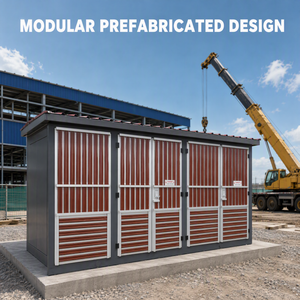
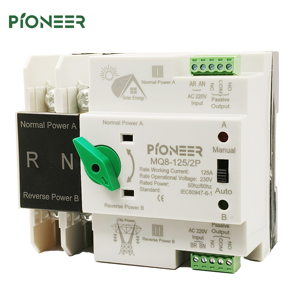
For facility-scale power architecture, outdoor compact prefabricated substations (American and European type) form the primary utility gateway. Modern redundant outdoor substations integrate 10kV to 35kV medium-voltage switchgear, step-down transformers, and low-voltage distribution buses into a single weather-hardened enclosure. When coupled with microgrid battery storage systems and dual-source Automatic Transfer Switches (ATS), facilities gain complete immunity to grid brownouts and transient frequency dropouts.
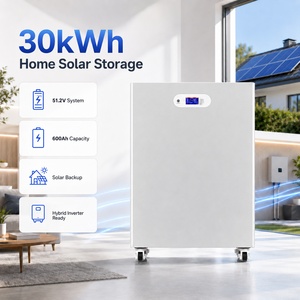
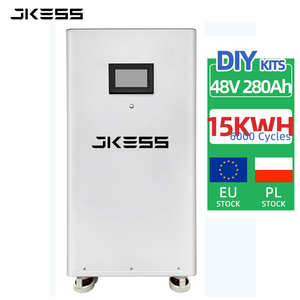
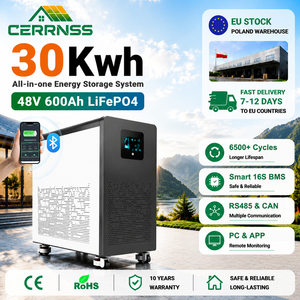
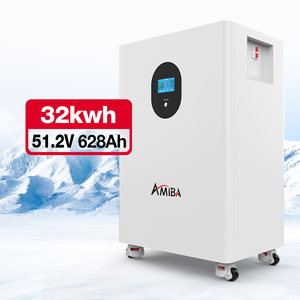
Energy storage integration within redundant systems has evolved rapidly from Lead-Acid to Lithium Iron Phosphate (LiFePO4) cell technology. Operating at nominal voltages of 48V to 51.2V, LFP chemistries present zero risk of thermal runaway compared to Cobalt-based chemistries, while offering up to 6,000 deep discharge cycles at 80% DOD (Depth of Discharge).
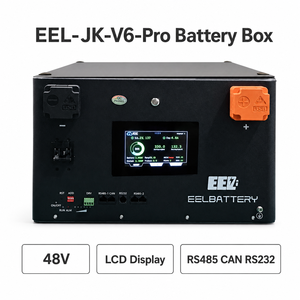
Crucial to this performance is the Smart BMS integration (e.g., 200A JK BMS with active cell balancing and LCD telemetry). The BMS manages cell-to-cell voltage variance to within ±0.005V, preventing capacity degradation and guaranteeing instantaneous current delivery during utility grid disconnects.
Combining world-class electrical engineering heritage with rapid-turnaround OEM/ODM manufacturing agility.
Standard power sub-assemblies are processed, tested, and dispatched within 3 business days. Complex custom multi-output enclosures and rack assemblies ship within 9 business days of drawing sign-off.
Every single power system, battery box kit, and ATS unit undergoes 100% full-load burn-in testing, high-pot dielectric testing, and complete serial traceability before leaving our export facility.
Our engineering team assists global clients in customizing DC outputs (0 Vdc to 30 kVdc), AC transfer capacities, custom front panel metering, enclosure IP ratings (IP54 to IP66), and communication protocols (Modbus, CANbus, SNMP).
No automated phone queues or generic helpdesk delays. Global buyers communicate directly with experienced electrical engineers for load matching, thermal headroom calculation, and compliance reviews.
Solid-state switchgear and dual power transfer switches (ATS) ensure load transfer occurs within 3ms to 5ms—well under the 20ms hold-up threshold of sensitive industrial power supplies.
All metal-enclosed redundant power units and battery management boxes are backed by a robust 5-year warranty, supported by regional logistics hubs for rapid spare component dispatch.
As global supply chains navigate energy transition mandates and digital transformation, enterprise procurement managers are shifting from transactional purchasing to strategic partner qualification. Key market trends defining sourcing decisions through 2030 include:
Industrial users are moving away from monolithic centralized UPS designs in favor of stackable, modular LiFePO4 battery boxes (such as 16S 48V / 51.2V DIY kit configurations with high-amperage BMS integration). Modular systems allow procurement teams to scale capacity incrementally from 10kWh to 300kWh without re-engineering the existing panelboard.
Modern B2B procurement specifications now strictly mandate cloud-connected telemetry via RS485, CAN, or Bluetooth protocols. Modern BMS controllers actively transmit cell internal resistance, temperature differentials, and state-of-health (SOH) indicators to preventative maintenance platforms, identifying failing cells long before an operational interruption occurs.
Global buyers increasingly prefer working directly with vertically integrated Chinese manufacturers capable of offering turn-key OEM adjustments. By avoiding multi-tier distributor markups, procurement departments secure custom sheet-metal enclosures, specialized busbar configurations, and custom voltage ratings at competitive lead times.
With the rise of sensitive edge computing nodes and robotic automated production lines, standard electromechanical transfer switches are being superseded by hybrid solid-state ATS units. These devices achieve near-zero arc transfer speeds, preventing reset cycles on PLC control panels during grid transfers.
The next decade of redundant systems innovation will be driven by advancements in wide-bandgap semiconductors, solid-state battery chemistry, and microgrid decentralization:
Direct technical answers addressing lead times, customization, compliance, and warranty policies.
Standard modular units, ATS switches, and inventory-stocked battery boxes typically ship within 3 business days. Custom engineered systems—including specialized 19" rack-mount configurations or prefabricated 10kv/35kv substations—are built, tested, and dispatched within 9 to 15 business days following engineering drawing approval.
Lithium Iron Phosphate (LiFePO4) offers superior chemical and thermal stability, completely eliminating thermal runaway risks associated with NMC/LCO batteries. Furthermore, LiFePO4 delivers 4,000 to 6,000 deep charge-discharge cycles compared to 500-1,000 cycles for traditional lithium chemistries, drastically lowering Total Cost of Ownership (TCO).
Yes. Our manufacturing facilities operate under an ISO 9001:2015 certified quality management system. Products are built to conform with CE low-voltage and EMC directives, UL 508 electrical safety guidelines, and relevant IEC standard frameworks for medium-voltage substations and transfer equipment.
Our dual-power ATS units operate with a switchover latency of less than 3ms to 8ms for compact units, and under 20ms for heavy industrial switchgear. This seamlessly maintains continuous DC output logic across downstream connected equipment without triggering system reboots.
Absolutely. Using our custom engineering workflow, clients specify exact mechanical dimensions, mounting options (wall-mount, DIN-rail, 19" rack mount, floor cabinet), input voltage ranges (85-264 VAC or isolated DC inputs), and required telemetry interfaces.
Each parallel power module incorporates built-in Schottky or active ideal-diode ORing FETs on the output stage. If an internal component failure occurs within one module, the ORing circuit instantly isolates the faulted unit from the shared DC bus within microseconds, preventing reverse current flow and maintaining full system voltage from the remaining functional modules.
Speak directly with our senior power electronics team today. Get complete technical specifications, CAD models, and factory-direct pricing for your project.