
Direct factory-engineered DC step-down converters with IP67/IP68 ingress protection, wide input voltage envelopes, and high-efficiency switching topologies.
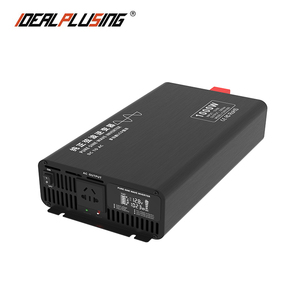
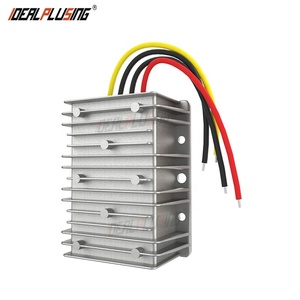
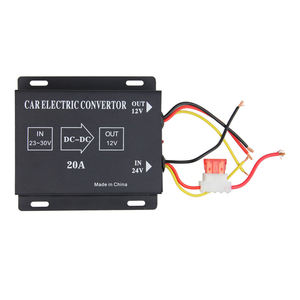
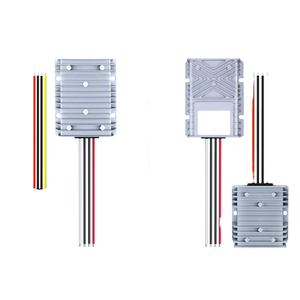
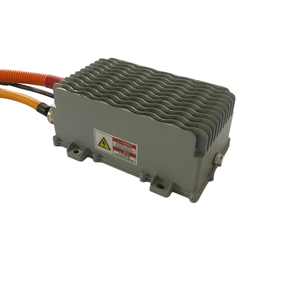
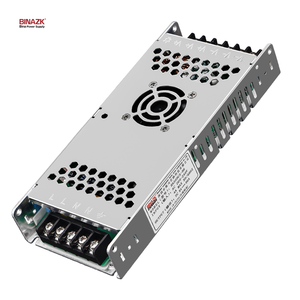
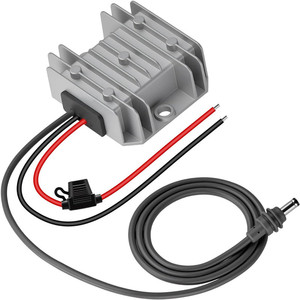
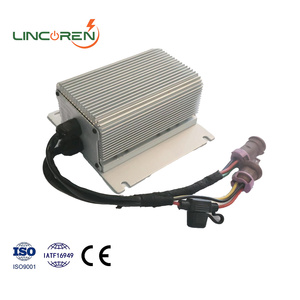
In modern industrial automation, electric vehicle (EV) powertrain architectures, heavy equipment manufacturing, and telecom power distribution, step-down voltage regulation represents a mission-critical link. A buck converter (step-down switch-mode power converter) must do far more than downscale direct current—it must deliver high power density, maintain low ripple under step-load changes, preserve high conversion efficiency across dynamic operational windows, and survive aggressive electromagnetic interference (EMI) and harsh thermal profiles.
China has evolved into the global epicenter for power electronic manufacturing and magnetic component engineering. Top-tier Chinese OEM/ODM buck converter factories have transitioned from basic contract assembly to high-complexity research, development, and advanced semiconductor packaging. By integrating Silicon Carbide (SiC) MOSFETs, Gallium Nitride (GaN) switching circuits, automated planar transformer winding, and fully automated silicone encapsulation lines, leading Chinese suppliers deliver power conversion units that rival or surpass traditional Western OEMs in thermal performance, reliability, and cost-per-watt efficiency.
Technical Insight for Engineering Procurement: Modern industrial buck converters require optimized PCB trace inductance, planar inductors, and synchronous rectification to minimize conduction losses. When specifying units for high-voltage EV applications (e.g., 80V–750V DC inputs down to 14V auxiliary buses), thermal derating headroom and transient suppressor clamping thresholds are critical design parameters.
Unlike commercial off-the-shelf consumer adapters, an industrial DC-DC buck converter manufactured for heavy machinery, forklifts, telematics, and EV buses is engineered with rigorous defense-in-depth protection principles:
Replaces traditional Schottky diodes with low Rds(on) MOSFETs, reducing conduction heat losses by up to 60% and enabling overall power conversion efficiencies exceeding 95%.
Thermally conductive polyurethane or silicone potting compound completely encapsulates the internal electronics, eliminating moisture, dust, vibration degradation, and salt-spray corrosion.
Integrated TVS diodes and LC input filters absorb load-dump spikes, inductive switching surges, and extreme voltage fluctuations inherent in heavy automotive and industrial DC grids.
As global industries accelerate electrification, smart grid adoption, and industrial IoT (IIoT) deployment, the technical demands placed on DC-DC buck converters are shifting dramatically. B2B procurement managers and system integration engineers must evaluate potential Chinese manufacturing partners against several key technological trends shaping the market through 2030:
With the commercial vehicle sector adopting higher DC bus voltages (400V to 800V EV battery platforms), buck converters are no longer limited to 24V-to-12V or 48V-to-12V step-down tasks. Modern factories are mass-producing wide-input converters (such as 80V–750V DC to 14V DC) capable of interfacing directly with high-voltage traction batteries to power 12V/24V auxiliary ECU control units, steering systems, and lighting without intermediate transformer stages.
Silicon Carbide (SiC) and Gallium Nitride (GaN) switching components are rapidly replacing conventional silicon MOSFETs in heavy-duty converters. High switching frequencies (200kHz to >1MHz) drastically reduce the physical footprint of magnetic cores and filter capacitors, allowing custom manufacturers to produce ultra-compact 1KW+ converters in low-profile aluminum enclosures.
Analog PWM control loops are increasingly augmented or replaced by Digital Signal Processors (DSP) and ARM Cortex microcontrollers. Modern buck converters feature real-time CAN bus, Modbus, or PMBus communications, allowing fleet managers and automated control systems to monitor operating temperatures, output load current, input voltage health, and operational faults dynamically.
| Architecture Feature | Legacy Buck Converters (Diode Rectified) | Modern OEM Buck Converters (Synchronous / SiC) | Enterprise Advantage / ROI Impact |
|---|---|---|---|
| Peak Efficiency | 78% - 85% | 92% - 97% | Lower heat dissipation, smaller heatsinks, energy saving |
| Input Voltage Range | Narrow ±15% nominal input | Ultra-Wide (e.g., 30V-72V, 80V-750V) | One module covers multiple battery topologies |
| Ingress Protection | Vented / IP20 Sheet Metal | IP67 / IP68 Fully Potted Die-Cast Shell | Zero failure in mining, marine, and outdoor environments |
| Thermal Density | Passive Convection Heavy Volume | High Power Density (>25W/in³) | Space-saving installation in vehicle dashboards & cabinets |
| MTBF Reliability | < 20,000 Hours | > 50,000 to 100,000 Hours | Drastically reduced field failure & warranty service costs |
When selecting a high-volume China OEM/ODM partner for custom DC-DC step-down converters, international sourcing teams must conduct stringent factory audits that go beyond standard ISO documentation. Evaluating technical capability requires verifying end-to-end design control, component sourcing integrity, and rigorous automated testing protocol.
Factory Qualification Promise: All featured products are produced under certified ISO 9001:2015 quality management systems, utilizing genuine flame-retardant materials (UL94-V0 rated) and offering custom mechanical mounting brackets, pinouts, and custom output voltage calibration upon request.
Answers to critical technical, logistics, and customization questions asked by system integrators, automotive procurement leads, and distributor partners.
A non-isolated buck converter shares a common ground (GND) path between the input and output circuits. It offers maximum electrical efficiency, smaller form factors, and lower cost, making it ideal for automotive step-down applications (e.g., 24V to 12V car electronics). An isolated converter uses a transformer to electrically separate the input and output grounds, protecting sensitive digital equipment from high-voltage transients or ground loops, which is mandatory in high-voltage industrial setups (80V-750V DC lines).
Yes. As a direct design and manufacturing factory, we offer complete OEM/ODM customization. We can engineer custom step-down ratios (e.g., 60V to 5V, 72V to 12V, 48V to 24V), adjust output current limits (from 1A up to 100A+), modify PCB layout dimensions, supply customized wire harnesses, and provide custom-branded extruded aluminum housings.
Our IP67/IP68 waterproof buck converters utilize high thermal conductivity silicone gel potting (typically >1.5 W/m-K) directly bonded to an extruded aluminum finned heatsink casing. Heat generated by power MOSFETs and inductors is rapidly conducted outward to the shell. Proper installation on a metal chassis provides additional passive heat-sinking, allowing full power operation from -40°C to +85°C ambient conditions.
Our products are engineered to comply with international power quality and safety benchmarks, including CE (EN 62368-1 standard), RoHS hazardous substance restriction compliance, FCC Part 15 Class B EMC requirements, and IP67/IP68 ingress protection certification. Specific automotive models adhere to CISPR 25 radiated emissions limits for radio interference mitigation.
Standard catalog models are maintained in modular component inventory, allowing sample orders from 1 to 10 units with lead times within 3 to 5 business days. Mass production batches (500–5,000 units) typically require 2 to 3 weeks. Custom OEM designs involving specialized tooling or unique PCB development follow an initial engineering prototype delivery timeline of 10 to 14 business days.
Whether you require standard 24V/48V/72V step-down converters or high-voltage custom power supply architectures, our engineering team is available 24/7 to provide datasheets, CAD 3D files, thermal calculations, and direct factory pricing.