
Engineered for maximum power density, ultra-low total harmonic distortion (THD), and seamless integration across industrial automation, telecommunications, and energy storage systems.

Integrated power distribution enclosure engineered with high-efficiency PFC switching matrix for utility-grade grid stability and heavy harmonic suppression.
Get a Quote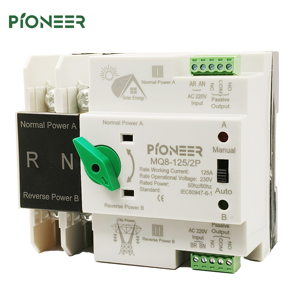
Seamless single-phase transfer switch designed for mission-critical backup transitions with embedded phase-matching & reactive power compensation.
Get a Quote
High-capacity residential and commercial solar ESS pack integrated with active PFC front-end chargers for rapid, low-loss grid recharging.
Get a Quote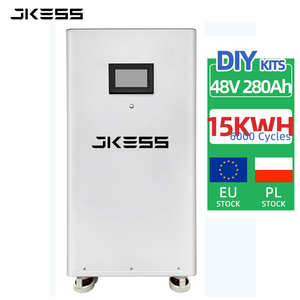
Modular DIY battery rack enclosure built for custom energy storage architectures with optional wide-input AC-DC active PFC converter integration.
Get a Quote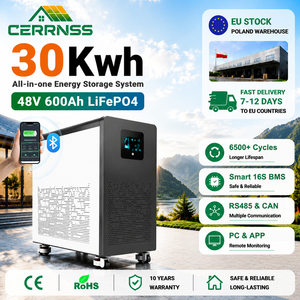
Factory-direct 16S intelligent lithium storage unit with smart Bluetooth BMS, optimized for high-power industrial power conversion modules.
Get a Quote
Precision-engineered high-stress structural frame designed using advanced metallurgy—reflecting our rigorous OEM manufacturing tolerance standards.
Get a Quote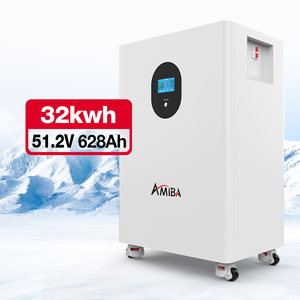
Commercial-grade energy wall with active power factor correction components, ensuring optimal line efficiency and reduced thermal dissipation.
Get a Quote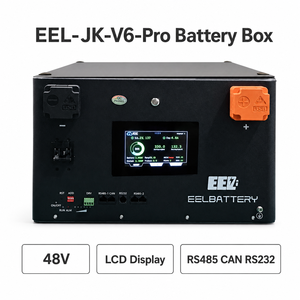
Stackable server-rack battery enclosure with built-in LCD and high-current busbar configuration, engineered for scalable microgrid installations.
Get a QuoteCombining world-class power electronics R&D, rigid ISO 9001 quality management, and rapid wholesale deployment to power mission-critical infrastructure worldwide.
We utilize cutting-edge Interleaved Boost, Bridgeless Totem-Pole, and Vienna Rectifier topologies. By incorporating Silicon Carbide (SiC) MOSFETs and Gallium Nitride (GaN) switches, our PFC modules achieve ultra-high power densities exceeding 45W/in³ while minimizing thermal losses.
From custom form factors and chassis-mount designs to specific output voltage trims (12V to 500V DC), our application engineers deliver tailored samples in as few as 3 to 7 business days, eliminating supply chain bottlenecks for enterprise procurement teams.
Every PFC module undergo 100% full-load thermal stress burn-in testing, automatic optical inspection (AOI), and electromagnetic compatibility testing. Our modules comply strictly with IEC/EN 61000-3-2 Class D, IEEE 519, CE, UL 62368-1, and RoHS standards.
An in-depth engineering analysis of active vs. passive PFC topologies, harmonic suppression, thermal dynamics, and grid compliance standards.
In uncorrected switch-mode power supplies (SMPS) and non-linear inductive loads, input rectifiers draw current in short, high-amplitude pulses rather than a smooth sinusoidal wave. This phase shift and high current harmonic content results in a poor Power Factor (PF), often between 0.55 and 0.65. Low power factor causes excessive reactive power draw, increased thermal stress on grid transformers, neutral line overheating, and severe voltage waveform distortion.
Modern industrial PFC modules actively force the AC input current to track the AC line voltage in both frequency and phase. By shifting the phase angle $\theta$ toward zero ($\cos\theta \approx 1.0$), active PFC modules raise power factor levels to 0.98 – 0.999 while dropping Total Harmonic Distortion (THD) below 3%. This drastically improves power distribution efficiency, decreases utility kVA charges, and guarantees compliance with stringent international grid regulations.
When specifying power conversion components for wholesale or OEM projects, choosing between Passive PFC (inductor/capacitor low-pass filtering) and Active PFC (boost converter with high-frequency PWM controller) is fundamental to equipment performance and regulatory compliance.
| Performance Characteristic | Passive PFC Solutions | Active PFC Modules (Our Specialty) |
|---|---|---|
| Achievable Power Factor (PF) | 0.70 – 0.85 | 0.98 – 0.999 (Near Unity) |
| Total Harmonic Distortion (THDi) | 30% – 50% | < 3% – 5% (Class D Compliant) |
| Input Voltage Range | Fixed or Narrow (115V or 230V Manual Switch) | Universal Input (85V – 264V AC Full Range) |
| Size & Weight Density | Heavy, bulky line-frequency chokes | Ultra-compact high-density modular bricks |
| Dynamic Line & Load Regulation | Slow response to transient spikes | Sub-millisecond high-speed loop recovery |
| Cost & Component Count | Low initial bill-of-materials (BOM) | Higher initial BOM, significantly lower TCO |
Our OEM manufacturing facility leads the power conversion industry by transitioning legacy boost PFC stages into wide-bandgap (WBG) Semiconductor topologies. Traditional diode bridge front-ends incur forward voltage drop losses ($V_f \times I_{in}$) across two diodes simultaneously at all times. By implementing a Bridgeless Totem-Pole Active PFC architecture paired with SiC MOSFETs, we eliminate diode bridge conduction losses entirely.
This technological leap provides three game-changing operational benefits:
Key technological transformations shaping global enterprise procurement, supply chain resilience, and power management specifications.
Analogue PWM controllers are rapidly giving way to fully digital Signal Processors (DSP) integrated with PMBus, CAN, or Modbus protocols. Future-proof procurement demands PFC modules capable of real-time telemetry—monitoring input voltage spikes, RMS current, core temperatures, and operational efficiency remotely for predictive maintenance in data centers and automated factories.
System architects are favoring standardized full-brick, half-brick, and quarter-brick enclosed PFC modules that allow modular hot-swapping and active current sharing ($N+1$ redundancy). Sourcing modular sub-assemblies drastically shortens market lead times compared to designing discrete PCB circuits from scratch.
Regulatory bodies across North America (IEEE 519), Europe (EN 61000-3-2), and Asia are enforcing harsher penalties for grid noise pollution. Procurement officers must specify active PFC front-ends to ensure end-user equipment passes Class D harmonic current limits, avoiding costly port-entry rejections or certification delays.
With the exponential growth of solar microgrids, battery energy storage systems (BESS), and DC distribution networks, demand is surging for wide-input DC-compatible active PFC converters capable of seamless transition between AC mains, diesel generator backup, and renewable DC buses.
How our factory is advancing power density, thermal dissipation, and electromagnetic compatibility for next-generation industrial applications.
By pairing high-speed Gallium Nitride (GaN) HEMTs on the high-frequency switching leg with Silicon Carbide (SiC) Schottky Barrier Diodes on the boost stage, our engineering team has lowered total switching losses by up to 65%. This breakthrough allows high-temperature operation ($T_j = 175^\circ\text{C}$) without thermal runaway risks, making our modules ideal for harsh industrial environments.
As power densities escalate past 3kW per single modular unit, traditional fan cooling reaches acoustic and spatial limitations. Our latest product lines incorporate aluminum-nitride ceramic substrate baseplates designed for direct thermal coupling to cold-plate liquid cooling circuits, maintaining low junction temperatures under continuous full-load operation.
Everything volume buyers, systems integrators, and OEM engineers need to know regarding technical specifications, minimum order quantities, lead times, and custom manufacturing.
Standard power modules are maintained in stock for rapid shipping within 3 to 5 business days. Custom OEM/ODM orders, tailored pinouts, or high-volume wholesale batches generally require 2 to 4 weeks production lead time following engineering sample sign-off.
Yes. All of our active PFC modules are engineered and certified to meet IEC/EN 61000-3-2 Class A, B, C, and D harmonic limits. Under typical operating loads (20% to 100% capacity), our modules achieve an input Total Harmonic Distortion (THDi) of under 3% to 5% and a power factor above 0.98.
Absolutely. We specialize in full OEM/ODM engineering customization. We can adjust input voltage ranges (e.g., 85V–305V AC), output DC voltages (12V, 24V, 48V, 380V, 400V DC), mechanical footprints, heatsink baseplates, conformal coating for harsh environments, and communication interfaces (PMBus/CAN).
Our PFC modules feature multi-layered hardware protection suites, including Over-Voltage Protection (OVP), Over-Current Protection (OCP), Continuous Short-Circuit Protection (SCP), Over-Temperature Shutdown (OTP), and AC Under-Voltage Lockout (UVLO) with automatic recovery.
By eliminating reactive power draw and reducing phase displacement, active PFC reduces peak RMS input current requirements. This lowers electrical utility kVA billing penalties, minimizes cable heat dissipation losses ($I^2R$), and allows engineers to run more machinery on existing circuit breakers.
Every single module undergoes automated optical inspection (AOI), high-voltage isolation breakdown testing (3000V AC Hi-Pot test), dynamic load transient testing, and 100% full-load thermal chamber burn-in prior to final packaging and delivery.
Partner directly with China's leading wholesale PFC module factory. Request a custom engineering consultation, factory-direct wholesale pricing, or sample units for your prototype validation.