
Explore engineered power conversion systems, utility-grade substations, and high-density LiFePO4 battery storage matrices designed for tier-1 commercial and industrial deployment.
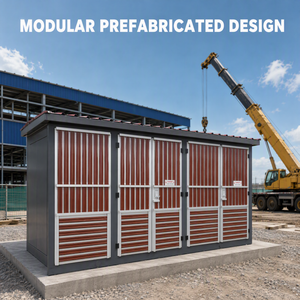
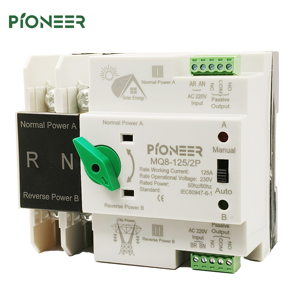
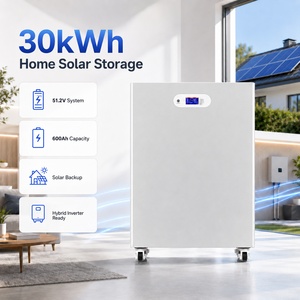
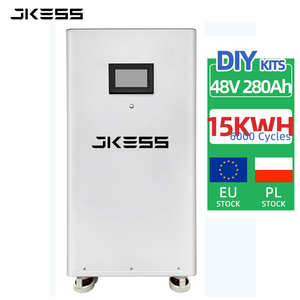
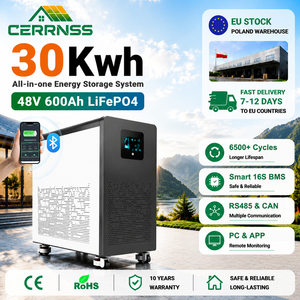
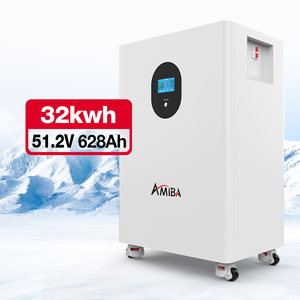
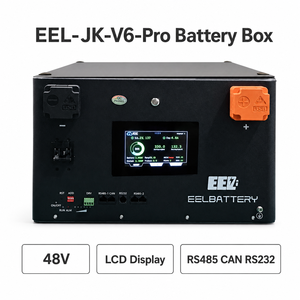
In high-stakes B2B procurement, specifying a power inverter or grid-tied energy storage ecosystem requires more than competitive pricing—it demands rigorously verified engineering, absolute thermal dependability, and total compliance transparency. As a leading China wholesale power inverters manufacturer and global exporter, our industrial footprint is built upon stringent international standards including ISO 9001:2015 certified Quality Management Systems, CE, UL 1741, IEEE 1547, and TAA-compliant sourcing parameters.
Every unit engineered in our automated facilities undergoes full-load burn-in testing, high-voltage insulation integrity verification, and dynamic harmonic distortion assessment before dispatch. Unlike standard commercial assemblers who rely on unverified third-party white-label components, our operational model maintains 100% component-level traceability from semiconductor wafers to final metal enclosures.
We incorporate Infineon and STMicroelectronics SiC MOSFETs, Texas Instruments DSP controllers, and grade-A EV-class LiFePO4 cells to ensure 15+ years of operational durability.
B2B enterprise clients work directly with senior power electronics engineers for custom topology design, transformerless optimization, and custom firmware adaptation.
With dedicated bonded warehouses in Europe and North America, standard power inverter models ship within 72 hours, while tailored OEM systems ship in under 14 business days.
The global renewable energy landscape is transitioning from passive energy generation to active, intelligent grid-supportive microgrid architectures. As power grids worldwide experience increased penetration of intermittent solar PV and wind assets, wholesale power inverter manufacturers must engineer advanced hardware capable of dynamic stability control, high frequency operation, and bidirectional power transfer.
Legacy power inverters heavily relied on Silicon IGBTs, which imposed inherent switching frequency caps (typically below 20 kHz) due to thermal dissipation limits and trailing current off-times. The integration of wide-bandgap Silicon Carbide (SiC) MOSFETs elevates switching frequencies beyond 100 kHz. This yields three critical engineering advantages:
Traditional solar inverters operated strictly in grid-following mode, relying on an established utility voltage reference to inject current synchronously. However, microgrid islanding and high-renewable penetration demand Grid-Forming Inverter Technology. These systems operate as virtual synchronous generators (VSG), establishing local voltage waveforms, providing synthetic inertia, and seamlessly absorbing instantaneous fault loads without tripping system breakers.
| Architecture Parameter | Legacy Silicon IGBT Inverters | Next-Gen SiC Hybrid Inverters | Utility Grid-Forming ESS |
|---|---|---|---|
| Switching Frequency | 8 kHz – 16 kHz | 60 kHz – 120 kHz | 20 kHz – 50 kHz |
| Peak Efficiency | 95.5% – 96.8% | 98.2% – 99.1% | 98.5% |
| Harmonic Distortion (THD) | < 3.0% at Rated Load | < 1.2% Low-Pass Filtered | < 1.5% Active Suppression |
| Grid Support Capability | Passive (P/Q Injections) | Dynamic VAR & Frequency Response | Virtual Synchronous Inertia (VSG) |
| Thermal Footprint | High (Requires Heavy Heat Sink) | Ultra-Low (Compact Forced-Air) | Liquid Cooled Matrix Option |
Modern commercial energy storage demands bidirectional power flow. High-voltage battery systems (operating between 400V DC to 800V DC) require seamless conversion between AC grid power and DC energy storage. Integrated bidirectional inverter modules combine MPPT solar charge controllers, AC-DC battery chargers, and pure sine wave DC-AC output stages within a single housing, dramatically reducing system installation complexity and balance-of-system (BOS) costs.
Sourcing power electronics from China has evolved beyond simple unit-cost arbitrage. Modern international buyers, EPC contractors, and regional distributors look for holistic manufacturer capabilities, including customized firmware localization, supply chain resilience, and post-sales technical support frameworks.
Enterprise buyers are stepping away from rigid monolithic power inverters in favor of modular stackable units. Standardized 48V/51.2V rack-mountable battery modules paired with scalable 5kW to 30kW hybrid inverters allow end-users to expand system capacities linearly. This reduces initial capital expenditure (CAPEX) while avoiding costly site structural modifications.
Lead-time volatility has reshaped inventory strategies. Premier China wholesale exporters maintain duty-paid regional stocks in key strategic nodes—such as the European Union (Netherlands, Germany) and North America—enabling tax-free, 3-to-5-day delivery to local installers, bypassing lengthy ocean transit bottlenecks.
Proprietary closed-loop communication ecosystems are rapidly being phased out. Commercial power systems must natively integrate with multi-brand EMS (Energy Management Systems) via RS485, CAN 2.0B, and open Modbus protocols. Wireless IoT modules enable real-time cloud analytics, predictive maintenance alerts, and remote firmware flashing, protecting long-term capital investments.
Detailed technical and commercial answers addressing common engineering, procurement, and logistical inquiries.
Partner with a premier Chinese wholesale manufacturer to access factory-direct pricing, customized engineering designs, robust quality verification, and reliable global fulfillment.