
1. Technical Architectural Overview of China Wall-Mounted Energy Storage & Power Equipment
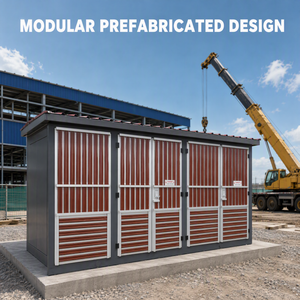
The global transition toward decentralized microgrids, commercial peak-shaving, and residential energy autonomy has exponentially elevated demand for advanced wall-mounted power distribution and energy storage systems (ESS). China has emerged as the global epicenter for the engineering, mass fabrication, and export of high-density lithium iron phosphate (LiFePO4) wall-mounted batteries, compact substations, and automatic transfer switchgear. Navigating the landscape of China wholesale wall mount suppliers and exporters requires a granular technical evaluation of electrochemistry, structural casing design, thermal dissipation profiles, and compliance standards.
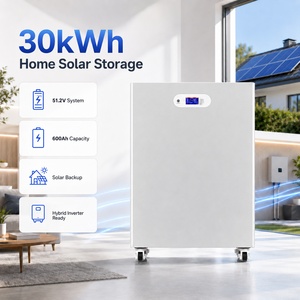
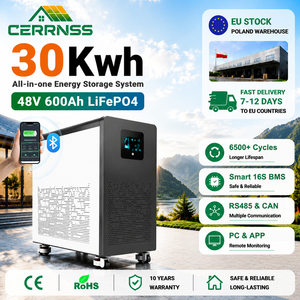
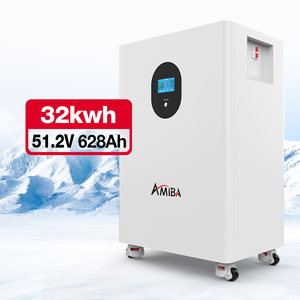
Modern wall-mounted power systems—ranging from 51.2V 100Ah (5.12kWh) compact home units to 30kWh+ modular industrial power walls—rely on precision-engineered prismatic LiFePO4 cell arrangements. Unlike traditional lead-acid or legacy lithium nickel manganese cobalt (NMC) chemistries, modern LFP cells provide intrinsic thermal stability, non-gassing characteristics under severe overcharge, and an impressive cycle life exceeding 6,000 to 10,000 cycles at 80% Depth of Discharge (DoD). This whitepaper outlines the critical engineering criteria, manufacturing standards, market procurement dynamics, and future technological vectors defining the wholesale export sector from China.
Information Gain Benchmark: Industrial wall-mounted energy storage systems are no longer passive static batteries; they are active edge-computing nodes integrated with hybrid inverters, CANbus/RS485 smart monitoring, localized thermal mitigation, and automated fire-suppression modules.
Cell Chemistry & Balancing
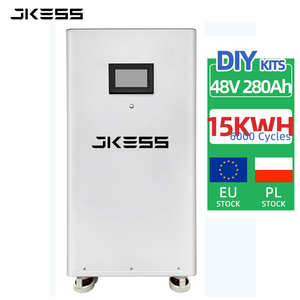
Utilization of Tier-1 prismatic 280Ah/314Ah LiFePO4 cells paired with active 2A-5A balancing BMS to prevent individual cell voltage divergence over 15-year operational spans.
Thermal & Structural Integrity
Heavy-duty cold-rolled steel enclosures rated up to IP65/NEMA 4X with integrated heat-sink channels and high-friction wall anchors built for dynamic load stresses.
Multi-Tier Protection Protocols
Hardware and software protection against over-voltage, under-voltage, short-circuit, thermal runaway, reverse polarity, and low-temperature charge inhibition.
2. Comparative Technical Metrics: Wall-Mount Topologies vs. Legacy Enclosures
B2B importers and project integrators must evaluate the operational footprint, installation labor costs, and thermal performance when selecting energy storage architectures. Wall-mounted designs yield distinct structural and electrical advantages over floor-standing cabinets or rack-mounted server rack batteries for specific commercial and residential deployment profiles.
| Evaluation Parameter | Wall-Mounted LFP Systems | Floor-Standing Power Cabinets | Standard 19-Inch Rack Systems |
|---|---|---|---|
| Spatial Footprint Efficiency | Maximum (Zero floor consumption) | Moderate (Requires dedicated floor pad) | High (Constrained to rack footprint) |
| Thermal Dissipation Vector | Convection + Back-Chassis Radiation | Forced Air HVAC / Fan Cooled | Internal Enclosure Fan Flow |
| Ingress Protection Rating | IP54 to IP65 Outdoor Ready | IP21 to IP54 Indoor/Outdoor | Typically IP20 Indoor Server Room |
| Installation Complexity | Low (Rapid wall bracket mounting) | Medium (Anchoring & pad leveling) | High (Multi-unit wiring & sliding rails) |
| Modular Scalability | Parallel expansion up to 15 units | Containerized / Multi-Cabinet | Rack Slot Expansion (Limited to height) |
| Vibration & Seismic Resistance | High (Bolted structural anchors) | Moderate (Floor mass dependent) | Medium (Requires reinforced frames) |
3. Industry Development & Future Procurement Trends (2025–2030)
The manufacturing ecosystem in China for wholesale wall-mounted electrical hardware is undergoing a massive engineering transition driven by smart grid demands and advanced cell chemical developments. Tier-1 original equipment manufacturers (OEMs) and original design manufacturers (ODMs) are pioneering four core technological trends that global sourcing managers must incorporate into their procurement specs:
Trend A: Transition to Next-Gen 314Ah Prismatic Cell Topologies
While 50Ah to 100Ah pouch and cylindrical cells dominated early wall-mount home batteries, and 280Ah prismatic cells became the industry benchmark from 2021 to 2024, the market is rapidly migrating to high-density 314Ah LiFePO4 cells. By standardizing on the 7117320 cell format factor, manufacturers can squeeze up to 16kWh of usable energy into the exact physical chassis footprint previously limited to 14.3kWh. This results in a 12% energy density boost without increasing freight volume or shipping costs.
Trend B: Cloud-Connected Edge AI BMS Architectures
State-of-the-art wall mount exporters are replacing basic microcontroller BMS units with ARM Cortex-M4 and Linux-based edge processing BMS platforms. These systems collect millisecond-level telemetry on cell voltage, internal impedance (ACIR/DCIR), and surface temperatures. By transmitting encoded telemetry over MQTT to cloud AI platforms, predictive diagnostic algorithms can identify thermal degradation anomalies weeks before failure occurs, enabling proactive field maintenance for remote commercial installations.
Trend C: High-Voltage DC Coupling (HV Wall-Mount Batteries)
Low-voltage (48V/51.2V) systems remain dominant in residential off-grid scenarios due to electrical safety simplicity. However, commercial microgrids and high-power home EV charging demand High-Voltage (HV) wall mount architectures operating between 192V DC and 600V DC. High-voltage coupling drastically reduces I²R copper transmission losses, increases inverter round-trip efficiency (RTE) from 92% to over 97.5%, and allows thinner wiring harnesses, lowering overall installation bill-of-materials (BOM).
Trend D: Ultra-Thin Profiles & Architectural Integration
End-user aesthetics are driving commercial building managers and high-end residential owners to demand ultra-thin wall mount form factors. Leading Chinese exporters have engineered heat-pipe cooling channels and flattened cell arrangements that reduce enclosure depth to under 130mm (5.1 inches). These flush-mount wall systems integrate seamlessly into utility rooms and exterior perimeter walls without intruding into vehicle parking spaces or pedestrian walkways.
Bi-Directional V2X & Microgrid Support
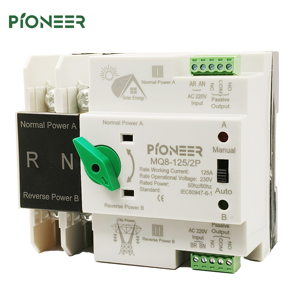
Modern wall mount energy storage systems incorporate bi-directionally compatible ATS contactors and fast-acting inverter interfaces capable of grid-forming island mode, Vehicle-to-Grid (V2G), and solar dynamic clipping.
Universal Inverter Protocol auto-Matching
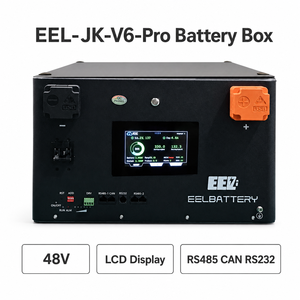
Pre-programmed CANbus and RS485 communication protocols supporting auto-detection for major global inverter brands including Victron Energy, SMA, Growatt, Deye, Solark, GoodWe, and Luxpower.
4. Enterprise Manufacturing Superiority & Quality Assurance Framework
When sourcing wall-mounted power distribution units, compact substations, and battery packages from China wholesale exporters, buyers must look beyond initial unit pricing to evaluate vendor production governance. A single battery fire or structural wall bracket failure can ruin brand reputation and create immense legal liability. The leading Chinese exporters operate under a rigorous quality control framework derived from aerospace and automotive industry standards.
Enterprise Manufacturing Standards & Global Reliability Benchmark
Drawing on decades of power engineering discipline—matching the meticulous precision of aerospace-grade suppliers—our manufacturing infrastructure ensures every exported unit delivers uncompromised reliability in extreme operating environments.
- 100% Full-Load Thermal & Electrical Burn-in Testing prior to crate sealing
- Traceable ISO 9001:2015 Quality Management & TAA / CE / UL Compliant Pathways
- Direct Access to Application Engineers for OEM Custom Schematics & Enclosures
- Rapid Prototyping Pipeline with 3-Day Expedited Sample Assembly Options
- 5-Year Direct Factory Replacement Warranty on All Metal-Enclosed Power Units
- Grade-A Fresh Cell Guarantee: No Re-badged, Refurbished, or B-Grade Stock
Technical Validation Protocol: From Inbound Cell Inspection to Crate Dispatch
A resilient OEM exporter implements end-to-end verification across every phase of production:
1. Incoming Quality Control (IQC): Automated capacity sorting machines test 100% of incoming prismatic cells for Voltage (V), Internal AC Resistance (ACIR), and Direct Current Internal Resistance (DCIR). Cells are matched within narrow tolerances (ΔV < 5mV, ΔR < 0.05mΩ) to prevent capacity throttling in assembled packs.
2. Structural Laser Welding & Mechanical Rigidity: Copper-aluminum busbars are joined via high-precision fiber laser welding, yielding ultra-low resistance electrical junctions resistant to thermal fatigue and transport vibration. Casing sheet metals undergo salt-spray chamber testing (500+ hours) to certify rust resistance in coastal marine atmospheres.
3. Outbound Quality Assurance (OQA) & Stress Testing: Assembled wall-mount units undergo high-pot (dielectric withstand) isolation testing, full charge-discharge thermal imaging, and vibration simulation. Packaging utilizes heavy-duty reinforced wooden crates with UN38.3 certified shock-absorption padding suitable for sea freight hazardous cargo handling.
5. Global Buyer Sourcing Guide: Regulatory Compliance & Lifecycle ROI
Importing commercial wall-mounted power distribution gear and energy storage systems from Chinese manufacturers requires navigating strict global regulatory frameworks. Obtaining the correct certifications prevents customs holds and ensures eligibility for regional renewable energy incentives.
Crucial Certification Matrix for Importers
Before issuing a Purchase Order (PO), B2B sourcing officers should verify that the manufacturer provides valid third-party test reports from accredited bodies (SGS, TUV, Intertek, Dekra):
- Transport Compliance: UN38.3 (Lithium Battery Transportation Standard) and MSDS (Material Safety Data Sheet) with full Dangerous Goods (DG) Class 9 shipping documentation.
- Electrical Safety (Europe & International): CE-LVD (EN 62619 for industrial lithium batteries; EN 62477-1 for power conversion units) and CE-EMC compliance.
- North American Grid & Battery Standards: UL 1973 (Stationary Battery Safety), UL 9540 (Energy Storage Systems & Equipment), and UL 9540A (Thermal Runaway Fire Propagation Testing).
- Grid Interconnection: IEC 62116, IEEE 1547, and VDE-AR-N 4105 for integrated switchgear and ATS units.
Total Cost of Ownership (TCO) & Levelized Cost of Storage (LCOS) Formula
Evaluating China wholesale pricing purely on a dollar-per-kilowatt-hour ($/kWh) basis can be misleading if cell longevity and round-trip efficiency are ignored. Sourcing managers should utilize the Levelized Cost of Storage (LCOS) equation when comparing supplier quotes:
LCOS ($/kWh) = [ Initial CAPEX + ∑ (O&M Costs) ] / [ Total Usable Lifetime kWh Delivered ]
Where Usable Lifetime kWh = Rated Capacity (kWh) × Recommended DoD (%) × Rated Cycle Life × System Round-Trip Efficiency (%)
Sourcing high-cycle wall-mount units (e.g., 6,000 cycles at 80% DoD with 95% RTE) from top-tier Chinese exporters routinely yields an LCOS under $0.045 per kWh delivered over a 15-year lifecycle. This metric underscores the economic viability of Chinese wall-mounted battery systems compared to legacy power sources.