
Engineered for demanding AC/DC current monitoring, motor drive control, renewable energy inverters, and industrial automation power systems.
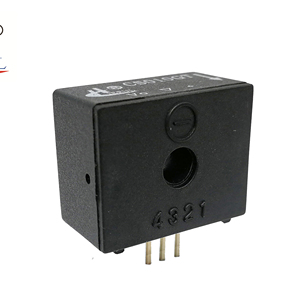
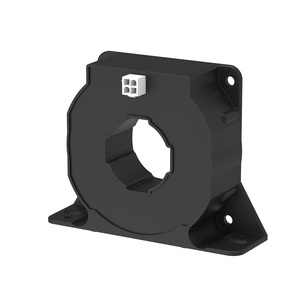
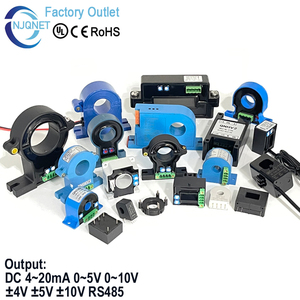
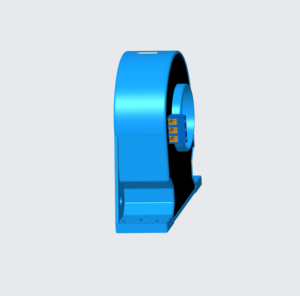
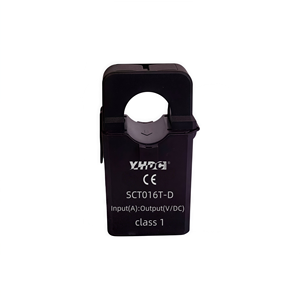
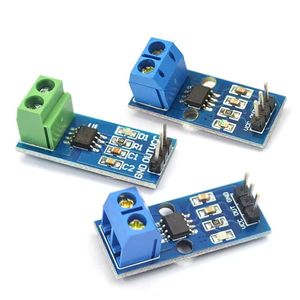
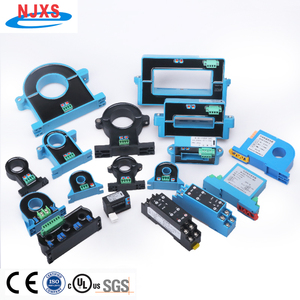
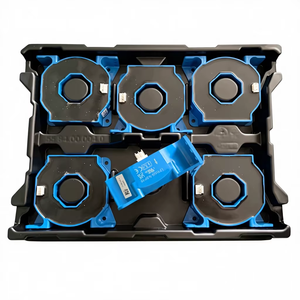
Modern electrical engineering is experiencing a profound paradigm shift. Driven by the aggressive proliferation of Electric Vehicles (EVs), Wide Bandgap (SiC and GaN) power semiconductor topologies, utility-scale Energy Storage Systems (ESS), and automated smart factories, the demand for high-precision, highly responsive current sensing technology has reached an all-time high. Current sensors are no longer passive diagnostic tools; they are dynamic, safety-critical feedback elements within closed-loop control algorithms.
Selecting the optimal OEM manufacturing partner and sensor architecture dictates system efficiency, thermal management, thermal drift resilience, and overall electromagnetic compatibility (EMC). This industry white paper provides hardware engineers, technical procurement leaders, and system architects with an authoritative evaluation framework for selecting high-tier current sensor factories globally.
Global supply chain diversification demands a rigorous understanding of the tier-1 OEM manufacturing landscape. Below is a comparative benchmarking breakdown evaluating leading global factories and contract manufacturers based on core technology strength, quality management systems, and customization capabilities.
| Manufacturer / OEM Category | Primary Topology Focus | Typical Precision Class | Target Applications | OEM Customization Agility |
|---|---|---|---|---|
| 1. Tier-1 Global OEM Factories (LEM, Honeywell) | Closed-Loop Hall, Fluxgate, Automotive Modules | 0.1% - 0.5% | Traction Inverters, Aerospace, High-End MRI | Moderate (Long NPI Cycle) |
| 2. Silicon-Integrated Specialists (Allegro, Melexis) | Integrated IC Coreless Hall, AMR, GMR Sensors | 1.0% - 2.0% | Automotive Subsystems, Consumer Electronics | Low (Standard IC Packages) |
| 3. Precision Asian OEM Manufacturers (NJXSE, YHDC) | Split-Core, DIN-Rail Transducers, PCB Clamp-on | 0.2% - 1.0% | Smart Grids, Sub-metering, Factory Automation | High (Custom Turnaround <2 wks) |
| 4. High-Frequency Magnetic Specialists (VAC, Tamura) | Nanocrystalline Core Fluxgate, Zero-Flux | < 0.05% | Laboratory Instrumentation, Grid Quality Monitors | Moderate |
| 5. Specialized Modular Integrators | Custom Busbar Transducers, High-Ampere Units | 0.5% | Mining Equipment, Heavy Railway, Electrolysis | Very High |
Precision magnetic sensing requires strict quality controls, low magnetic hysteresis materials, and rigorous environmental stress screening.
Every current transducer shipped undergoes multi-point temperature compensation across -40°C to +125°C. Automated laser trimming ensures offset voltages remain virtually zero under extreme ambient fluctuations.
Featuring reinforced isolation up to 5000V AC RMS and creepage/clearance distances exceeding 8mm, our factory's components strictly comply with international safety standards including IEC/EN 61800-5-1 and UL 94-V0 flammability ratings.
From non-standard busbar aperture geometries (such as rectangular 16mm to 100mm split cores) to custom pinout headers and RS485 Modbus digital bus protocols, custom prototypes are delivered within 10 to 14 business days.
As power electronics migrate from Silicon IGBTs to Wide Bandgap Silicon Carbide (SiC) and Gallium Nitride (GaN) MOSFETs, switching speeds are surging from 20kHz to upwards of 500kHz. Traditional magnetic cores exhibit severe eddy current losses and phase delays at these high frequencies. Forward-looking OEM sourcing strategies must prioritize the following four technological vectors:
Coreless IC Hall effect designs completely remove soft magnetic cores, eliminating magnetic saturation risks, reducing physical weight, and achieving near-zero phase error. Meanwhile, Tunneling Magnetoresistance (TMR) sensors are rapidly gaining ground due to their extreme sensitivity, lower power consumption, and bandwidth capability reaching beyond 500kHz.
Analog 0-5V or 4-20mA outputs are increasingly giving way to localized digital intelligence. Factory automation systems require current transducers equipped with onboard microcontrollers capable of transmitting direct RS485 Modbus, CANopen, or Ethernet/IP data. Integrated edge algorithms compute real-time RMS, peak-to-peak current, and harmonic distortion directly on the transducer module.
Utility solar installations and battery storage banks cannot afford operational downtime during sensor integration. Split-core current sensors (such as the YHDC SCT series and NJXSE split-core models) feature latching magnetic mechanisms that enable quick installation over live conductors without interrupting primary power distribution.
Under-the-hood EV traction inverters and heavy industrial drives demand operation up to +125°C ambient temperatures. Advanced OEM factories now employ specialized epoxy encapsulation techniques, ceramic substrate IC mounting, and AEC-Q100 qualified silicon components to guarantee zero thermal degradation over 15-year operational lifespans.
Strategic sourcing directors are moving away from sole-source vendor dependencies. Supply chain disruptions have highlighted the vulnerability of single-source magnetics procurement. Key strategic shifts include:
Open-Loop Hall sensors concentrate magnetic flux into a sensor IC outputting a proportional voltage; they offer low power consumption, light weight, and lower cost. Closed-Loop sensors use a secondary feedback winding to produce a opposing magnetic field that balances the core flux to zero. Closed-Loop provides superior accuracy (<0.2%), fast response (<1μs), and excellent temperature stability, making them ideal for high-precision motor drives.
Measure the outer diameter (OD) of the conductor or copper busbar, including all insulation layers. Always select an aperture size (e.g., 16mm, 24mm, 36mm, or 50mm) that provides at least 15% clearance around the conductor to prevent mechanical stress on the magnetic core joints and to maintain optimal magnetic coupling alignment.
Yes. Both Open-Loop and Closed-Loop Hall Effect transducers, as well as Fluxgate sensors, inherently measure true RMS AC, pure DC, and complex pulsed or complex wave current signals without requiring physical electrical contact with the primary circuit.
Standard catalog samples typically ship within 3 to 5 business days. Custom mechanical enclosures, specialized PCB footprints, or non-standard transformation ratios usually require 2 weeks for prototype delivery, with full mass-production scaling achievable within 4 to 6 weeks.
Speak directly with our factory application engineering team to request custom engineering datasheets, pin-to-pin cross-reference analysis, or sample evaluation units.