Verified OEM/ODM Power Supplies & Buck Modules for Industrial, Automotive, and Telecommunications Engineering
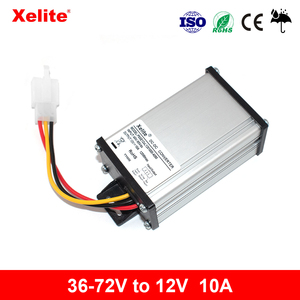
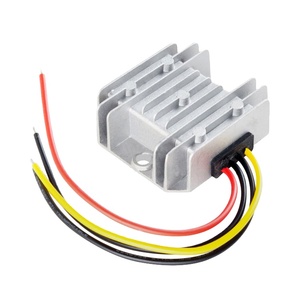
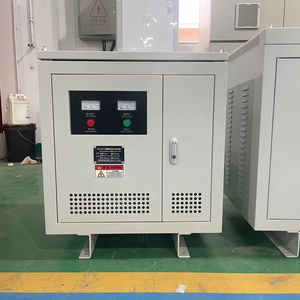
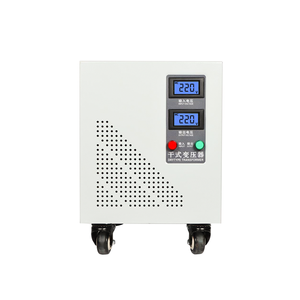
In modern industrial automation, electric mobility, aerospace, and renewable energy infrastructure, voltage down-conversion architecture forms the foundational backbone of operational stability. System design engineers and procurement officers selecting hardware from the Top 10 Step Down Suppliers & Exporters face complex tradeoffs among thermal dissipation limits, total harmonic distortion (THD), electromagnetic compatibility (EMC), and transient suppression dynamics.
Voltage step-down technology spans two major engineering domains: AC-to-DC/AC-to-AC Magnetic Transformers and DC-to-DC Switch-Mode Buck Converters. Selecting the correct topology requires a clear understanding of galvanic isolation requirements, line/load regulation specs, and operating environmental extremes.
To assist technical buyers in identifying the best topology for specific duty cycles, the following matrix compares core step-down conversion approaches across key industry metrics:
| Conversion Architecture | Typical Input / Output Range | Peak Efficiency | Galvanic Isolation | Primary Industry Applications |
|---|---|---|---|---|
| Switch-Mode DC-DC Buck | 9V - 120V DC In / 3.3V - 24V DC Out | 92% - 98.5% | Non-Isolated (Standard) | E-bikes, Robotics, Telecom, Golf Carts |
| Linear Voltage Regulator | 5V - 48V DC In / 1.2V - 24V DC Out | 30% - 60% | Non-Isolated | Medical Instrumentation, Audio, Precision Sensors |
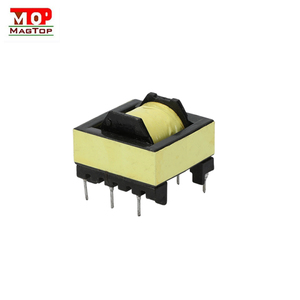
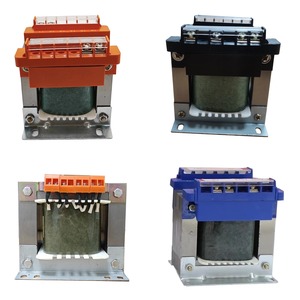
| Low-Frequency EI/EE Transformer | 110V - 480V AC In / 12V - 24V AC Out | 85% - 92% | High (Isolated Windings) | HVAC, Industrial Control Panels, Heavy Machinery |
| 3-Phase Dry Isolation Transformer | 220V - 480V AC In / 110V - 240V AC Out | 95% - 98.8% | High (Reinforced Dry Isolation) | Factory Automation, Data Centers, Power Grids |
When reviewing bids from step-down suppliers and exporters, qualified power engineers systematically evaluate six critical technical metrics:
Integrated TVS diodes safeguard sensitive buck circuitry against inductive voltage spikes, load shedding, and electrostatic discharge (ESD) in automotive and industrial setups.
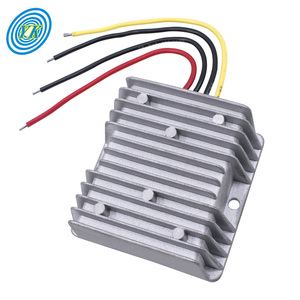
High-density buck modules require potting compounds or extruded aluminum heat sinks to maintain full load rating up to +85°C ambient operational limits without thermal shutdown.
For marine, off-road e-mobility, and outdoor telecommunication cabinets, fully epoxy-potted IP68 buck converters eliminate moisture penetration and vibration-induced failures.
The step-down power conversion market is undergoing a structural transition driven by wide-bandgap (WBG) semiconductors, strict energy conservation mandates, and decentralized smart grid architectures. Procurement teams must align purchasing strategies with four key technological developments:
1. Wide Bandgap (GaN and SiC) Power Stages: Gallium Nitride (GaN) and Silicon Carbide (SiC) FETs are replacing legacy silicon MOSFETs in step-down switchers. Operating at switching frequencies beyond 1 MHz, GaN-based buck converters reduce magnetic element footprints by up to 60% while achieving ultra-high conversion efficiencies exceeding 98%.
2. Wide Input Range Multi-Voltage Scaling: Modern electric transport systems operate across wide battery voltage bands (from 20V up to 120V nominal). Universal-input step-down converters like the 20-120V to 12V 10A Golf Cart Reducer eliminate the need for distinct SKU inventories by dynamically stabilizing outputs across varying battery state-of-charge (SoC) profiles.
3. Advanced Digital Telemetry (PMBus & CANbus): Next-generation industrial power supplies are shifting from analog pot tuning to digital control loops. Real-time telemetry reporting over CANbus or PMBus enables predictive maintenance, temperature monitoring, dynamic output voltage scaling, and remote fault diagnostics in critical automated facilities.
4. Eco-Design Directives and Circular Manufacturing: Regulatory frameworks such as EU RoHS 3, REACH, and US TAA compliance mandate non-hazardous materials and traceable supply chains. Top exporters now publish full Life Cycle Assessments (LCAs) and design transformers with high-grade recyclable silicon steel laminations and copper coils.
Partnering with a tier-1 step-down manufacturer ensures your equipment complies with rigorous global standards, eliminating field failures and costly safety recalls.
Every step-down power module and isolation transformer is engineered under strict quality management systems, meeting US Federal TAA compliance for defense, government, and aerospace programs.
To guarantee zero-defect delivery, units undergo full electrical parameter verification, thermal imaging, and high-voltage dielectric withstand testing (Hipot) prior to international export packaging.
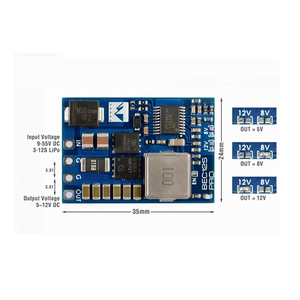
From custom winding taps on 50kVA 3-phase isolation units to specialized PCB footprints for BEC step-down modules, custom prototypes can be designed, built, and shipped within rapid 3-day to 9-day lead times.
All products hold full compliance certifications including CE, RoHS, UL 508, and FCC Class B electromagnetic radiation thresholds for global market entry.
Direct technical answers to common questions asked by industrial buyers and engineering managers sourcing step-down transformers and DC converters: