
Explore our industrial-grade power modules, modular LiFePO4 battery banks, automated transfer systems, and prefabricated outdoor substations certified for international utility and microgrid deployments.
In modern industrial automation, renewable energy storage systems (ESS), telecommunications infrastructure, and utility substations, the battery charger is far more than a simple AC-to-DC rectifier. It represents the central nervous system governing electrical energy conversion, battery health preservation, continuous load backup, and microgrid stabilization. Specifying enterprise battery charging infrastructure requires evaluating thermal handling, electromagnetic interference (EMI), voltage ripple limits, closed-loop feedback response, and systemic redundancy under adverse field conditions.
As a global OEM/ODM manufacturer backed by over 68 years of continuous power conversion leadership (originating from USA engineering standards established in 1957), our manufacturing facilities engineer industrial battery chargers and power supplies engineered for zero-downtime mission-critical environments. From precision linear regulated charging topologies for noise-sensitive control loops to high-density switch-mode chargers for large-scale LiFePO4 cell stacks, our systems satisfy strict regulatory compliance frameworks including ISO 9001:2015, TAA compliance, UL 508, and IEC 62619 standards.
Selecting the optimal power supply and battery charging architecture involves tradeoffs between electrical conversion efficiency, physical power density, total harmonic distortion (THD), and electromagnetic noise isolation. The parametric table below presents a comparative analysis across major industrial power conversion topologies used in battery manufacturing and ESS plant installations:
| Conversion Topology | Typical Efficiency | DC Ripple & Noise | Thermal Derating Footprint | Primary Industrial Use Case |
|---|---|---|---|---|
| Switch-Mode Battery Chargers (SMPS) | 88% - 96% | < 100 mV p-p | Compact, convection/fan cooled up to 60°C | LiFePO4 ESS battery racks, electric mobility fleet charging, stationary energy backup. |
| Linear Regulated Power Supplies | 45% - 65% | < 3 mV RMS (Ultra-Low) | Heavy heatsink footprint required; localized dissipation | Avionics instrumentation, low-noise laboratory testing, sensitive medical telemetry loads. |
| High Voltage DC Rectifiers (to 30 kVdc) | 90% - 94% | < 0.1% full scale | Shielded modular enclosure with liquid/forced-air paths | Industrial electrostatic precipitators, particle accelerators, specialized battery cell formation. |
| N+1 Redundant Power Systems | 92% - 95% | < 50 mV RMS | Hot-swappable 1U-6U rack systems with fault isolation | Datacenter UPS backup, utility 10kV/35kV substations, continuous telecom DC plant operations. |
Enterprise procurement managers and principal systems engineers do not merely purchase battery charger hardware; they invest in predictable operational reliability and verifiable vendor integrity. Operating out of state-of-the-art manufacturing hubs in Easton, Pennsylvania and Melbourne, Florida, our manufacturing philosophy eliminates supply chain ambiguity.
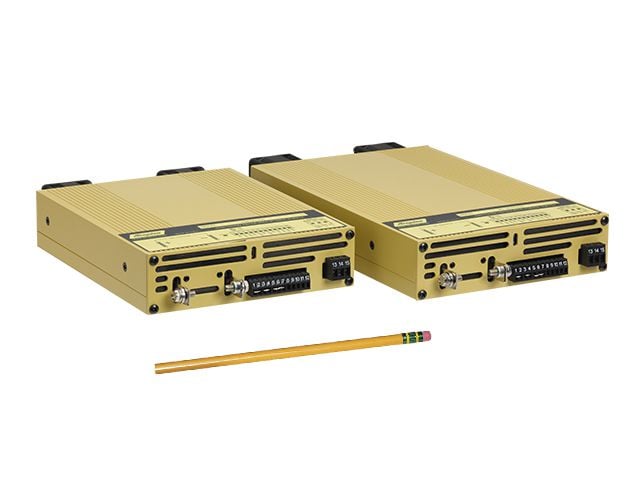
Modular AC-DC and DC-DC charger modules featuring wide-adjust output control, constant current limiting, and integrated active power factor correction (PFC > 0.99).
Every industrial charger unit is assembled fresh upon order placement, subjected to full thermal burn-in testing, and custom-tuned to client battery chemistry profiles.
Delivering programmable precision from 0 Vdc to 30 kVdc, covering standard 48V/51.2V LiFePO4 packs up to high-voltage industrial battery formation testing benches.
Integrated ORing diodes and smart active balancing allow zero-downtime hot-swapping in high-availability utility and telecom DC microgrids.
Accelerate your engineering cycle with downloadable 3D STEP models, mechanical drawings, thermal derating curves, and schematics ready for CAD layout integration.
High-efficiency switchers capable of producing up to 600W under passive convection cooling—eliminating mechanical fan failure points in dust-prone environments.
Reflecting decades of proven mean-time-between-failure (MTBF) metrics, all metal-encapsulated power supplies and chargers are backed by our 5-year replacement guarantee.
The global battery charger market is undergoing a paradigm shift driven by the rapid adoption of renewable microgrids, grid-scale Lithium Iron Phosphate (LiFePO4) storage, and high-voltage direct current (HVDC) distribution. Industrial procurement leaders must align their sourcing strategies with four key technology trends transforming power conversion hardware:
Silicon Carbide (SiC) and Gallium Nitride (GaN) power MOSFETs are replacing traditional Silicon IGBTs in industrial battery chargers. SiC technology elevates switching frequencies above 200 kHz, reducing magnetic transformer size by 40% while achieving peak conversion efficiencies above 97%.
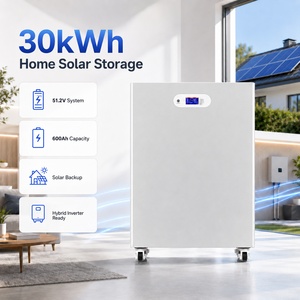
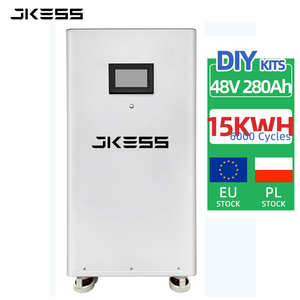
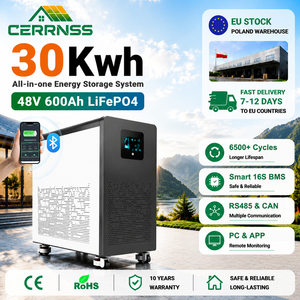
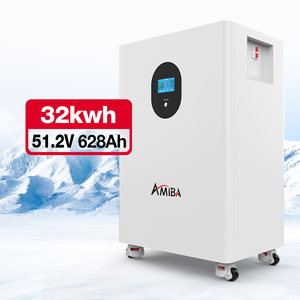
Modern battery chargers no longer operate as standalone voltage sources. High-capacity LiFePO4 packs (such as 51.2V 280Ah/314Ah configurations with JK active balancing BMS) require dynamic CANbus 2.0B or Modbus RTU communication protocols that automatically modulate charging currents based on real-time cell temperatures and voltage balance.
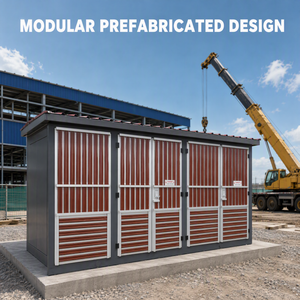
Industrial facility expansion demands rapid deployment of step-down transformers and DC distribution hubs. Compact American-type prefabricated substations integrate medium-voltage switchgear, step-down transformers, automatic transfer switches (ATS), and central battery charger banks into an all-in-one weatherproof enclosure.
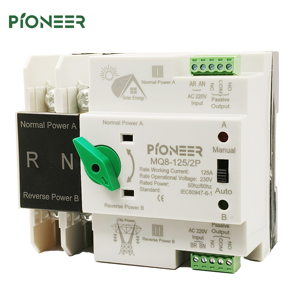
To eliminate operational downtime during utility grid voltage sags or total blackout events, enterprise power setups pair battery storage racks with high-speed dual-power transfer switches capable of completing transfer routines in under 8 milliseconds.
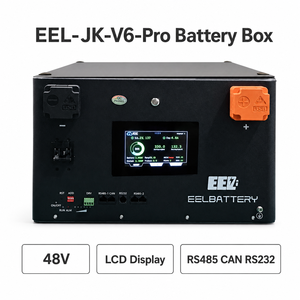
Standardized 19-inch stackable battery enclosures (such as EEL 16S 48V kits) allow facility managers to scale backup reserves incrementally from 5kWh to over 300kWh without altering central charger cabinet wiring.
Future battery chargers incorporate predictive telemetry algorithms that calculate state-of-health (SOH) and internal cell resistance trends, enabling proactive maintenance before cell degradation interrupts critical operations.
Comprehensive answers regarding lead times, customization, compliance standards, and thermal specs for industrial battery charger and energy storage procurement.
Most of our standard industrial battery chargers and power supplies are freshly built and shipped within 3 business days of order confirmation. Larger multi-output custom assemblies, prefabricated outdoor substations (10kV/35kV), or high-capacity rack-mount systems typically complete testing and ship within 9 business days.
Yes. Every power supply and battery charger unit is designed, assembled, and burn-in tested at our ISO 9001:2015 certified manufacturing facilities located in Easton, Pennsylvania and Melbourne, Florida. Our products fully satisfy TAA compliance requirements for federal procurement and defense contractors.
Switch-mode chargers (SMPS) are recommended for applications requiring high efficiency (>90%), lightweight design, and high current outputs (such as 48V 100Ah-600Ah LiFePO4 battery banks). Linear regulated units are specified for noise-sensitive control circuitry, avionics testing, and instrumentation where ultra-low ripple (<3 mV RMS) and zero high-frequency switching EMI are non-negotiable.
Yes. Our industrial rack-mount and wall-mount chargers support N+1 redundant parallel configurations. Integrated isolation diodes and smart current-sharing circuitry ensure that if a single power module experiences an anomaly, secondary modules instantly assume the load without voltage dropout.
Our programmable and wide-adjust chargers support integration with leading active balancing BMS platforms (such as JK BMS, Seplos, and Daly). Communication can be established via CANbus, RS485, or Bluetooth LE to implement auto-cutoff, temperature throttling, and cell voltage balancing.
Our metal-enclosed convection-cooled units operate at 100% rated load up to 40°C ambient temperatures. Derating linearly by 2.5% per °C between 40°C and 70°C ensures continuous system stability without triggering thermal shutdown limits.