

Explore field-tested, industrial-grade power distribution units, compact substations, automatic transfer switches, and high-density energy storage battery racks engineered for maximum operational uptime.
An in-depth comparative evaluation of hard-switched Pulse Width Modulation (PWM) versus Zero Voltage Switching (ZVS) resonant topologies in next-generation high-density power systems.
Traditional hard-switched converters force power MOSFETs or IGBTs to transition between conducting and non-conducting states while voltage and current overlap across the semiconductor junction. This simultaneous voltage-current exposure creates switching losses proportional to switching frequency ($P_{sw} \propto f_{sw}$), severely limiting power density and generating high-frequency Electromagnetic Interference (EMI).
Resonant converters solve this physical bottleneck by shaping voltage or current waveforms into sinusoids using an LC or LLC tank circuit. Through Zero Voltage Switching (ZVS) or Zero Current Switching (ZCS), the switching elements transition precisely when voltage across the switch drops to zero or current through it reaches zero. This eliminates capacitive turn-on losses and reduces thermal dissipation down to conduction-only losses.
Selecting the optimal resonant converter topology depends fundamentally on load variability, input voltage range, and output requirements. The LLC series resonant converter and LCC parallel-series resonant converter represent the industry standards for high-performance AC-DC and DC-DC power modules.
An LLC converter utilizes two inductors (magnetizing inductance $L_m$ and series resonant inductance $L_r$) combined with a resonant capacitor $C_r$. It offers narrow switching frequency variation over wide load ranges, retaining ZVS from zero load to full overload conditions. This makes LLC the preferred topology for server power units, EV onboard chargers, and telecommunications rectifiers.
Conversely, LCC converters integrate a parallel resonant capacitor across the transformer primary. LCC topologies excel in wide output voltage variation regimes (such as high-voltage power supplies from 0 to 30 kVdc or wide-range battery chargers), maintaining soft-switching capabilities even down to short-circuit conditions.
Information Gain Insight: Modern power architectures integrating Gallium Nitride (GaN) and Silicon Carbide (SiC) switches into LLC resonant topologies achieve power densities exceeding 100 W/in³, operating with passive convection cooling where conventional PWM switchers require forced-air fan arrays.
System architects must weigh trade-offs between component count, frequency control logic, and total cost of ownership. The benchmark table below illustrates why leading manufacturers are transitioning mission-critical infrastructure to resonant power architectures:
| Performance Metric | Conventional Hard-Switched PWM | LLC Series Resonant Converter | LCC Series-Parallel Converter |
|---|---|---|---|
| Peak Efficiency | 88% – 92% | 96% – 98.8% | 94% – 97.2% |
| Switching Losses | High ($P_{sw} = V \cdot I \cdot f \cdot t_{sw}$) | Near Zero (ZVS Turn-on) | Near Zero (ZVS/ZCS Transition) |
| EMI / RFI Radiation | High ($\mathrm{d}v/\mathrm{d}t$ spikes require heavy filtering) | Ultra-Low (Sinusoidal currents) | Low (Filtered resonant tank) |
| No-Load Capability | Excellent | Requires Burst Mode or Frequency Shift | Excellent (Parallel Cap Resonates) |
| Primary Application | Budget AC-DC Power Supplies | Data Centers, Telecom, EV Fast Charging | High-Voltage 30kV, Laser & X-Ray Power |
Key technological and supply chain shifts reshaping global procurement of industrial power converters, energy storage conversion systems, and substation infrastructure.
Silicon power MOSFETs are fast approaching their theoretical bandgap limits. Sourcing teams are increasingly specifying Gallium Nitride (GaN) and Silicon Carbide (SiC) switches within resonant converters. GaN enables switching speeds in the Megahertz range with zero reverse recovery charge ($Q_{rr}$), allowing resonant tanks to utilize ultra-small planar transformers.
Analog resonant controllers are being rapidly replaced by high-speed Digital Signal Processors (DSPs) and ARM Cortex microcontrollers running adaptive boundary-mode control algorithms. DSP-driven resonant converters allow real-time monitoring of tank currents, automatic dead-time tuning to ensure ZVS under transient shocks, and PMBus/CAN telemetry integration for predictive maintenance.
Global defense contractors, aerospace systems builders, and critical infrastructure operators are moving away from unverified off-shore supply chains. Sourcing managers now mandate Trade Agreements Act (TAA) compliance, ISO 9001:2015 certified quality systems, and domestic U.S. manufacturing facilities to guarantee components are free from gray-market counterfeit risks.
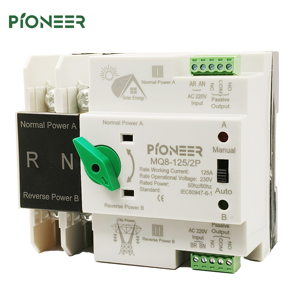
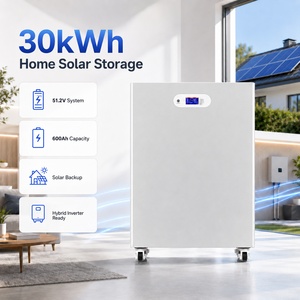
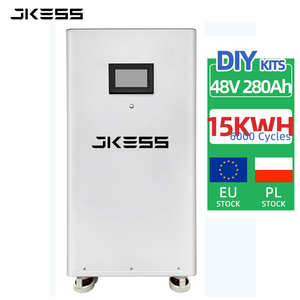
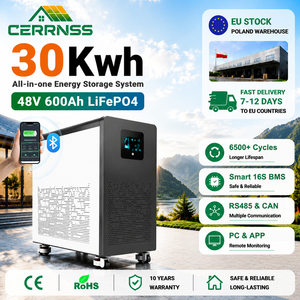
With the explosive expansion of commercial LiFePO4 Battery Energy Storage Systems (ESS), grid-tied high-voltage substations, and automated transfer switches (ATS), power conversion hardware must handle bi-directional energy flow. Resonant dual active bridge (DAB) topologies are becoming the standard interface connecting high-voltage DC battery racks (such as 51.2V 300Ah packs) directly to 10kV–35kV compact substations.
Combining nearly seven decades of American engineering heritage with agile production facilities built to deliver standard and custom power supplies with zero defect rates.
Every converter, power supply module, and rack system is engineered, built, and burn-in tested at our state-of-the-art facilities in Easton, Pennsylvania and Melbourne, Florida. We maintain absolute control over every step of assembly—from magnetic winding and surface-mount technology (SMT) placement to final mechanical enclosure housing.
In an industry accustomed to 16 to 24-week lead times, our modular inventory system allows us to assemble, test, and dispatch standard and catalog-configured units within 3 business days of receiving an order. Complex multi-output custom power systems typically ship within 9 business days.





Comprehensive answers regarding resonant power converter selection, thermal management, compliance standards, and custom build schedules.
Resonant converters utilize Zero Voltage Switching (ZVS) or Zero Current Switching (ZCS) to drastically minimize semiconductor turn-on and turn-off losses. This enables much higher switching frequencies (often >300 kHz), allowing engineers to reduce magnetic transformer dimensions while achieving conversion efficiencies up to 98.8%. Furthermore, the smooth sinusoidal current waveforms dramatically decrease Electromagnetic Interference (EMI) emissions, simplifying system-level compliance with MIL-STD-461 and FCC Class B standards.
Specify an LLC Series Resonant converter when your application calls for a fixed or narrow DC output voltage under variable load conditions (e.g., 48V server backplanes, 12V bus converters, telecommunication power supplies). LLC converters provide ultra-high efficiency near the resonant frequency. Specify an LCC Parallel-Series converter when the system requires a wide adjustable output voltage range (e.g., 0-5 Vdc up to 0-30 kVdc high voltage supplies) or continuous constant-current operation into fluctuating load impedances.
Standard metal-enclosed power supplies and catalog resonant modules are built to order and shipped within 3 business days. Customized multi-output rack assemblies, specialized voltage configurations, or N+1 redundant power systems typically ship within 9 business days of order confirmation. Every unit undergoes full functional testing and high-temperature burn-in prior to dispatch.
Yes. All power conversion products are manufactured under an ISO 9001:2015 certified quality management system at our plants in Easton, PA and Melbourne, FL. Because all assembly, testing, and packaging occur in the United States, our products are fully compliant with the Trade Agreements Act (TAA), making them eligible for U.S. Federal Government, Department of Defense, and GSA schedule procurement.
LiFePO4 batteries (such as 51.2V 280Ah/300Ah packs) require stable, low-ripple constant-current/constant-voltage (CC/CV) charging profiles to maximize battery cell lifespan. Resonant converters provide exceptionally clean DC output with near-zero voltage ripple, reducing harmonic heating in lithium battery cells. Additionally, their fast transient response handles high-current battery step-loads without triggering BMS over-current cutoffs.
Whether you need a standard off-the-shelf resonant supply, a custom multi-output 19" rack system, or high-density industrial power distribution hardware, our U.S.-based engineering team is ready to evaluate your specifications.