Industrial Product Portfolio
CE Certified Redundant Systems & Power Assemblies
Featured exporting solutions compliant with European CE standards and ISO 9001:2015 quality assurance frameworks for UAE industrial deployments.
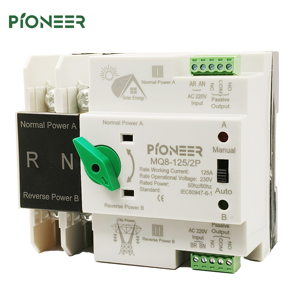
Automatic Transfer Switch ATS 100A 2P Dual Power Transfer Switch Single Phase
Get a Quote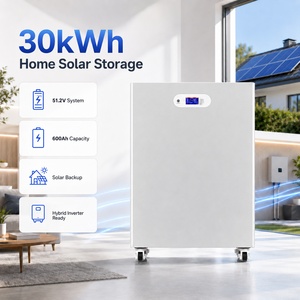
51.2V 15Kwh 20KWH 30KWH Lifepo4 Lithium Solar Battery 48V 280Ah 300Ah Lithium Ion Battery Pack 30Kwh Home Energy Storage System
Get a Quote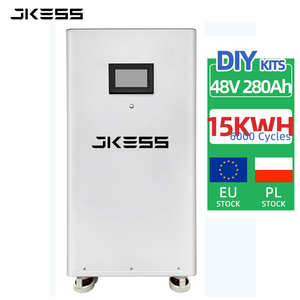
JKESS Diy 51.2V 280Ah 314AH Lifepo4 Battery Box 280Ah Lifepo4 Battery Rack Battery Box Diy Kit
Get a Quote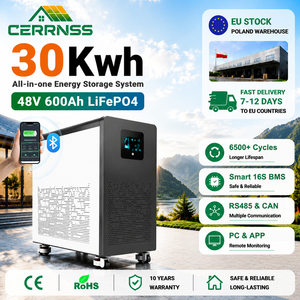
EU STOCK Tax Free LiFePO4 48V 100Ah 5Kwh 300Ah 15Kwh 16S Bluetooth BMS 51.2V 30Kwh 48V 600Ah LiFePO4 Home Energy Storage Battery
Get a Quote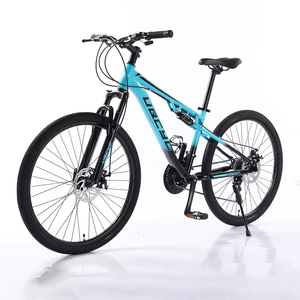
29er Full Suspension MTB 24 Speed Steel Frame Mountain Bicycle Dual Suspension for Off Road Riding
Get a Quote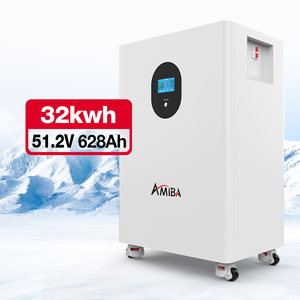
Floor Home Lifepo4 Battery 51.2V 10kWh 30kWh Lithium Ion Batteries Solar Energy Storage Power Wall Mount System 48V 600Ah LFP
Get a Quote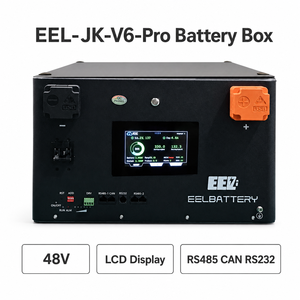
EEL 16S 48V Stackable LiFePO4 Battery Box for Solar Energy Storage ESS Off Grid Home Backup 200A JK BMS with LCD Display
Get a Quote
Technical White Paper
Engineering High-Availability Redundant Power Systems for the UAE Infrastructure
In modern industrial operations, zero-unplanned-downtime is no longer a luxury—it is an absolute operational mandate. Across the United Arab Emirates (UAE), where extreme environmental heat, rapid industrial expansion, and ambitious green energy initiatives intersect, electrical design standards require maximum thermal headroom, structural isolation, and fault-tolerant architecture. As a premier CE certified redundant systems exporter targeting the United Arab Emirates market, our engineering mission centers on supplying custom-configurable, high-density power modules, ATS assemblies, and LiFePO4 battery storage units designed to withstand Middle Eastern operating environments.
Redundancy in power conversion and distribution systems relies on active N+1 or N+2 topology. Under normal operating parameters, multiple power channels or energy storage blocks share the total connected system load equally. If a single power module, internal diode, or battery control unit encounters a catastrophic fault or thermal threshold excursion, internal hot-swappable isolation circuits instantly disconnect the compromised unit. The backup module assumes 100% of operational current demand within microseconds without causing voltage sag, frequency disturbance, or system reboot in critical microcontrollers, Supervisory Control and Data Acquisition (SCADA) nodes, or downstream industrial automation equipment.
Key Information Gain Concept: Passive vs. Active Diode-ORing Redundancy in UAE Desert Climates
Standard off-the-shelf power supplies often utilize simple schottky diodes for power decoupling, generating significant thermal dissipation ($P = V_f \times I$). In elevated ambient temperatures common in Dubai and Abu Dhabi (frequently exceeding 50°C inside outdoor IP65 enclosures), passive diode thermal losses accelerate internal capacitor aging. Our exported CE certified redundant systems integrate active N-channel MOSFET diode-ORing controllers. This reduces internal forward voltage drop by up to 85%, significantly lowering internal cabinet heat load and boosting system Mean Time Between Failures (MTBF) beyond 350,000 hours.
Compliance with European Norms (EN 62368-1, EN 61000-6-2/4) combined with CE Mark certification guarantees that exported power systems meet rigorous Electromagnetic Compatibility (EMC) and Low Voltage Directive (LVD) mandates. Furthermore, when importing into UAE industrial zones such as Jebel Ali Free Zone (JAFZA), KIZAD, or Dubai Industrial City, these certifications provide seamless integration into local utility frameworks controlled by the Dubai Electricity and Water Authority (DEWA) and Abu Dhabi Distribution Company (ADDC).
Enterprise Core Competencies
Why International EPCs & UAE Buyers Partner With Us
Built upon nearly seven decades of precision power engineering, our manufacturing and export operations combine rapid logistics with military-grade dependability.
68+ Years Manufacturing Heritage
Established in 1957, our design philosophy shuns cheap consumer-grade assembly line shortcuts. We engineer heavy-duty metal-enclosed power conversion systems, transformer-isolated sub-assemblies, and ruggedized power modules proven across aerospace, defense, and global energy utilities.
Rapid 3-Day Build & Dispatch
Unlike traditional power system suppliers with 12 to 20-week lead times, our modular supply chain configuration allows core 3-day models to be built to order, burn-in tested, serialized, and dispatched within 72 business hours—minimizing project downtime for UAE project managers.
5-Year Comprehensive Warranty
We stand firmly behind our thermal design and internal component sourcing (using premium 105°C long-life electrolytic capacitors and solid-state switching components). Every metal-enclosed redundant power module includes a full 5-year replacement warranty.
Certified Quality Frameworks
Our production facilities operate under an audited ISO 9001:2015 Quality Management System. Products comply fully with CE directives, TAA standards, and localized Emirates Conformity Assessment Scheme (ECAS) registration pathways for Middle Eastern markets.
Direct Application Engineer Access
We eliminate frustrating front-desk delays and chatbots. When UAE MEP consultants or procurement officers contact our engineering hub, they communicate directly with experienced application engineers to discuss custom output voltages (0–30 kVdc), busbar sizing, and thermal derating curves.
Field-Tested Applications
Localized UAE Deployment Scenarios
Examining how exported CE certified redundant systems and high-capacity LiFePO4 ESS units address regional infrastructure challenges in the United Arab Emirates.
1. Mission-Critical Data Centers in Dubai & Abu Dhabi
Tier III and Tier IV data centers operating within Dubai Telecom Oasis and Abu Dhabi Internet City demand dual-bus N+1 redundant power modules to ensure continuous uptime for server racks. Our dual-input AC-DC switching power systems and sub-millisecond ATS transfer switches prevent hardware power supply failures from interrupting hyperscale cloud services or financial processing networks.
2. Desert Utility Solar ESS Integration (Al Dhafra & Mohammed bin Rashid Al Maktoum Solar Park)
Large-scale solar generation in the UAE desert faces extreme thermal swings and high solar irradiance. Our floor-standing and rack-mounted 51.2V LiFePO4 battery modules (10kWh to 30kWh configurations featuring Smart JK BMS controllers) provide stable load-leveling, smoothing solar intermittency and serving as resilient microgrid storage for remote telecommunication towers and utility substations.
3. Offshore Oil & Gas Platforms in the Arabian Gulf
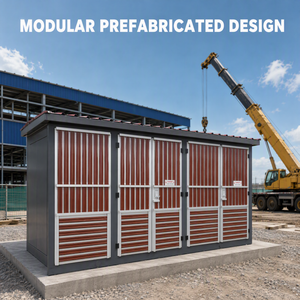
Adnoc-operated off-shore platforms and onshore processing facilities require explosion-proof enclosure compatibility, high salt-mist protection, and rigid CE-marked electrical isolation. Our compact box-type American prefabricated outdoor substations (10kV/35kV) isolate primary high-voltage transmission feeds while delivering regulated DC control power for pneumatic valve control systems and safety shutdown loops.
4. Commercial High-Rise & District Cooling Plant Redundancy
Dubai’s high-density urban core relies heavily on district cooling plants (e.g., Empower, Tabreed). Variable frequency drives (VFDs) and massive centrifugal chillers depend on 100A/200A dual-power automatic transfer switches (ATS) and uninterruptible DC power racks to prevent plant tripping during grid switching events or phase loss.
Technical Comparison
Standard Commercial Power vs. CE Certified Redundant Systems
A granular side-by-side engineering evaluation highlighting why high-spec redundant power topologies are critical for hot-climate operations.
| Performance Specification | Standard Commercial Converter Assembly | CE Certified Redundant System (Export Grade) |
|---|---|---|
| Redundancy Architecture | Single-channel input/output (Single point of failure) | N+1 or N+2 Active Redundant (Hot-swappable bus architecture) |
| Thermal Operating Ambient | 0°C to 40°C max (Steep derating above 40°C) | -20°C to +55°C continuous (Full output rated up to 50°C without forced air) |
| Decoupling Topology | Passive Schottky Diode (High internal heat $V_f \approx 0.7\text{V}$) | Active N-Channel MOSFET Diode-ORing ($V_f \le 0.05\text{V}$, reduced thermal dissipation) |
| BMS & Telemetry Protocol | Basic LED indicator / No remote telemetry | Smart Bluetooth/RS485/CANbus BMS with LCD Display & Modbus integration |
| MTBF (Mean Time Between Failures) | $\sim 80,000$ to $120,000$ Hours | $> 300,000$ Hours (Demonstrated MIL-HDBK-217F calculated) |
| Certification & Compliance | Basic CE self-declaration or missing test reports | Full CE Certified (EN 62368-1, EN 61000-6-2/4), ISO 9001:2015, TAA compliant |
| Warranty Duration | 1 Year Limited | 5-Year Heavy Duty Factory Replacement Warranty |
Regional Market Trends
Macro Trends Driving Demand in the UAE Electrical Sector
1. UAE Energy Strategy 2050 & Net Zero Initiative: The United Arab Emirates is aggressively transitioning its energy mix to combine 44% clean energy, 38% gas, 12% clean coal, and 6% nuclear energy. This structural shift requires massive decentralization of energy storage systems (ESS). As solar penetration grows, localized high-capacity 51.2V 300Ah LiFePO4 battery banks and modular inverter enclosures are critical to stabilizing frequency fluctuations in microgrids across Ras Al Khaimah, Sharjah, and Abu Dhabi.
2. "Operation 300bn" Industrial Growth Strategy: The UAE Ministry of Industry and Advanced Technology (MoIAT) aims to raise the industrial sector's GDP contribution to AED 300 billion by 2031. Expanding domestic manufacturing plants, food processing complexes in ICAD, and aluminum smelters in EGA requires certified electrical distribution gear, box-type substations, and automated switchgear compliant with strict international CE standards.
3. Transition from Lead-Acid to High-Density LiFePO4: Legacy telecom infrastructure across the GCC previously relied on VRLA lead-acid battery banks. Due to high degradation rates in ambient heat, UAE operators are universally retrofitting sites with 48V/51.2V LFP (Lithium Iron Phosphate) rack kits equipped with Intelligent BMS systems. LFP offers 6,000+ deep discharge cycles at 80% DoD, dramatically reducing lifetime OPEX.
Buyer Knowledge Base
Frequently Asked Questions for UAE Procurement Engineers
Clear guidance regarding certification, thermal specs, logistics, and customization for buyers across the GCC region.
Why is CE Certification mandatory for power supplies exported to the UAE?
While the UAE has its own national standard authority (Ministry of Industry and Advanced Technology - MoIAT), CE certification serving under European EN safety and EMC standards is universally accepted as baseline compliance. It allows fast-track approval through the Emirates Conformity Assessment Scheme (ECAS) and guarantees safety compliance during DEWA/ADDC municipal inspections.
How do these systems withstand continuous high ambient temperatures (up to 55°C)?
Our exported redundant power systems utilize high-grade aluminum heat sinks, premium 105°C-rated long-life capacitors, and conservative component derating guidelines (components operate at maximum 50-60% of rated electrical stress). Where necessary, forced-air convection channels or IP65 heat exchangers are integrated into our compact prefabricated outdoor substations.
What are the shipping lead times and port logistics for Jebel Ali / KIZAD?
Core power modules and build-to-order redundant systems are assembled, burned in, and packaged within 3 to 9 business days. Expedited air freight delivers directly to Dubai International (DXB) or Abu Dhabi International (AUH) within 4-6 days. Containerized freight shipments (for box substations and bulk battery shipments) ship directly to Jebel Ali Port or Khalifa Port with complete commercial invoices, CE test reports, COO certificates, and HS coding.
Can we request custom DC output voltages or custom rack dimensions?
Yes. Through our Custom System Builder engineering program, we manufacture single, dual, triple, and wide-adjust output configurations ranging from 0 Vdc to 30 kVdc, configured within 1U–6U 19-inch rack-mount chassis, wall-mount enclosures, or NEMA 4X / IP66 rated cabinets tailored to exact consultant drawings.
How does the N+1 Redundancy mechanism handle a power module failure?
In an N+1 assembly, multiple power modules feed a shared DC bus via active diode-ORing circuits. If one module experiences a failure (e.g., input power interruption or internal component short), internal solid-state switches isolate the failed module in under 10 microseconds, allowing remaining operational modules to carry the full current load without any interruption to connected equipment.