Executive Engineering Whitepaper: Redundant Power Systems in Greater Sydney
As Greater Sydney accelerates its infrastructure expansion across the Western Sydney Aerotropolis, Macquarie Park Innovation District, and the South Sydney Industrial Corridor, electrical system reliability has shifted from a operational luxury to a critical compliance mandate. Electrification initiatives, grid decarbonization targets under the NSW Electricity Infrastructure Roadmap, and extreme climatic events (including summer thermal peaks exceeding 45°C) require power engineers to design for failure isolation and continuous automated switchover.
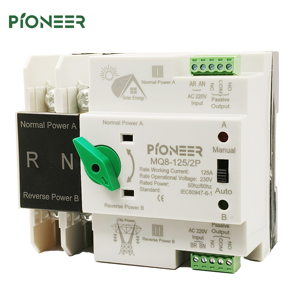
In modern industrial and commercial installations, a non-redundant system presents a single point of failure (SPOF). Specifying CE Certified Redundant Systems engineered for dual-bus (2N) or N+1 parallel redundant architectures guarantees that primary utility power disruptions, transformer trips, or localized inverter isolation do not collapse downstream critical loads. By combining robust low-voltage automatic transfer switches (ATS), prefabricated compact substations (10kV/35kV), and modular LiFePO4 battery energy storage systems (BESS), engineers can achieve continuous fault isolation without disrupting operation.
N+1 Active Parallelism
Scalable power module distribution ensuring remaining units seamlessly absorb total system load during single-module servicing or component failure.
Harmonic Mitigation
Integrated active front-end technology meeting strict AS/NZS 61000 harmonic current distortion limits for sensitive Australian grid ties.
Marine/C4 Enclosure Rating
Salt-spray resistant powder coating and IP65/IP66 sealing tailored for coastal Sydney ambient environments and high humidity.
Regulatory Harmonization: CE Compliance & AS/NZS Frameworks in Sydney
Procurement officers and electrical consultants in New South Wales must navigate rigorous regulatory hurdles when importing or commissioning overseas redundant hardware. CE Certification serves as a comprehensive baseline for electromagnetic compatibility (EMC 2014/30/EU) and low-voltage electrical safety (LVD 2014/35/EU). When entering the Sydney market, CE-marked redundant systems align directly with the mandatory Electrical Regulatory Authorities Council (ERAC) Regulatory Compliance Mark (RCM) and relevant Australian Standards.
Standards Mapping Matrix for Sydney Industrial Procurement
European Directive / International CE
Australian Equivalent Standard (AS/NZS)
Engineering Impact & Compliance Verification
CE LVD 2014/35/EU (Low Voltage)
AS/NZS 61439.1 / AS/NZS 3000
Verifies busbar temperature rise, short-circuit withstand rating, and clearance boundaries within switchgear assemblies.
CE EMC 2014/30/EU (Electromagnetic)
AS/NZS CISPR 11 / 32
Ensures zero interference with localized telecommunication bands, medical equipment, and automation control systems.
IEC 62619 / UN 38.3 (Battery Safety)
AS/NZS 5139:2019
Mandates thermal runaway propagation isolation and risk-mitigated casing for grid-connected residential & commercial LiFePO4 batteries.
IEC 62109-1/-2 (Inverter Safety)
AS/NZS 4777.2:2020
Governs grid-tied response, autonomous wall-rate limits, and over-voltage trip points under Ausgrid and Endeavour Energy network rules.
Our redundant power supply architectures, including automatic transfer switches (ATS) and stackable LiFePO4 battery banks, undergo continuous third-party laboratory verification. Each system is issued with a complete Technical Construction File (TCF) and Declaration of Conformity (DoC), ensuring rapid sign-off by accredited Private Certifiers and Distribution Network Service Providers (DNSPs) across New South Wales.
Localized Deployment Scenarios across Greater Sydney Infrastructure
Deploying redundant electrical equipment in Sydney requires tailored engineering solutions to withstand regional ambient constraints, local power grid variances, and high land costs. Below are four key sector applications where our CE-certified redundant equipment provides high availability:
Data Center Hubs: Western Sydney
With hyperscale cloud facilities expanding near Badgerys Creek and Eastern Creek, our dual-feed ATS switches and N+1 redundant battery racks deliver seamless 2N power backup. Under sudden grid voltage sags, our fast-acting switchgear transfers sensitive server racks within 8-10ms without dropping digital logic or rebooting storage nodes.
Maritime & Port Logistics: Port Botany
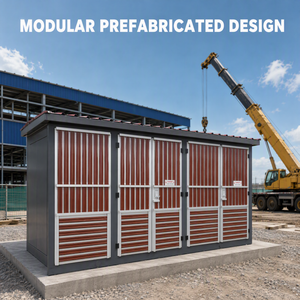
Corrosive maritime air around Sydney Harbour and Botany Bay destroys standard steel enclosures. Our prefabricated 10kV/35kV outdoor compact substations utilize marine-grade C4/C5 anti-corrosion coatings and active thermal management, housing high-voltage redundant switchgear for heavy crane automation and container electrification.
Commercial Microgrids: Parramatta CBD
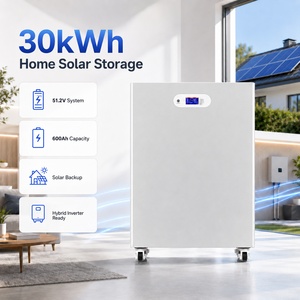
High-density commercial towers and precinct microgrids leverage our 51.2V 280Ah/300Ah stackable LiFePO4 wall and rack storage. Coupled with redundant smart BMS units, these installations peak-shave electricity demand during high Ausgrid network tariffs while guaranteeing emergency backup for critical fire-life safety systems.
Sydney Local Market Trends & Strategic Regulatory Drivers (2025–2030)
The Sydney energy ecosystem is undergoing an unprecedented structural transition driven by strict state environmental policies, grid decentralization, and extreme thermal resilience demands:
1. Phasing Out Diesel Generators in Favor of BESS-Buffered Redundancy
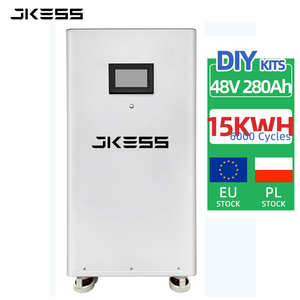
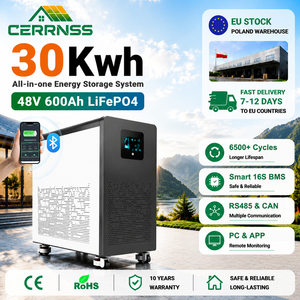
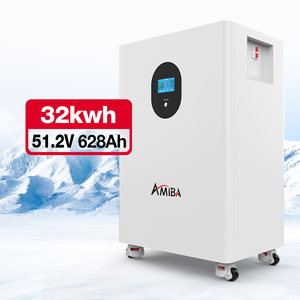
The City of Sydney’s Sustainable Sydney 2030–2050 Directives have introduced strict noise and carbon emission thresholds in urban centers. Facility engineers are replacing noisy, maintenance-heavy diesel generator backup systems with redundant modular LiFePO4 battery banks (such as our 51.2V 30kWh to 600Ah stackable systems) coupled with high-speed Automatic Transfer Switches. This achieves zero local emissions, instantaneous switchover, and significant operational cost reductions.
2. Extreme Weather & Heatwave Thermal Headroom
Greater Western Sydney experiences summer ambient temperatures reaching up to 47°C inside unconditioned switchrooms. Standard off-the-shelf power equipment typically undergoes severe thermal derating above 40°C. Our redundant systems utilize heavy-duty copper busbars, optimized heat sinking, and smart cooling controllers, ensuring zero derating up to 50°C operating ambient conditions.
3. High Solar Penetration & Grid Instability Management
With roof-top solar penetration across New South Wales exceeding national records, grid voltage stability fluctuates significantly during solar peak hours. Redundant switch systems equipped with smart dual-power transfer mechanisms dynamically balance load between local solar storage reserves and utility grid feeds (Ausgrid/Endeavour Energy), protecting industrial production lines from phase imbalances and over-voltage trips.
Why Enterprise Buyers Specify Our Redundant Power Systems
Backing our complete catalogue of CE-certified redundant hardware is a proven manufacturing infrastructure built on rigorous quality management, rapid custom engineering, and transparent supply chain integrity. Built on over 68 years of power engineering legacy, we deliver unmatched value to the Australian market:
Rapid 3-Day Build & Dispatch
Standard catalog models are built fresh and dispatch-ready within 3 business days of order confirmation. Custom multi-output redundant systems ship within 9 business days, eliminating long project delays.
5-Year Unconditional Warranty
Every metal-enclosed redundant power supply, ATS switchboard, and prefabricated substation is backed by a 5-year full factory warranty, supported by rigorous ISO 9001:2015 quality control processes.
Direct Engineer Support
No call centers or ticketing queues. Sydney consultants and project engineers speak directly with experienced power application engineers for custom wiring, CAD drawings, and compliance sign-offs.
Frequently Asked Questions (FAQ) for Sydney Procurement Teams
Are your redundant systems fully compliant with Ausgrid and Endeavour Energy connection rules?
Yes. Our CE-certified equipment, including automatic transfer switches and battery inverter storage systems, aligns with AS/NZS 4777.2 and AS/NZS 3000 rules. Complete documentation packages (including test certificates and schematics) are provided for rapid DNSP grid-connection approval.
How fast is the transfer time on your Automatic Transfer Switches (ATS)?
Our dual-power single-phase and three-phase ATS units deliver transfer times under 10 milliseconds. This ultra-fast switchover ensures that sensitive digital switchgear, automation PLCs, and IT infrastructure maintain continuous operation without resetting.
Can your LiFePO4 energy storage systems handle Sydney’s summer ambient heat?
Our battery packs feature smart active BMS units and thermal isolation design. They operate safely up to 55°C ambient temperatures with integrated over-temperature isolation and automated cooling controls meeting AS/NZS 5139 installation guidelines.
Do you offer custom configuration for 19-inch rack-mount redundant power supplies?
Yes. Utilizing our custom engineering builder, Sydney clients can specify single, dual, triple, or N+1 redundant power output configurations from 0-5Vdc up to 500Vdc (and high voltage up to 30kVdc), mounted in standard 1U to 6U rack enclosures.
What is the expected lifespan and warranty on your modular energy storage systems?
Our Grade-A LiFePO4 cells are rated for >6,000 deep discharge cycles at 80% DoD (Depth of Discharge). Metal-enclosed power equipment comes backed by our comprehensive 5-year factory warranty.
What lead times can Sydney industrial projects expect for sea or air freight delivery?
Standard units are built within 3 days. Air-freight options deliver to Sydney Airport (SYD) within 5-7 business days, while standard sea freight via Port Botany takes approximately 18-22 days from dispatch.
Accelerate Your Project with CE Certified Redundant Systems
Connect directly with our senior application engineers to request detailed technical datasheets, 3D CAD mechanical models, or custom quote options for your Sydney installation.