
Argentina’s industrial and commercial infrastructure represents one of Latin America's most dynamic yet electrically challenging landscapes. Operating across the SADI (Sistema Argentino de Interconexión) grid, facilities face unique power quality phenomena: nominal 220V single-phase / 380V three-phase grid frequencies at 50Hz, frequent seasonal voltage sags (brownouts), severe surge spikes during summer peak demand, and vast geographical distances separating generation hubs (such as Comahue hydroelectric or Patagonian wind corridors) from load centers in Greater Buenos Aires (AMBA), Córdoba, and Rosario.
For industrial plant engineers, EPC contractors, lithium mining consortia, and solar developers importing international machinery—ranging from 110V/120V North American equipment to specialized 400V/480V European or Asian automation lines—specifying CE Certified Voltage Converters is not merely a purchasing line item. It is a critical safeguard for operational continuity, dielectric integrity, and thermal stability.
Information Gain Key Insight: While CE marking certifies compliance with European Union safety (LVD 2014/35/EU) and electromagnetic compatibility (EMC 2014/30/EU) directives, deployment within Argentina requires harmonic isolation, neutral grounding adaptation, and compliance with local safety resolution guidelines (such as IRAM standards). Dual-certified step-up/step-down transformation solutions bridge the gap between global machinery specs and local grid realities.
Custom-engineered power converters, step-down substations, and battery-backed energy storage systems serve pivotal roles across Argentina's distinct geographical and industrial zones. Understanding these specific operational contexts ensures optimal system topology selection.
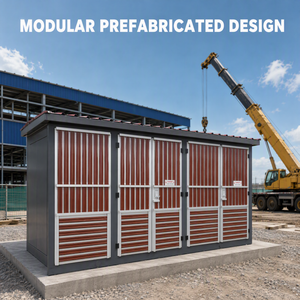
Located in the high-altitude Puna region (>4,000 meters above sea level), lithium extraction plants experience derating caused by thin air, extreme diurnal temperature fluctuations (-15°C to +35°C), and airborne salt dust. Our specialized 10kV/35kV prefabricated outdoor substations and heavy-duty step-down converters feature C5-M anti-corrosion enclosures, modified creepage distances, and forced thermal isolation to power brine pumps and direct lithium extraction (DLE) processing units uninterrupted.
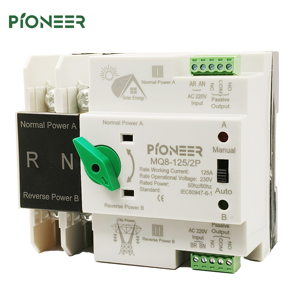
Argentina's southern wind corridor generates massive renewable power, yet grid tie-in points suffer from severe voltage harmonics and phase imbalances. Industrial step-up isolation converters step up low-voltage inverter outputs (e.g., 400V to 10kV/35kV) while absorbing total harmonic distortion (THD < 2%). Integrated Automatic Transfer Switches (ATS) ensure auxiliary control power swaps seamlessly between grid and onsite storage during transmission line dropouts.
Heavy machinery imported from North America (operating at 480V 60Hz or 208V 60Hz) cannot be connected directly to Argentina’s 380V/220V 50Hz mains without magnetic saturation and overheating. Our CE-certified wide-adjust frequency-tolerant isolation transformers deliver precise voltage matching, galvanic isolation, and zero-flicker stability to high-precision CNC equipment, automotive welding robots, and pharmaceutical packaging lines.
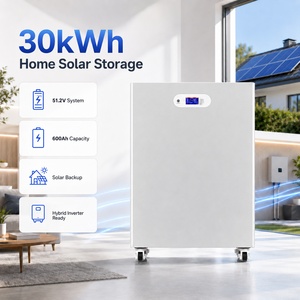
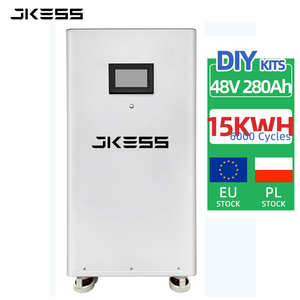
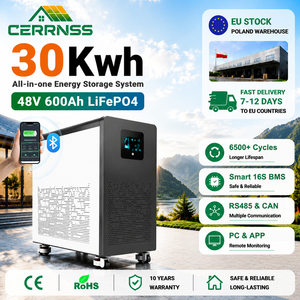
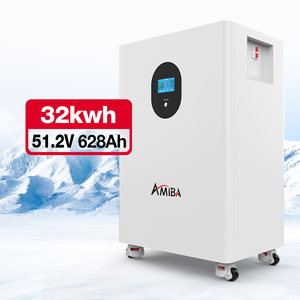
Amid ongoing power tariff restructuring and urban distribution constraints, businesses across Buenos Aires are adopting hybrid energy storage. Combining 51.2V LiFePO4 battery banks (such as 15kWh to 30kWh wall/floor-mounted systems) with robust bi-directional voltage converters creates a self-healing microgrid. During utility blackouts, 100A 2P single-phase ATS switches transfer loads in under 15 milliseconds, maintaining clean power for data centers, cold storage, and commercial complexes.
Procurement teams and engineering directors in Argentina must balance immediate capital expenditure against long-term operational resilience. Key market shifts include:
| Grid Disturbance Type | Typical SADI Impact Level | Recommended Voltage Conversion Architecture | Target Output Quality Standard |
|---|---|---|---|
| Voltage Sags (Brownouts) | 170V - 195V AC in summer peak loads | Wide-Adjust Auto-Transformer / Servo-Controlled Voltage Stabilizer | 220V ± 1.5% Regulated Output |
| Transient Surges & Lightning | Up to 6kV spikes in high-altitude mining | Galvanic Isolation Transformer with Class I TVSS Surge Protection | IEEE 62.41 Category B Suppressed |
| Frequency Deviations | 48.5Hz - 51.5Hz in isolated microgrids | Double-Conversion Online UPS & Bi-Directional Converter | 50Hz ± 0.1Hz Crystal Synchronized |
| Machinery Voltage Mismatch | Importing 480V 60Hz US gear into 380V 50Hz site | CE Certified Step-Down Transformer with Frequency Compensation Taps | 480V / 380V Phase-Matched Delivery |
| Total Grid Outage | Unplanned distribution feeder dropouts | 100A ATS Switch + 51.2V 30kWh LiFePO4 Storage Stack | < 15ms Transfer Time to Emergency Bus |
Building on over six decades of power conversion engineering, our manufacturing model eliminates traditional supply chain bottlenecks, ensuring every unit shipped to South America meets uncompromising quality metrics.
Standard voltage converters and power modules are custom built to order and dispatchable within three business days, eliminating long project downtime.
Every sub-assembly undergoes rigorous full-load thermal testing prior to serialization, guaranteeing zero DOA (Dead On Arrival) units at your site.
Our complete manufacturing pipeline follows documented QA protocols with full component-level serial tracking for regulated industrial programs.
Exceeds Low Voltage Directive (LVD) and Electromagnetic Compatibility (EMC) standards, streamlining customs clearance and IRAM local safety sign-offs in Argentina.
Custom potting, tropicalization treatments, and expanded heat sinks engineered specifically for mountain altitude and humid coastal operations.
Speak directly with senior power conversion engineers during system specification—no automated call queues or unqualified sales intermediaries.
Answers to common technical, compliance, and import questions regarding CE certified converters in Argentina.
While Argentina enforces local safety standards (governed by SICE Resolution 92/98 and certified by bodies like IRAM or UL Argentina), holding a valid CE mark with complete CB Test Reports significantly speeds up local recognition. CE certification proves compliance with IEC/EN 61558 (transformer safety) and IEC/EN 62040 (UPS/converter systems), allowing local electrical engineers to qualify equipment with minimal testing delay.
Yes. Our industrial-grade voltage converters and automatic stabilizers feature wide input voltage windows (typically 160V – 260V AC for single-phase, 300V – 450V AC for three-phase). They utilize multi-tap auto-transformer windings or digital servo control to output a stable 220V/380V ±2%, preserving sensitive control electronics from undervoltage shutdown.
Standard power equipment loses dielectric strength and thermal cooling capacity above 1,000 meters altitude. For high-altitude Argentine mines in Jujuy and Salta, we design units with derating thermal factors, expanded air clearances, reinforced high-voltage insulation, and liquid-cooled or forced-air enclosures engineered specifically for low ambient pressure environments.
The 100A 2P Single Phase Automatic Transfer Switch features dual-magnetic coil mechanisms capable of break-before-make transfer in under 15 milliseconds. When utility grid voltage drops below pre-set parameters, the ATS sends a remote dry-contact signal to start the inverter/converter system or generator set, drawing power from the 51.2V LiFePO4 battery rack to maintain zero continuous power interruption.
Absolutely. We build step-down isolation and auto-transformers designed for 50Hz/60Hz dual-frequency operation. Core flux densities are sized specifically to prevent magnetic saturation when operating high-voltage 60Hz equipment on a 50Hz Argentine supply line, keeping operational temperatures low and efficiency high.
Standard modular converters and stackable battery units are dispatched from factory floor stock or built within 3 to 5 business days. Custom prefabricated outdoor box substations require 2 to 3 weeks for assembly and factory acceptance testing (FAT). Ocean freight to Buenos Aires typically takes 30 to 40 days, while emergency air freight can arrive within 5 to 7 business days.