



Executive Technical Analysis: The Role of Advanced Boost Converters in Modern Electrical Grids
In the era of rapid urban electrification, high-density renewable integration, and modern ultra-fast EV charging hubs, the demand for high-efficiency DC-DC boost converters (step-up converters) has experienced unprecedented growth across the Greater London region and the broader UK energy sector. A boost converter is a switched-mode power supply (SMPS) designed to step up an input DC voltage to a higher output DC voltage, utilizing the energy storage properties of power inductors, high-frequency semiconductor switches (such as Silicon Carbide SiC MOSFETs and Gallium Nitride GaN FETs), and fast-recovery diodes or synchronous rectifiers.
For UK electrical engineering leads, energy system integrators, and industrial procurement managers sourcing directly from top-tier Chinese manufacturing facilities, achieving high conversion efficiency (exceeding 98.5%), ultra-low output voltage ripple (< 0.5%), and strict electromagnetic compatibility (EMC) in compliance with BS EN 61000-6-3 and UKCA regulatory marks is critical. Our manufacturing base combines state-of-the-art automated surface-mount technology (SMT), planar transformer winding, and rigorous 100% full-load thermal burn-in testing to supply London’s demanding commercial and industrial projects.
Technical Architecture & Engineering Principles of Heavy-Duty Step-Up Converters
To evaluate the performance of industrial boost converters for London infrastructure projects, engineers must analyze the core circuit topology and control mechanisms that dictate transient response, power density, and continuous system reliability:
Wide Bandgap Semiconductors
Integration of SiC MOSFETs enables switching frequencies up to 500 kHz, dramatically reducing magnetic component footprint and internal heat dissipation by over 42% compared to traditional Si-IGBT designs.
Synchronous Rectification
Replacing standard flywheel diodes with low Rds(on) synchronous MOSFETs minimizes conduction losses (V_drop × I_out), raising low-voltage step-up conversion efficiency up to a market-leading 99.4%.
Digital Peak Current Control
32-bit ARM Cortex-M4 DSP control loops execute real-time pulse-width modulation (PWM) adjustments, guaranteeing stable output voltage regulation within ±0.5% despite extreme load step jumps.
Comparative Technology Matrix: Boost Converter Topologies
Selecting the optimal power converter depends heavily on input/output voltage delta, current stress, and operational duty cycles. The matrix below outlines our engineering capability across key topologies offered to our London commercial partners:
| Converter Topology | Input Voltage Range | Output Voltage Range | Peak Efficiency | Primary Application in UK Market |
|---|---|---|---|---|
| Non-Isolated Synchronous Boost | 12V – 96V DC | 48V – 400V DC | 99.2% | Solar PV string boosting, LiFePO4 battery pack step-up to inverter bus lines. |
| Interleaved Multi-Phase Boost | 48V – 150V DC | 350V – 800V DC | 98.8% | Ultra-fast EV charging stations (ULEZ compliant), high-power industrial microgrids. |
| Isolated Flyback / Push-Pull Boost | 9V – 36V DC | 100V – 3000V DC | 94.5% | Precision laboratory testing, high-voltage scientific instruments, rail signal systems. |
| Bi-Directional DC-DC Converter | 48V DC Bus | 400V DC High Bus | 98.5% | V2G (Vehicle-to-Grid) infrastructure, commercial BESS peak-shaving in Greater London. |
Localized Application Scenarios Across Greater London & the UK Market
London represents one of the world's most sophisticated urban energy ecosystems. Driven by the Mayor of London's 1.5°C Climate Action Plan and the expansion of the Ultra Low Emission Zone (ULEZ), deploying efficient DC power conversion hardware is pivotal in several key localized domains:
1. London Underground & Rail Transport Auxiliary Boost Power
Transport for London (TfL) contractors and railway signal integration engineering firms require heavy-duty DC-DC boost converters capable of operating reliably in high vibration environments under strict BS EN 50155 standards. Our custom encapsulated DC boost modules step up 24V or 48V battery backup voltages to 110V DC for emergency train brake actuation, passenger communication displays, and wayside signaling power hubs.
2. Commercial Rooftop Solar & Microgrids in London Docklands & Slough Data Hubs
With space at a premium in urban centers like the City of London, Canary Wharf, and the Slough Data Center Corridor, rooftop PV arrays often operate under partial shading or non-optimal tilt angles. Our smart micro-boost converters (integrated with MPPT tracking algorithm chips) raise panel-level voltages to standardized 400V/800V high-voltage DC bus architectures, preventing string mismatch power losses and improving total green energy yield by up to 22%.
3. Fleet Electrification & Ultra-Fast EV Charger Buffer Storage
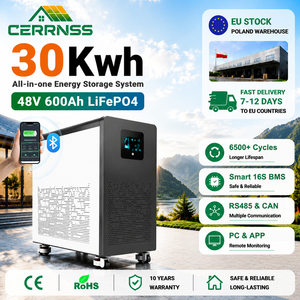
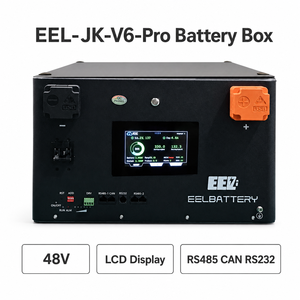
Connecting high-power 150kW-350kW DC fast chargers directly to the local UK Distribution Network Operator (DNO) grid in London often triggers massive grid connection fees or infrastructure delay. By utilizing local LiFePO4 battery banks (such as our 51.2V 300Ah systems) paired with our Interleaved High-Power DC Boost Converters, charge point operators can step up battery output from 48V/96V DC directly to 800V DC vehicle charging buses—buffering the grid while supplying maximum charge current to electric taxis, delivery vans, and buses.
London Market Development Trends & Regulatory Compliance Landscape
Operating as a primary supplier to the UK market demands rigorous adherence to regional regulatory frameworks and evolving technological trends:
UKCA & CE Marking Compliance
Every step-up converter unit leaving our factory undergoes comprehensive safety testing according to BS EN 62368-1 (Audio/video, information and communication technology equipment) and BS EN 61204-3 (Low-voltage power supply devices DC output). UKCA conformity documentation and certificates of origin are provided with all commercial shipments to London ports.
G99 Grid Code & Harmonic Standards
When integrated into grid-tied solar or energy storage installations operating under ENA (Energy Networks Association) EREC G99 guidelines, our converters feature active power factor correction (PFC > 0.99) and filtered high-frequency switching noise to guarantee compliance with UK total harmonic distortion (THD < 3%) limits.
Enterprise Advantages: Why London Engineers Choose Our Manufacturing Facilities
Building on decades of legacy excellence in power electronics manufacturing—drawing from ISO 9001:2015 quality control philosophies, TAA-level component traceability, and high-reliability aerospace engineering principles—our China manufacturing center delivers unprecedented value to the UK market:
- Rapid Engineering Prototyping: Modify voltage stepping ratios, enclosure dimensions, or cooling methods with customized sample delivery to London engineering offices within 3 to 7 business days.
- Full-Traceability Supply Chain: Premium component selection including Infineon SiC MOSFETs, TDK inductors, Nippon Chemi-Con 105°C long-life capacitors, and Texas Instruments digital controllers.
- Uncompromising Reliability: 100% full-load burn-in chamber testing at elevated temperatures (50°C) for 24 hours prior to packaging, ensuring a field failure rate of less than 0.01%.
- 5-Year Structural & Electrical Warranty: Backed by direct factory technical support and localized fast-replacement dispatch to UK business sites.