
Engineered for high power density, thermal resilience, and strict utility compliance in demanding Australian industrial deployments.
Australia’s energy landscape is undergoing one of the most radical transformations in the Southern Hemisphere. Driven by the Australian Energy Market Operator's (AEMO) Integrated System Plan (ISP), the National Electricity Market (NEM) is transitioning rapidly toward high-penetration renewable generation, distributed microgrids, and massive mining sector electrification. Within this complex infrastructure, the requirement for robust, highly efficient, and thermally tolerant power modules has reached an all-time high. Electrical engineers, procurement managers, and system integrators across Western Australia (WA), Queensland (QLD), and New South Wales (NSW) face stringent operational challenges that require a sophisticated approach to power module selection, thermal management, and regulatory compliance.
Off-the-shelf power converters frequently fail under Australia's environmental extremes. Specifying power modules for Australian projects demands verified compliance with AS/NZS 61000 electromagnetic compatibility standards, AS/NZS 3000 (Wiring Rules), and superior thermal derating profiles capable of sustaining continuous rated output in ambient temperatures exceeding 50°C in remote mining sites like the Pilbara.
The Australian market exhibits unique technical requirements that differentiate it from North American and European sectors. Understanding these localized macro trends is critical for procurement heads and original equipment manufacturers (OEMs):
Remote regional communities and agricultural centers rely heavily on isolated microgrids incorporating solar PV, battery energy storage systems (BESS), and diesel backup. Modular AC-DC and DC-DC converters are vital for stabilizing DC bus voltages across variable solar inputs.
Major mining operators in WA and QLD are actively transitioning haul trucks, drill rigs, and underground utility vehicles from diesel to electric powertrains. High-power DC-DC converters and stackable LiFePO4 battery power modules are essential components for rapid charging units and onboard power conversion.
Utilities upgrading sub-transmission networks (10kV to 35kV) require compact, prefabricated box-type substations equipped with redundant power supplies, low-ripple linear regulators, and automated transfer switches (ATS) to guarantee uninterrupted SCADA telemetry.
Selecting the optimal power supply circuit topology directly impacts thermal dissipation, electromagnetic interference (EMI), system longevity, and total cost of ownership (TCO). The table below outlines key engineering trade-offs when specifying power modules for Australian field environments:
| Topology Type | Typical Efficiency | Output Ripple / Noise | Thermal Performance (Outback) | Primary Australian Application |
|---|---|---|---|---|
| Linear Regulated | 40% – 60% | < 3 mV RMS (Ultra-Low) | Requires substantial heat sinking | Sensors, Avionics, Medical Instrumentation |
| Switching Regulated (SMPS) | 85% – 96% | 10 mV – 50 mV p-p | Convection / Minimal Airflow needed | Industrial Automation, BESS, Telecommunications |
| High-Voltage Modular (HV) | 88% – 94% | Custom Tuned Filters | Encapsulated / Oil Cooled options | Electrostatic Precipitators, Mining Analysis, HVDC |
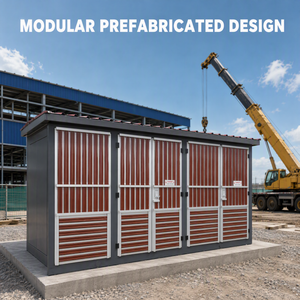
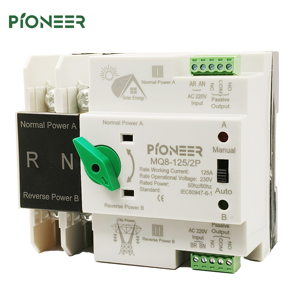
Prefabricated compact outdoor substations (such as 10kV to 35kV American-style box substations) are widely deployed across regional utility zones managed by Ergon Energy, Endeavour Energy, and Horizon Power. Integrating automated dual-power Automatic Transfer Switches (ATS) ensures seamless failover between grid connections and auxiliary diesel generators during extreme storm events or bushfire isolations.
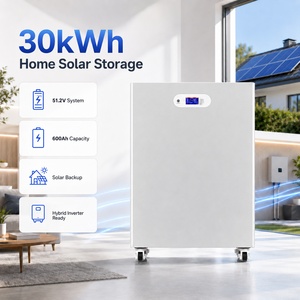
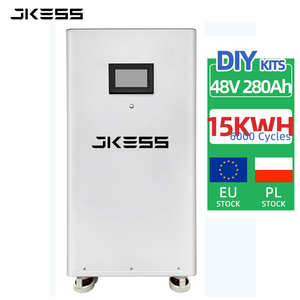
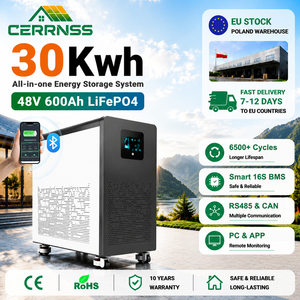
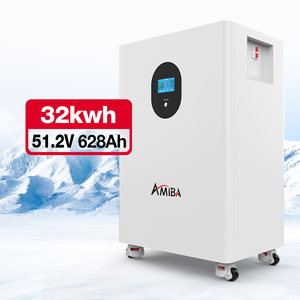
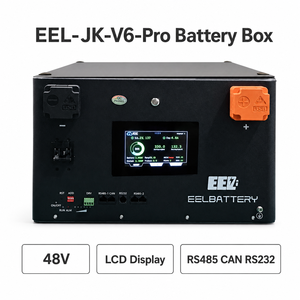
In dust-heavy environments like the Pilbara mineral fields, sensitive electronics demand NEMA 4X or IP66 sealed power module chassis. Modular high-capacity LiFePO4 battery systems (51.2V 280Ah/314Ah configurations) equipped with robust Bluetooth/CAN-bus BMS provide uninterrupted DC standby power for remote monitoring, safety lighting, and automated haul road communication towers.
As Australia accelerates EV highway corridor funding along the East Coast (Hume and Pacific Highways), power module suppliers are delivering scalable DC-DC converters capable of stepping down high battery bus voltages to regulated control logic circuits. High power density, power factor correction (PFC > 0.99), and low total harmonic distortion (THD < 3%) are mandatory parameters to meet AEMO grid connection standards.
Combining world-class American engineering heritage with rapid global dispatch capabilities to support critical infrastructure projects throughout Australia and the APAC region.
While industry standard lead times stretch to 16–26 weeks, our streamlined manufacturing workflow builds and dispatches millions of standard power module configurations within 3 business days, ensuring your site work never halts.
All metal-enclosed AC-DC and DC-DC power modules undergo 100% full-load thermal burn-in testing. We back our hardware reliability with a industry-leading 5-year warranty governed by ISO 9001:2015 quality control.
Need specialized voltages or rack-mount configurations? Our custom system building capabilities allow engineers to configure multi-output power systems (spanning 0 Vdc to 30 kVdc) tailored precisely to your mechanical layout.
No automated phone bots or generic helpdesk queues. When you contact our engineering team, you speak directly with experienced power supply designers who understand derating, transient response, and grid compliance.
Clear answers to essential technical, compliance, and logistics questions facing Australian power system engineers.
Yes. Our wide-range universal input AC-DC power modules accept 85–264 Vac at 50/60 Hz, fully supporting Australian nominal single-phase (230V) and three-phase (400V) utility voltages without requiring external step-down transformers.
Our heavy-duty industrial modules are rated for full load operation up to +50°C ambient temperatures, with linear derating extending up to +71°C. High-efficiency switching designs combined with heavy-gauge aluminum heat sinks ensure continuous thermal reliability in harsh Outback conditions.
Our power supplies are manufactured under an ISO 9001:2015 certified quality management system. Products meet UL 508, CE, TAA compliance standards and conform to AS/NZS 61000 EMC emissions and immunity benchmarks for industrial grid deployment.
Standard 3-day build models are assembled, tested, and dispatched within 3 business days of order confirmation. Express air freight options to major Australian ports (Sydney, Melbourne, Brisbane, Perth) typically deliver units within 5 to 8 business days total door-to-door transit time.
Absolutely. We offer wide-adjust and programmable power supply configurations spanning 0–5 Vdc to 0–125 Vdc, as well as specialized high-voltage units up to 30 kVdc. Customized float and equalization voltages for non-standard LiFePO4 or NMC lithium battery packs are readily engineered.
Speak directly with our senior power supply engineers to request customized datasheets, CAD models, thermal analysis reports, or immediate price quotations.
Get a Quote