
Engineered for high reliability, precise digital control, and seamless compliance with European grid and safety specifications.
A comprehensive technical analysis of high-density DC power supplies, precision programming, and localized grid energy transition in the Netherlands.
Modern high-tech industries in the Netherlands—ranging from lithography research facilities in Veldhoven to offshore energy hubs in Rotterdam—require DC power supply architectures that combine extreme voltage stability, minimal total harmonic distortion (THD), and instantaneous programming response. Programmable power supplies differ fundamentally from fixed linear or switching power units by allowing dynamic control over output current, voltage profiles, and slewing rates via automated digital communication buses.
Whether configured as switching-regulated topologies for maximum power density or linear-regulated topologies for ultra-low noise requirements (< 1 mV RMS ripple), programmable DC sources act as the core operational foundation for automated test equipment (ATE), electroplating, battery cell formation, subsea cable testing, and semiconductor wafer fabrication lines.
Sub-millisecond recovery times during 10% to 90% load step variation. Crucial for semiconductor testing and dynamic laser diode driving without overshoot voltage transients.
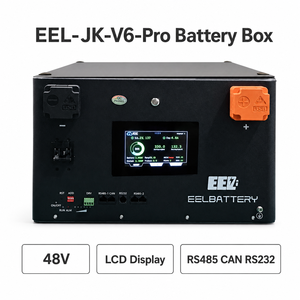
Native integration with Modbus RTU/TCP, SCPI commands via Ethernet/LAN, CAN bus, and RS485 interface protocols for direct PLCs and SCADA network orchestration.
Integrated hot-swappable diode isolation circuits ensure uninterrupted operation in continuous process environments, data center infrastructure, and critical marine power control systems.
Selecting the optimal power conversion topology requires evaluating line regulation, efficiency, thermal dissipation, and programming fidelity. Below is a comparative engineering baseline established across primary export topologies delivered to European integrators:
| Topology / Parameter | Linear Regulated Supplies | High-Efficiency Switching | Programmable DC Sources | LiFePO4 ESS Battery Buffers |
|---|---|---|---|---|
| Typical Efficiency | 40% – 60% | 88% – 95% | 85% – 93% | > 97% (Round-Trip) |
| Output Ripple & Noise | < 0.5 mV RMS (Ultra-Quiet) | 10 mV – 50 mV P-P | < 5 mV RMS / < 20 mV P-P | Pure DC Voltage Output |
| Voltage Programming Accuracy | ±0.05% of full scale | ±0.1% of full scale | ±0.02% Digital Resolution | BMS Voltage Regulated |
| Primary Dutch Application | Semiconductor R&D / Sensors | Heavy Industrial Drives & Automation | ATE Test Benches & Hydrogen Electrolysis | Grid Peak Shaving & Solar Storage |
| EU Compliance Standard | EN 61010-1, CE LVD | EN 61000-6-4 EMC, CE | EN 61326-1, RoHS 2011/65/EU | UN38.3, IEC 62619, CE, RoHS |
The Brainport Eindhoven region is globally recognized as the focal point of semiconductor lithography and advanced precision engineering. Wafer inspection systems, extreme ultraviolet (EUV) light source testing, and electron microscopy require DC power supplies with zero phase-noise injection and instantaneous load step stabilization. Our programmable linear and low-profile switching power supplies are deployed in custom 19-inch rack enclosures, supplying continuous, stable DC energy to high-vacuum pumps, laser control loops, and positioning stages.
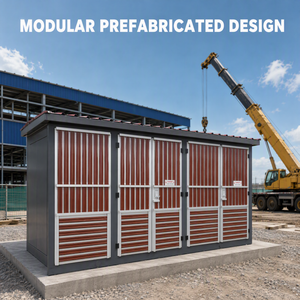
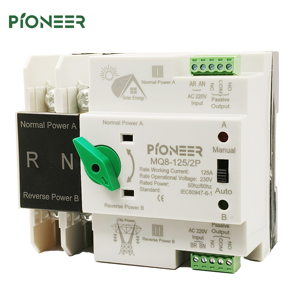
As the Port of Rotterdam targets zero-emission shore operations, maritime electrification has transitioned from auxiliary battery storage to high-power DC distribution networks. Our heavy-duty 10kV/35kV compact prefabricated substations work in harmony with 100A-600A Automatic Transfer Switches (ATS) and stackable LiFePO4 battery banks. These systems provide shore-to-ship power conversion, container terminal crane power buffering, and marine microgrid stabilization against extreme maritime climatic conditions.
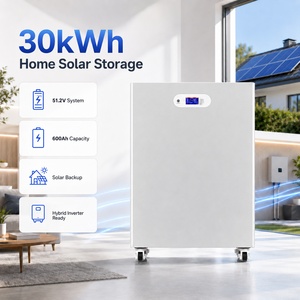
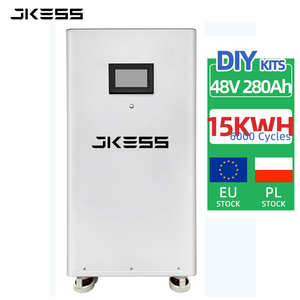
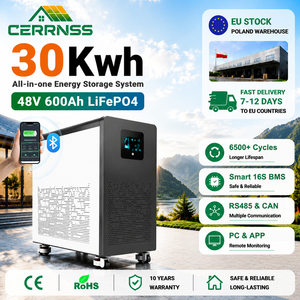
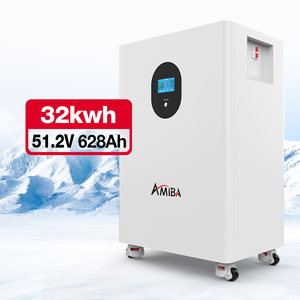
The Netherlands' electrical grid (managed by TenneT and regional DNOs like Liander and Enexis) is experiencing severe regional congestion (netoverbelasting). Commercial solar park operators and agricultural greenhouse growers in Westland are frequently curtailed due to grid feed-in limits. Deploying our 51.2V 280Ah/300Ah floor-standing and wall-mounted LiFePO4 energy storage systems allows enterprise operators to store daytime solar surplus and discharge during peak evening tariff hours, maximizing self-consumption and enabling grid-arbitrage monetization.
Exporting electrical and electronic capital goods into the Dutch market requires strict adherence to European Union directives and local environmental laws. Sourcing from experienced factories ensures seamless customs clearance and hassle-free commissioning:
When selecting a manufacturing partner and exporter for high-reliability power infrastructure, engineering rigor and supply chain transparency are non-negotiable. Our manufacturing baseline provides unmatched assurances for Dutch procurement teams:
Founded on rigorous engineering standards, our facilities have produced millions of customized AC-DC and DC-DC power modules trusted by top-tier global aerospace, defense, and industrial OEMs.
Standard model configurations are freshly built-to-order and dispatched within 3 business days, eliminating long lead times and expensive project downtime for Dutch integrators.
Backed by an ISO 9001:2015 certified Quality Management System, every unit undergoes full-load burn-in testing and serialization before shipping, backed by a 5-year warranty.
Direct answers regarding logistics, European grid compatibility, customs, and technical customization.
Whether you require precision programmable DC power supplies for semiconductor testing, robust ATS controllers, or high-capacity LiFePO4 battery energy storage for Dutch industrial facilities, our engineering team is ready to assist.
Contact Us