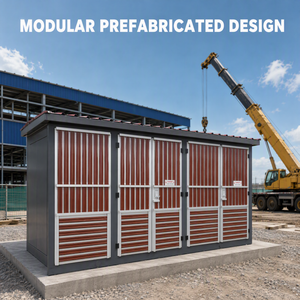

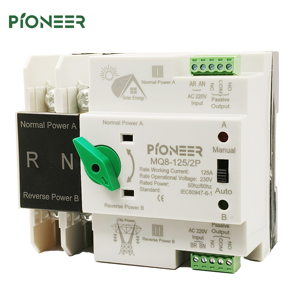
Featured electrical protection components, high-capacity substations, automatic transfer switches, and energy storage systems deployed across the Middle East.
In the rapidly expanding industrial and metropolitan landscape of Riyadh and the broader Central Province of Saudi Arabia, electrical supply continuity is no longer merely a utility concern—it is a critical parameter of operational survival. Modern electrical networks across the Kingdom operate under unique environmental and grid-switching pressures. As a prominent surge protectors manufacturer supplying the Riyadh market, our engineering mandate focuses on neutralizing transient overvoltages (surges) caused by atmospheric lightning strikes, inductive load switching within heavy industrial complexes, and utility-scale grid maneuvers executed by the Saudi Electricity Company (SEC).
Transient voltage surges are catastrophic microsecond spike events where voltage swings exceed nominal operating limits by thousands of volts. In typical 400V/230V three-phase 60Hz networks standard in Saudi Arabia, an unsuppressed surge can destroy sensitive low-voltage microelectronics, disrupt Programmable Logic Controllers (PLCs) in automated manufacturing facilities, degrade insulation in heavy-duty distribution transformers, and ignite severe electrical fires within sub-distribution panels. Achieving electrical resilience demands a rigorous technical understanding of surge suppression topologies, SASO / IEC 61643 standards, and local thermal conditions.
Thermal derating is the single most overlooked failure mechanism for surge protective devices (SPDs) installed in the Middle East. With ambient shade temperatures reaching up to 55°C during peak summer months, interior temperatures inside unconditioned metal distribution cabinets frequently exceed 70°C. Standard Metal Oxide Varistors (MOVs) experience accelerated thermal runaway under sustained high ambient heat if not paired with robust internal thermal disconnectors optimized for high-temperature operating thresholds.
Industrial engineers operating in Riyadh encounter two primary vectors of transient overvoltages: Externally Induced Surges and Internally Generated Transients. Understanding these mechanisms dictates the appropriate selection of surge protective devices (SPDs) and TVSS architectures.
Designing an effective, cascaded surge protection scheme for industrial plants, data centers, and commercial towers across Riyadh requires precise compliance with IEC 61643-11 / EN 61643-11 standards (mandated by SASO regulations). Surge Protectors are structurally categorized based on their installation zone (Lightning Protection Zones - LPZ) and surge current withstand capabilities.
| SPD Classification | Standard Waveform Test | Primary Component Technology | Typical Installation Point | Protection Level ($U_{\text{p}}$ Target) | Riyadh Application Focus |
|---|---|---|---|---|---|
| Type 1 (Class I) | $10/350\ \mu\text{s}$ (Impulse $I_{\text{imp}}$) | Gas Discharge Tubes (GDT) / Spark Gaps | Main Service Entrance / Substation LV Side | $\le 2.5\text{ kV}$ | Primary distribution panels in MODON Industrial Cities, outdoor substations. |
| Type 2 (Class II) | $8/20\ \mu\text{s}$ (Nominal $I_{\text{n}}$ / Max $I_{\text{max}}$) | High-Energy Metal Oxide Varistors (MOV) | Distribution Switchboards / MCC Panels | $\le 1.5\text{ kV}$ | HVAC power feeds, industrial machinery, facility sub-panels. |
| Type 3 (Class III) | $1.2/50\ \mu\text{s} - 8/20\ \mu\text{s}$ (Combination) | Silicon Avalanche Diodes (SAD) + Fast MOVs | Terminal Equipment / Sensitive Load Inputs | $\le 1.0\text{ kV}$ | PLC control cabinets, enterprise servers, medical diagnostics. |
| PV DC Surge Protectors | Direct Current ($8/20\ \mu\text{s}$ & $10/350\ \mu\text{s}$) | High-Voltage Y-Configured MOV Blocks | Solar Array Inverters & BESS DC Strings | $\le 3.8\text{ kV}$ (1500V DC) | Utility solar PV installations, commercial rooftop solar in KSA. |
As a specialized manufacturer, we engineer core internal protective elements to ensure zero downtime and safe end-of-life isolation under severe grid faults:
Features an integrated thermal release mechanism that physically detaches the MOV element from the circuit upon detecting sustained thermal runaway caused by overvoltage faults, preventing cabinet fires.
Engineered for Type 1 primary service entrance protectors to clear heavy follow-on currents up to 50kA RMS without blowing upstream utility distribution fuses.
Integrates multi-stage LC capacitive-inductive filters within Type 2 and Type 3 TVSS units to suppress high-frequency line noise, electrical harmonics, and electromagnetic interference.
Every commercial and industrial sector within the Riyadh metropolitan region exhibits distinct electrical load characteristics. Implementing an unadapted, generic surge protection layout risks equipment damage. Below are engineered deployment frameworks proven in local Saudi operational environments:
In heavy manufacturing zones across Riyadh's MODON estates—encompassing metal forging, plastics extrusion, chemical processing, and bottling plants—electrical panels are exposed to high harmonic distortion and rapid inductive motor switching. Recommended Configuration: Install DIN-rail mounted 3-Phase Type 1+2 hybrid SPDs ($I_{\text{imp}} = 25\text{kA}$, $I_{\text{max}} = 100\text{kA}$) directly downstream of the main breaker in low-voltage switchboards, coupled with Type 3 line-conditioners at individual PLC panels.
Skyscrapers and institutional towers require protection against indirect lightning strikes to rooftop structures (lightning rods/air terminals) and switching surges originating from massive central HVAC chilled water plants. Recommended Configuration: Heavy-duty Type 1 SPDs installed at the main switchgear basement vault; modular plug-in Type 2 SPDs situated on every secondary distribution floor riser board; and isolated TVSS surge strips protecting IT network closets.
With Saudi Arabia accelerating renewable integration under Vision 2030, solar photovoltaic installations across the sun-drenched Central Region face extreme DC overvoltages. Long DC cable runs from PV arrays to central inverters act as antennas for electromagnetically induced lightning transients. Recommended Configuration: 1000V DC and 1500V DC Type 2 Surge Protectors with Y-configuration MOV modules deployed at DC combiner boxes and inverter inputs, tested to IEC 61643-31 standards.
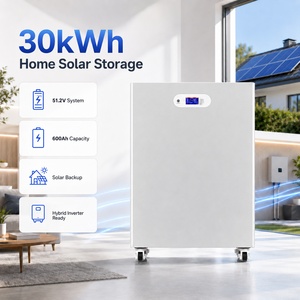
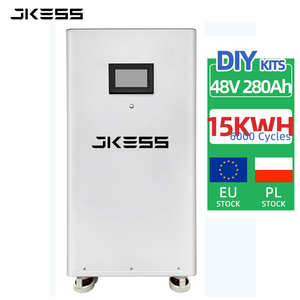
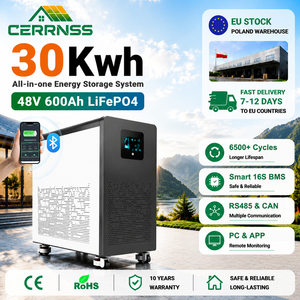
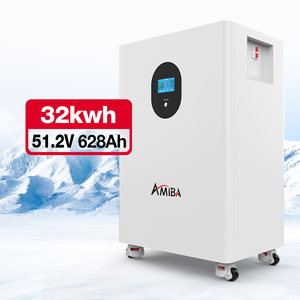
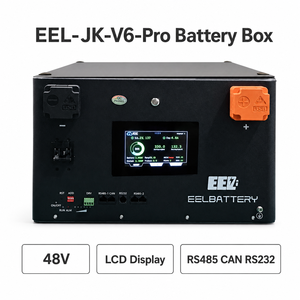
Containerized LiFePO4 battery energy storage installations (such as our 51.2V and 48V rack systems) demand bidirectionally isolated surge mitigation. High-speed switching within hybrid inverters creates high microsecond voltage spikes that degrade battery management systems (BMS). Recommended Configuration: Integrated DC-rated SPDs paired with fast-acting optical isolation monitoring to safeguard BMS microcontrollers against ground loop transients.
The surge protector manufacturing ecosystem supplying the Riyadh market is undergoing a structural transformation powered by national mega-projects, digital transformation, and stringent regulatory updates enforced by the Saudi Standards, Metrology and Quality Organization (SASO) and the Saudi Electricity Code (SBC 401).
SASO mandates strict conformity certification (CoC) for low-voltage electrical devices imported into or manufactured in the Kingdom. SPDs must undergo rigorous third-party lab testing verifying $I_{\text{imp}}$, thermal stability, and IP ingress ratings.
Riyadh is rapidly establishing itself as the cloud computing hub of the MENA region. Data center infrastructure requires ultra-low clamping voltage SPDs ($U_{\text{p}} < 800\text{V}$) with active remote status monitoring via Modbus/RS485 interfaces.
Giga-developments in the Riyadh province mandate smart grid integration, outdoor-rated IP67 surge protection cabinets, and zero-maintenance self-diagnosing SPD modules to support automated urban infrastructure.
Modern electrical engineering consultants in Saudi Arabia are transitioning from passive surge suppression (basic MOV strips) to Intelligent Transient Mitigation Systems. These systems combine high-impulse current diversion, thermal condition monitoring, dry contact alarm outputs for Building Management Systems (BMS), and real-time surge event counters.
We deliver engineer-grade transient protection and power distribution hardware engineered for maximum uptime in harsh operating environments.
Standard DIN rail and panel-mount SPDs are produced under strict QA schedules, with custom multi-output power systems and enclosure assemblies manufactured and dispatched rapidly to meet aggressive project deadlines.
Every unit undergoes 100% full dielectric withstand testing, impulse response validation, and thermal aging burn-in prior to final shipment, backed by a comprehensive 5-Year Replacement Warranty.
Our application engineering team collaborates directly with EPC consultants, switchboard builders, and project managers in Riyadh to assist with SPD sizing, cascading calculations, and specification writing.
Direct technical guidance on surge protector selection, SASO compliance, and installation best practices in Saudi Arabia.
Surge Protective Devices installed in low-voltage electrical systems across Saudi Arabia must comply with SASO IEC 61643-11 for AC power circuits and SASO IEC 61643-31 for photovoltaic DC installations. These standards stipulate requirements for thermal disconnect safety, short-circuit current ratings (SCCR), impulse discharge capability ($I_{\text{imp}}$), and ingress protection ratings suited for local ambient dust conditions.
Extreme ambient temperatures reduce the thermal dissipation capacity of internal Metal Oxide Varistors (MOVs). When selecting an SPD for outdoor switchgear or unconditioned panels in Riyadh, specify devices rated for elevated operational temperatures (up to +85°C internal) and ensure the unit utilizes heavy-duty thermal disconnectors designed to prevent nuisance tripping while providing reliable thermal runaway protection.
$I_{\text{imp}}$ (Impulse Current) evaluates an SPD's ability to withstand direct lightning stroke currents using a high-energy $10/350\ \mu\text{s}$ impulse waveform (mandatory for Type 1 Class I SPDs). $I_{\text{max}}$ (Maximum Discharge Current) measures an SPD's capacity to handle indirect lightning or switching transients using an $8/20\ \mu\text{s}$ waveform (standard for Type 2 Class II SPDs). For primary service entrance protection in KSA, high $I_{\text{imp}}$ ratings are essential.
In standard Saudi Arabia SEC low-voltage networks (TN-S or TN-C-S grounding configurations), select a 4-Pole SPD with a Maximum Continuous Operating Voltage ($U_{\text{c}}$) of at least 275V AC for Phase-to-Neutral (L-N) and 350V AC or higher for Phase-to-Phase (L-L) to account for nominal grid fluctuations without causing continuous MOV stress.
Yes. Our modular Type 2 and Type 1+2 DC SPDs are engineered with compact DIN-rail mounting form factors specifically tailored for direct incorporation into Solar Combiner Boxes, Hybrid Inverter DC inputs, and LiFePO4 Energy Storage System (BESS) control cabinets, featuring visual status windows and remote telemetry contact switches.
Speak directly with an experienced application engineer to evaluate your electrical load requirements, review panel schematics, or request bulk commercial pricing for upcoming Saudi projects.
Send an Inquiry