
Norway’s industrial ecosystem is undergoing a dramatic electrification phase. Driven by intense decarbonization goals across maritime shipping, offshore oil & gas platforms, automated aquaculture facilities, and green data centers, the stability of the local electrical grid managed by Statnett is under rigorous scrutiny. Power Factor Correction (PFC) modules have evolved from simple passive reactive power compensation units into advanced, micro-processor controlled Active PFC (APFC) power conversion systems.
In high-latitude and coastal Nordic operations, voltage distortion, non-linear harmonic pollution, and reactive losses can severely undermine equipment life and trigger financial penalties under strict European EN 61000-3-2 and IEC 61000-3-12 directives. Modern active PFC modules utilize wide bandgap semiconductors (Silicon Carbide - SiC and Gallium Nitride - GaN) to deliver high power density, achieve total harmonic distortion (THD) levels below 3%, and maintain a power factor exceeding 0.99 across dynamic load ranges.
Whether integrated into containerized subsea substations, shore-to-ship power (OPS) systems, or rack-mounted mission-critical power supplies, selecting the right PFC partner in Norway requires evaluating thermal headroom, enclosure protection (IP65/NEMA 4X), transient immunity, and local engineering compliance.
Engineered for high reliability, tight harmonic control, and seamless deployment across Norwegian industrial sites.

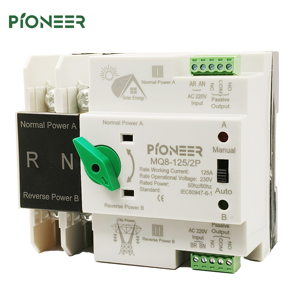

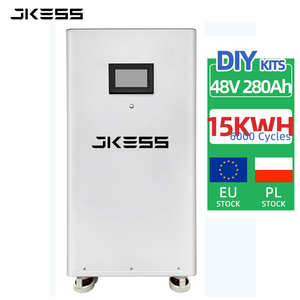

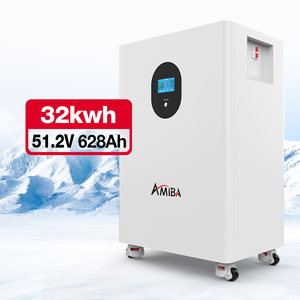
A rigorous comparative evaluation based on technical compliance, custom manufacturing speed, localized engineering support, and grid distortion mitigation capability.
Custom engineering demands differ across Nordic marine, energy, and automated manufacturing sectors.
Norway leads the global maritime sector in zero-emission electric ferries and hybrid supply vessels. Port authorities in Bergen, Oslo, and Ålesund mandate Ocean Port Shore Power (OPS) connections. Active PFC modules prevent destructive phase imbalances and voltage sags on coastal local grids when high-power shore chargers draw megawatts of energy during quick vessel turnarounds.
Operating in the North and Norwegian Seas requires DNV-certified electronics housed in pressure-neutral or vacuum-sealed enclosures. High-density Active PFC rectifiers compensate for reactive losses across long subsea umbilical cables stretching over 100 km from onshore hydropower stations to offshore seabed pumps and platform equipment.
Leveraging low electricity costs and natural cold-air cooling, hyper-scale data centers in Lefdal Mine and Hamar require energy efficiency ratings near PUE 1.05. PFC modules engineered with redundant active cooling topologies eliminate harmonic stress on backup diesel generator sets and uninterruptible power systems (UPS).
Northern Norway’s wind farms (e.g., Fosen Vind) experience arctic wind variations and sub-zero freeze cycles. PFC conversion systems equipped with internal conformal coatings and wide temperature ranges (-40°C start-up) stabilize power quality prior to grid feed-in under severe weather dynamics.
Key regulatory and technological shifts influencing PFC module procurement.
Transitioning from traditional Silicon MOSFETs to Silicon Carbide (SiC) switches allows PFC rectifiers to operate at switching frequencies over 100 kHz, reducing passive inductor size by 40% while boosting overall power density above 98% efficiency.
Norwegian grid operator Statnett has enforced tighter limits on total demand distortion (TDD) at the Point of Common Coupling (PCC). Facilities are forced to replace legacy passive LC filters with dynamic multi-channel Active PFC modules.
To eliminate operational downtime in offshore fish farms and remote coastal lighthouses, engineers prefer N+1 redundant, hot-swappable 1U/2U rack-mounted PFC power modules that can be serviced without interrupting the primary DC bus.
Since 1957, Acopian has built millions of precision AC-DC power supplies, high-voltage modules, and custom power systems. We bypass long lead-time supply chains by engineering, assembling, burn-in testing, and shipping directly from our USA facilities.
While standard industry lead times stretch for months, our core metal-enclosed single and multi-output active PFC supplies are custom-built to your exact voltage specifications and shipped within 3 business days.
Every metal-cased switching and linear regulated PFC unit is backed by a full 5-year replacement warranty, supported by ISO 9001:2015 certified quality controls.
Need custom voltage outputs, wide adjustment ranges, NEMA 4X weatherproofing, or low-noise linear secondary regulation? Our engineering team designs custom modular power systems with up to 5 outputs tailored to your exact mechanical drawing.
No automated phone queues or generic chatbots. You connect directly with power application engineers who understand phase angles, thermal derating, EMC shielding, and Norwegian grid compliance.
Essential guidance on logistics, environmental protection, compliance, and custom ordering.
Active PFC modules use electronic switching circuits (boost converters) to actively shape the input current waveform to match the line voltage, achieving a power factor > 0.99 and low THD (< 3%). Passive PFC uses heavy inductors and capacitors which are bulky, sensitive to line frequency fluctuations, and less effective across wide temperature swings common in Nordic winters (-40°C to +50°C).
PFC power modules imported into Norway must carry the CE mark and comply with Low Voltage Directive (LVD) 2014/35/EU, EMC Directive 2014/30/EU, and RoHS/REACH environmental standards. For maritime and offshore platforms, additional certification from DNV (Det Norske Veritas) or compliance with NEK 400 installation standards is required.
Yes. Modules destined for Norwegian fjords or offshore rigs should be ordered with military-grade conformal coating (IPC-CC-830), stainless steel or extruded aluminium anodized chassis, and sealed to IP65 / NEMA 4X ratings to resist salt spray corrosion (C5-M standard).
While many European catalog distributors require 12 to 20 weeks, Acopian builds standard metal-enclosed PFC modules within 3 business days and multi-output custom rack systems within 9 business days, shipping rapidly via air express (DHL/FedEx) directly to Norwegian job sites.
Norwegian electric utilities charge commercial users reactive power penalties if power factor drops below ~0.90 to 0.95. A PFC module maintaining > 0.99 power factor eliminates reactive kVAR surcharges, reduces transformer thermal stress, allows thinner conductor sizing, and improves total system efficiency.
Speak directly with our power application engineering team to request customized datasheets, CAD 3D drawings, or expedited project quotes.