Executive Technical White Paper
Engineering Unregulated Power Supplies for Greater Boston’s Industrial & High-Tech Ecosystem
An in-depth guide to topology selection, thermal resilience, load surge tolerance, and compliance standards for OEM design engineers across New England.
Information Gain Key Takeaway: Unlike regulated linear or high-frequency switching power supplies, unregulated power supplies deliver the highest mean time between failures (MTBF), extreme current surge capabilities, and unparalleled immunity to electromagnetic interference (EMI)—making them the absolute preferred choice for heavy inductive motor loads, raw DC bus lines, relays, solenoids, and ruggedized military-grade equipment.
1. Topology Architecture & Physics of Unregulated DC Sources
An unregulated power supply represents the quintessential foundational architecture of power conversion electronics. Consisting fundamentally of an isolation power transformer, a full-wave bridge rectifier (utilizing silicon power diodes), and a high-capacitance passive filter bank, this circuit design eliminates active solid-state control loops, high-frequency pulse-width modulation (PWM) switches, and sensitive feedback circuitry.
In high-density industrial corridors such as Greater Boston—spanning Kendall Square biotech labs, Route 128 (I-95) tech hardware integrators, and North Shore defense facilities—design engineers frequently face environments with high electrical noise and massive load surges. Unregulated DC power supplies excel under these parameters. Because the output voltage ($V_{out}$) varies directly with input AC line fluctuations and load current draw, the power supply operates with near-zero internal high-frequency switching losses and generates no high-frequency radiated EMI.
| Electrical Parameter |
Unregulated Power Supply |
Linear Regulated Supply |
Switching Regulated Supply (SMPS) |
| Circuit Complexity |
Ultra-Low (3 Core Components) |
Moderate (Pass Transistors) |
High (PWM Controller, FETs) |
| MTBF (Reliability Hours) |
> 500,000 Hours |
~ 150,000 Hours |
~ 80,000 - 100,000 Hours |
| Peak Surge Tolerance |
300% to 500% Rated Current |
150% Rated Current |
Current Limited (Foldback/Shutdown) |
| Radiated / Conducted EMI |
Virtually Zero |
Extremely Low |
Moderate to High (Requires Filters) |
| Full Load Efficiency |
80% – 90% (Transformer Limited) |
30% – 50% (High Dissipation) |
85% – 95% |
| Output Ripple Voltage |
Moderate (3% - 10% Peak-to-Peak) |
Ultra-Low (< 3 mV RMS) |
Low to Moderate (10-50 mV RMS) |
2. Mathematical Calculation of Voltage Ripple & Load Regulation
When specifying an unregulated factory unit for a Boston industrial application, understanding the mathematical relationship between the filter capacitance, line frequency (60 Hz AC grid standard in New England), and current load is essential. The peak-to-peak ripple voltage ($V_{ripple(p-p)}$) is modeled by the classic differential equation:
V_ripple(p-p) = I_load / (f_rect * C)
Where I_load represents DC output current in Amperes, f_rect is the rectified ripple frequency (120 Hz for a standard 60 Hz full-wave bridge input), and C is the capacitance in Farads. Because the output DC voltage decreases proportionally as the load current increases (due to internal transformer winding DC resistance and diode forward voltage drop), engineers can easily calculate the nominal operating window. For heavy inductive loads such as DC solenoids, magnetic brakes, and industrial relays, this minor DC voltage droop is completely harmless and structurally preferable to an electronic over-current shutdown trip typical of switching switchers.
Regional Integration
Localized Application Scenarios across Boston's Tech Hubs
From Route 128 defense contractors to Cambridge robotics labs, discover how unregulated power architectures drive New England's top industries.
Defense & Aerospace System Integration (Route 128 Tech Corridor)
In defense manufacturing hubs around Waltham, Lexington, and Woburn, mission-critical radar positioning systems, ruggedized actuators, and naval telemetry gear rely on unregulated DC power supplies. Their immunity to electromagnetic pulses (EMP) and absence of volatile control ICs ensure operational readiness under extreme military environmental conditions.
Biotech & Automated High-Throughput Screening (Kendall Square)
Boston's biotech infrastructure in Cambridge and Seaport utilizes heavy-duty unregulated DC rails to power high-torque centrifuge motors, peristaltic liquid dosing pumps, and automated storage micro-actuators. The high surge current capability seamlessly overcomes high initial mechanical break-away torque without tripping lab power breakers.
Robotics & Autonomous Material Handling (Burlington & Natick)
New England's thriving robotics cluster deploys custom chassis-mount unregulated power modules inside Autonomous Mobile Robot (AMR) charging depots and automated conveyor systems. These units handle back-EMF energy generated during sudden motor braking without voltage-clamping component failures.
Market Intelligence
Boston & New England Industrial Power Trends (2025–2030)
Strategic insights into procurement shifts, federal compliance mandates, and clean tech integration driving regional manufacturing investment.
A. Reshoring & TAA Compliance Mandates
Boston-area prime contractors under DoD contracts are aggressively replacing overseas power components with 100% Domestic Trade Agreements Act (TAA) compliant hardware. Power supplies designed and assembled in American facilities (such as Easton, PA and Melbourne, FL) provide absolute supply chain security and audit-ready compliance for defense procurement programs.
B. Microgrid Integration & High-Capacity Battery Buffering
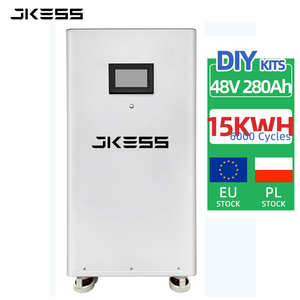
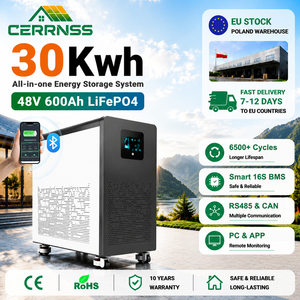
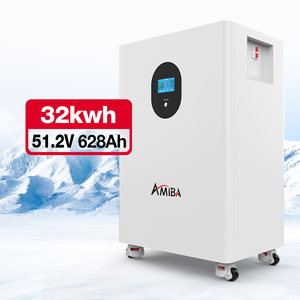
As Massachusetts targets aggressive grid decarbonization, industrial facilities across Greater Boston are adopting hybrid microgrids. Unregulated power supplies are increasingly specified as robust front-end rectifiers to feed DC bus systems, pairing directly with LiFePO4 energy storage banks (such as 51.2V 15kWh to 30kWh modular battery racks) to absorb utility voltage spikes and support uninterrupted plant operations.
Key Procurement Metrics for Boston Engineering Buyers
- Lead Time Priority: 3-Day dispatch capabilities for emergency replacement and engineering rapid-prototyping.
- Thermal Headroom: Convection-cooled designs capable of operating continuously up to +71°C ambient without forced air fan failures.
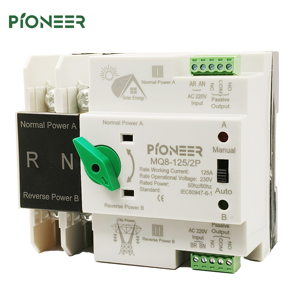
- Mounting Versatility: Availability of 19-inch rack mount, wall-mount, standard chassis, and DIN rail enclosures.
- Quality Assurance: ISO 9001:2015 certified production backed by standard 5-year full factory warranties.
Why Choose Us
Enterprise Manufacturing Advantages & Engineering Promise
Delivering uncompromised power solutions built on nearly seven decades of American engineering craftsmanship.
Built & Shipped Within 3 Days
Standard models are freshly assembled, burn-in tested, and shipped within 3 business days of order receipt. Complex rack systems ship within 9 business days—eliminating supply chain downtime.
5-Year Factory Warranty
Every metal-enclosed AC-DC and DC-DC power supply is backed by an industry-leading 5-year warranty, reflecting superior component selection and robust mechanical casing.
Direct Access to Application Engineers
No automated phone trees or non-technical call centers. Connect directly with experienced power engineers to solve output voltage selection, heat sinking, and custom wiring specs instantly.
Buyer & Engineer FAQ
Frequently Asked Questions for Boston Power Supply Buyers
Clear, expert answers to common technical, procurement, and logistical questions from regional engineering teams.
Q1: Why should a Boston OEM choose an unregulated power supply over a switching supply for heavy industrial machinery?
Unregulated power supplies eliminate sensitive high-frequency switching transistors, control ICs, and complex feedback loops. For heavy industrial equipment operating near Boston's maritime hubs or industrial parks—where high motor surge currents, inductive kickback, and electrical noise are common—unregulated supplies offer virtually indestructible reliability, zero generated switching noise, and MTBF figures exceeding 500,000 hours.
Q2: How quickly can custom or standard unregulated units be delivered to facilities in New England?
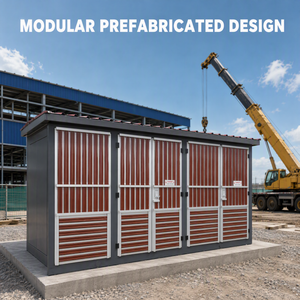
Standard models are built to order and shipped within 3 business days from our USA manufacturing facilities. Multi-output custom rack systems or specialized outdoor substations typically ship within 9 business days. Fast ground transit guarantees delivery across Boston, Cambridge, Quincy, and Worcester within 24–48 hours of dispatch.
Q3: Are your power supplies compliant with defense and government procurement standards (TAA & MIL-STD)?
Yes. All units are engineered and manufactured in Easton, Pennsylvania or Melbourne, Florida under an ISO 9001:2015 certified quality management system. They are fully TAA compliant for government contracts and can be customized to comply with MIL-STD-810 shock/vibration and MIL-STD-461 EMI specifications required by New England defense integrators.
Q4: How do I calculate the required output capacitor size for custom ripple suppression?
Output ripple voltage is inversely proportional to filter capacitance ($C$) and load frequency ($f$). To achieve a specific peak-to-peak ripple voltage ($V_r$) at maximum load current ($I$), select capacitance using $C = I / (120 \cdot V_r)$ for 60Hz full-wave rectified input. Our application engineering team can pre-calculate and integrate custom internal filter banks tailored to your load tolerance.
Q5: What mounting configurations are available for space-constrained rack systems?
We manufacture unregulated sources in low-profile modular chassis, DIN rail mount casings, wall-mount enclosures, high-voltage modules up to 30 kVdc, and standard 19-inch rack-mount assemblies (1U through 6U heights) equipped with custom front-panel meters, breakers, and switches.