
Engineered for high surge resilience, maximum operational durability, and demanding industrial applications in Western India and global markets.
Why industrial plant operators and system integrators across Mumbai’s manufacturing belts consistently choose unregulated power topologies over sensitive switch-mode units for high-inductive loads.
An unregulated power supply represents the pinnacle of electrical simplicity, mechanical ruggedness, and long-term durability. Unlike complex linear regulated or switch-mode power supplies (SMPS) that depend on dense semiconductor control loops, delicate feedback circuits, and active switching transistors, an unregulated power supply relies exclusively on robust passive magnetic and solid-state components. The architecture consists of three fundamental stages:
In this design, the input AC voltage (typically 230V single-phase or 415V three-phase in the Mumbai industrial power grid operating at 50 Hz) is stepped down by a grain-oriented silicon steel (CRGO) core transformer. The stepped-down AC is subsequently rectified into pulsating DC by heavy-gauge silicon diodes and smoothed via high-ripple-current electrolytic capacitors. Because there is no active voltage regulation circuitry, the output DC voltage naturally tracks input line voltage fluctuations and varies inversely with the connected load current.
Efficiency: Up to 96%
Surge Capacity: 300% to 500% peak rating
Component Count: Minimal (Transformer, Rectifier, Capacitor)
Failure Modes: Extremely low; resistant to line spikes and dirty power grids.
Efficiency: Low (35% to 50%)
Ripple & Noise: Sub-millivolt (Ultra-clean)
Heat Dissipation: Very high; requires heavy heat sinks
Primary Use: Precision medical, lab instruments, high-gain audio.
Efficiency: High (80% to 92%)
Component Sensitivity: High; susceptible to grid voltage surges
EMI/RFI Output: Significant high-frequency noise
Primary Use: IT servers, consumer electronics, lightweight systems.
| Performance Parameter | Unregulated DC Supply | Switch-Mode Supply (SMPS) | Linear Regulated Supply |
|---|---|---|---|
| Voltage Stability (% Regulation) | Loads vary 10% to 20% dependent on current draw | Tight regulation (±0.5% to ±1%) | Ultra-tight regulation (±0.05% to ±0.1%) |
| Inrush Current / Surge Immunity | Exceptional: Handles massive inductive motor/solenoid spikes | Moderate to Low: Trips optical protection loops or blows FETs | Moderate: Limited by series pass transistor thermal envelope |
| Grid Spike Immunity (MSEDCL Lines) | High Immunity: Absorbed by heavy magnetic core volume | Vulnerable: Requires complex input VAR/MOV protection | Moderate: High input voltage spikes cause severe heat buildup |
| MTBF (Mean Time Between Failures) | > 150,000 Hours (Decades of maintenance-free service) | 40,000 – 70,000 Hours (Electrolytic thermal degradation) | 60,000 – 90,000 Hours (Thermal stress on pass elements) |
| Total Cost of Ownership (TCO) | Lowest: Near zero repair overhead and maximum lifespan | Moderate initial cost; higher replacement frequency | High energy operating expense due to thermal losses |
Customized power supply configurations matching the specific environmental, electrical, and commercial demands of Mumbai’s premier manufacturing zones.
In the heavy chemical, electroplating, and metal finishing facilities located across Taloja MIDC, Dombivli, and the Thane-Belapur industrial corridor, electrical equipment operates under extremely hostile ambient conditions. Atmosphere laden with corrosive acid fumes and high relative humidity demands robust power supplies.
Unregulated DC power supplies are extensively specified for electroplating rectifiers, DC anodizing baths, and heavy magnetic contactors. Because these units contain zero delicate micro-electronics or SMD control cards that degrade in acidic air, they offer uninterrupted 24/7 continuous operation without requiring air-conditioned clean rooms.
The vast logistics and supply chain hubs in Bhiwandi, Kalamboli, and Navi Mumbai rely heavily on automated high-speed sorting conveyors, motorized diverters, and electro-mechanical pallet lifters. These systems utilize heavy 24V DC solenoids, electromagnetic brakes, and inductive actuators.
When hundreds of solenoids actuate simultaneously, they pull instantaneous current spikes up to 400% of nominal rating. Standard switch-mode power supplies frequently trip their over-current protection under these loads. Our unregulated power supplies handle these massive current surges effortlessly, ensuring continuous conveyor belt movement without false tripping.
Naval defense facilities, container terminal cranes, and shipyards surrounding the Jawaharlal Nehru Port Trust (JNPT) and Mazagon Dock demand power equipment capable of enduring salt fog, severe mechanical vibration, and wide AC line voltage fluctuations (often powered by localized diesel generators).
Enclosed in heavy-gauge steel or optional stainless steel enclosures, our unregulated power supplies convert erratic generator output into reliable raw DC power for winch controls, heavy relay banks, and cathodic protection systems along the western coastline.
Electronics OEMs and export manufacturers inside the SEEPZ Special Economic Zone (Andheri East, Mumbai) require dependable DC sources for long-duration product endurance testing and component burn-in racks.
Unregulated power supplies deliver an unmatched price-per-watt ratio for driving large banks of capacitive loads, resistive heating elements, and endurance test jigs where high precision regulation is not required, drastically reducing capital expenditure for testing facilities.
How modern unregulated power supply designs adapt to Maharashtra's grid realities, solar integration initiatives, and stringent quality mandates.
Industrial power lines in peripheral Mumbai and MIDC zones frequently experience line voltage sags (dropping to 180V AC) during peak load hours and transient voltage surges during grid switching. Unregulated supplies, built with oversized copper windings and high magnetic saturation thresholds, absorb voltage spikes natively without catastrophic semiconductor breakdown.
Modern industrial procurement in India requires compliance with Bureau of Indian Standards (BIS) mandates and international safety guidelines. Our manufacturing processes utilize double-insulated CRGO transformers compliant with IEC 61558-2-6 safety standards, ensuring high galvanic isolation (up to 3000V AC isolation test) between mains AC and load DC terminals.
With Maharashtra’s rapid push toward rooftop industrial solar adoption, unregulated power supplies serve as robust primary rectifiers in hybrid solar-battery storage ecosystems (ESS). They handle direct raw power rectification to charge heavy LiFePO4 battery banks and high-capacity lead-acid batteries without delicate control circuitry failing due to solar inverter harmonics.
Backed by decades of power engineering mastery, custom modular build options, and streamlined global export logistics based in Mumbai’s trade nexus.
Every single power supply unit manufactured in our facilities undergoes a rigorous 100% full-load burn-in cycle prior to packaging. We perform thermal imaging validation, high-potential dielectric breakdown testing, and output ripple verification to guarantee zero-defect field installation upon arrival at your facility.
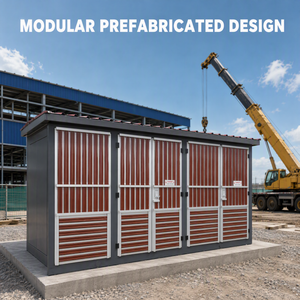
Need a non-standard DC output voltage (such as 18V, 36V, 72V, or 110V DC)? Our engineering team specializes in custom transformer tapping and modular housing designs (DIN-rail, rack-mount, or wall-mount). Positioned close to Mumbai’s international air cargo terminals and JNPT sea port, we guarantee swift export dispatch across Asia, the Middle East, Europe, and the Americas.
Clear, direct technical answers regarding selection, ripple formulas, line regulation, and environmental protection.
Because an unregulated power supply has no feedback regulation circuit, the output DC voltage is directly tied to the secondary AC transformer voltage minus the diode forward voltage drops ($V_{fd} \approx 1.4V$ for full-bridge rectification) and internal winding resistance ($I \times R$ drop). Under no-load conditions, the filter capacitor charges up to the peak AC voltage ($V_{peak} = V_{rms} \times 1.414$). Under full load, the voltage settles toward the average rectified DC voltage. Typically, expect a 10% to 18% voltage variation between zero load and 100% rated load.
Yes, exceptionally well. Switch-mode supplies often trip under voltage sag conditions because their internal controller attempts to draw higher current to maintain fixed output power, triggering over-current shutdown. In contrast, an unregulated supply simply experiences a proportional reduction in output DC voltage without tripping or damaging any components, allowing connected solenoids, contactors, or motors to remain operational or fail-safe naturally.
Peak-to-peak ripple voltage ($V_{ripple}$) in a full-wave rectified 50 Hz single-phase system can be calculated using the formula: $V_{ripple} = I_{load} / (2 \times f \times C) = I_{load} / (100 \times C)$. To lower ripple, you can increase the capacitance value ($C$) of the filter bank or add an external LC choke filter module. For most industrial relays, DC motors, and solenoids, standard ripple levels of 5% to 10% are completely harmless.
Absolutely. Units built for Mumbai and coastal export destinations receive tropicalization treatment. Transformers are vacuum-impregnated with high-grade anti-fungal insulating varnish, circuit connections are conformal coated, and metal enclosures are powder-coated with corrosion-resistant epoxy polyester finishes capable of passing 500-hour salt spray endurance tests.
Yes. We regularly supply custom tap transformers providing specialized DC rails (such as 12V, 24V, 48V, 110V, 220V DC) in open-frame chassis, heavy-duty wall-mount enclosures, DIN-rail formats, or standard 19-inch rack-mount chassis built to your exact spatial and electrical drawing requirements.
Standard off-the-shelf models and modular assemblies are dispatched within 3 business days. Customized industrial transformers and specialized OEM power cabinets generally ship within 7 to 10 business days. Expedited air freight via Mumbai International Airport (BOM) or sea cargo via JNPT Port is fully coordinated by our export team.
Consult directly with our experienced power application engineers today. Obtain technical datasheets, request custom transformer tap configurations, or receive competitive export quotations for the Mumbai and global markets.